COP30 changed the narrative. Now we must change the Ecosystem
By Beto Carvalho
CEO, SoulBeeGood • Co-founder, Vertentes Mental Health Ecosystem • Co-chair, Environment Working Group – Global Mental Health Action Network
COP30: A Partial Breakthrough at a Critical Moment
I can say that going to COP30 was a real adventure. I’ve decided to be in Belém for the COP30 after participating in the Pre-COP in Brasília and the opportunities generated for incidence to strengthen mental health into climate negotiations, also to promote and support some Youth Led initiatives, like the one promoted by Marcele Oliveira COP30 Youth Champion the Youth #Mutirão. The invitations from GCHA (Red de Clima y Salud LATAM), Catalyst Now, Youth4Planet and the WHO to join in some in-person presentations were also important in this decision. The trip was intense, involved beyond air tickets, a boat crossing and 500km car trip from São Luis to Belém. But all these efforts totally paid off. Along the way these magic beings were somehow surprisingly appearing and taking part in this Adventure.
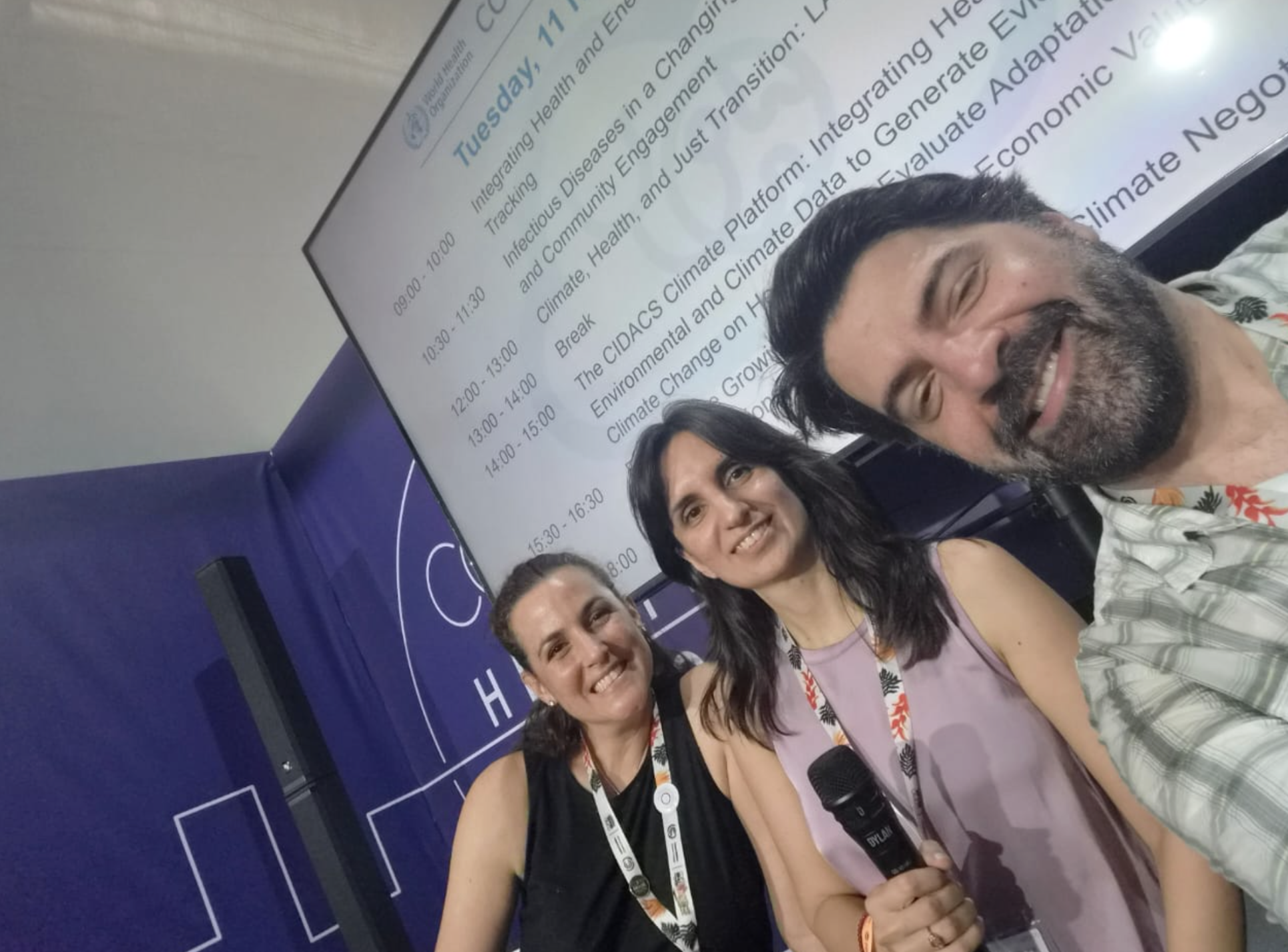
Climate Justice Panel together with GCHA and Lancet Countdown at the WHO Pavilion
But all this incidence construction initiated years ago, when the good soul of a bee took a step forward. And like repeating behaviors that was also the case to connect and articulate the next Ecosystemic levels of Ambition.Despite the challenges we could advance in Piloting the Cobertura dos Povos Peoples Coverage at COP30. Yuri from Imprensa Jovem, with his tutor Cláudia, could reach Belém and bring voices from Capão Redondo at the COP30. Promoting this a youth-led, intergenerational communications and education initiative connecting with the WHO Youth Council, Imprensa Jovem (Brazil), Viração (Brazil), UN Youth Office, youth delegation from Luxembourg, local networks of Indigenous and urban youth in Belém. Young reporters were not simply documenting COP30 — they were translating it into the language of their communities, producing podcasts, short films, murals, social media narratives and public conversations about climate, mental health and rights. It demonstrated that youth participation cannot remain symbolic. It must become institutional, funded, protected and replicable.
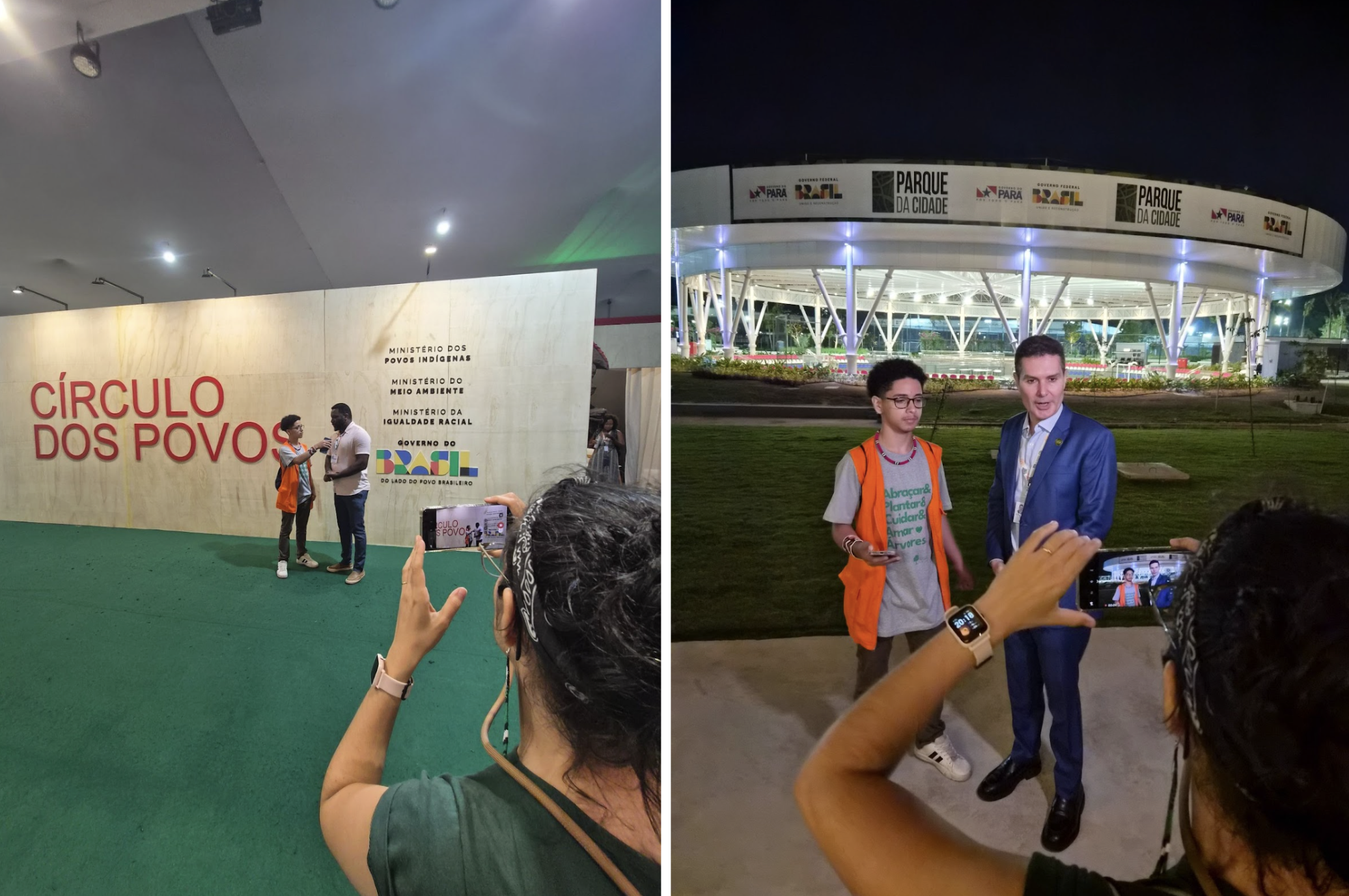
Interviews from Imprensa Jovem - Ronaldo Santos (Racial Inclusion Secretary) and Jader Barbalho Filho (Cities Ministry)
Children, Adolescents and Youths at COP30
For sure, the participation of children, adolescents and youth were for me the highest point of the meeting. COP30 marked a threshold moment: when children, adolescents and youth stopped being spoken about and began to be taken seriously within the architecture of climate action — and when mental health finally started to be understood as climate infrastructure, not as peripheral damage.
For decades, global climate negotiations have treated children as a symbolic “future”. At COP30, they finally entered the political present.
Not as decoration. Not as moral leverage. But as actors and co-authors.

This shift was not accidental. It was driven by years of mobilisation from civil society, youth movements, Indigenous and traditional communities, and global child-rights organisations. The Children in G20 initiative we had last year during the Brazilian G20 not just led to the Children in G20 South Africa as an official working group but also drove the creation of the Coalition Children at COP30. Led by Marcele Oliveira, the Alana Institute in collaboration with several other organizations, including Soulbeegood, ASEC+, Vertentes, CLICA and many others. In Belém, this work crystallised: children, adolescents and youths had its own pavilion and an intense engagement agenda that were embedded across key decisions — Official UNFCCC texts showed a sharp increase in references to children, youth, and girls, moving beyond symbolic inclusion toward strategic recognition of their roles in climate action, adaptation, and just transition.
Since last year we have been advocating, as stated in a previous article - Investing in future minds through Children - that children and youth are not just the future, they are the driving force behind the solutions to today’s mental health challenges. In every proposal we present, young people take center stage as agents of change. They are the leaders in building community-based ecosystems, creating safe spaces and peer networks that foster resilience and well-being. They are the innovators, shaping accessible and disruptive digital platforms focused on promotion and prevention, in schools, communities and businesses. Codesign with youths equitable and innovative care paths that offer accessible and immediate mental health support. Moreover, youth are at the forefront of advocacy efforts, pushing for global and national policy changes to recognize mental health as a fundamental human right. They are deeply involved in research and innovation, ensuring that mental health interventions are culturally relevant and impactful for their generation.
By investing in youth, we are not only securing their future, but the future of society as a whole. They have the power to transform practices and policies, creating a more inclusive, resilient, and sustainable mental health landscape.
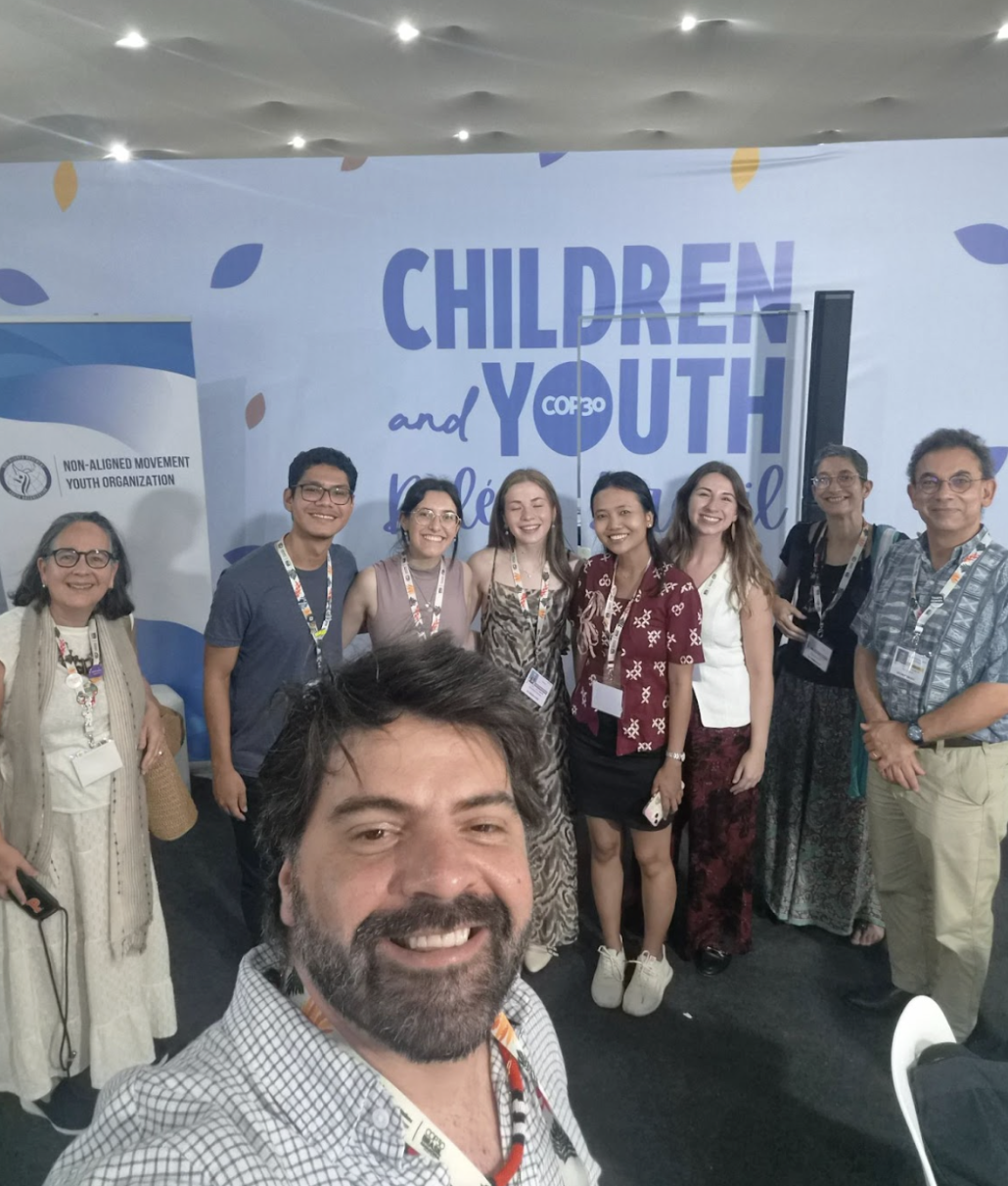
Session about Climate Education and Mental Health together with Juliana Fleury (ASEC+ and Vertentes) and Jessica Newberry Le Vay (Connecting Climate Minds)
The conference advanced key areas such as intergenerational equity, children’s participation in the Global Goal on Adaptation, education within the Just Transition agenda, and the recognition of children’s specific needs in technology transfer. Initiatives like the Global Children’s Mobilization and a high-level intergenerational dialogue further reinforced this shift, marking COP30 as the “first COP of Children.” However, a critical gap remains: the lack of firm commitments for funding allocation which undermines long-term protection of children’s climate future.
But this strong participation matters, because when children enter the room, the language changes. Carbon becomes breath. Water becomes life. Territory becomes home. But a symbolic shift is not enough.
What is truly transformative about COP30 is that it opened a second, more difficult door: recognising health — especially mental health — as a structural pillar of climate adaptation and resilience.
Starting with some reflections about the COP30 negotiations. The Belém meeting literally was on fire for the past weeks. We also had a lot of heavy rains, typically from this period, and hot air. Despite these environmental conditions it closed with a mix of incremental progress and unresolved structural challenges, reflecting both the growing urgency of the climate crisis and the persistent political limits of global negotiations. On the one hand, the summit delivered important political and technical milestones, including the adoption of a common set of indicators for the Global Goal on Adaptation, the launch of the Belém Action Mechanism for a Just Transition, the approval of the Belém Gender Action Plan, and increased momentum for the Tropical Forests Forever Facility (TFFF). These steps strengthen the global architecture for adaptation, social inclusion, and nature-based solutions. On the other hand, COP30 failed to agree on a clear roadmap for transitioning away from fossil fuels, left major gaps in climate finance — particularly for adaptation in the Global South — and postponed essential decisions on bridging the emissions gap needed to keep 1.5°C within reach. And also lacked a more clear financing agenda that was pushed for 2035. As a result, Belém became both a platform for political convergence on certain fronts and a reminder of the deep geopolitical tensions still blocking transformative climate action, shifting key unresolved questions to the road toward COP31 in 2026.
The conclusion is that more than ever we must work together and articulate High Impact Ecosystems to raise the Ambition and advance with practical commitments for implementation and collective action. So what we could see at COP30, just like we had last year at the G20 in Brazil, was the power of collective advocacy.
This agenda has been developed at the GMHAN Landscape not just the Environment working group, but also the Child & Youth Working group chaired by Muskan, Murilo and Zane, also with the leadership of Juliana Fleury from ASEc+ and Vertentes, that co-led together Marcio Galagliato the COP30 Stag developed and adapted several materials, including the Climate Change and Mental Health: Youth at the forefront report and the Mental Health and Environment Advocacy Briefs.
Climate change is a mental health crisis
We are all aware that the climate emergency does not only flood cities, pollute air and burn forests. It also deeply scars psychosocial adaptation and resilience building landscapes. In this sense vulnerable populations are the ones mostly affected. Especially children, adolescents, youths living through floods, droughts, fires or heatwaves are not just losing homes and schools. They are losing safety, predictability and continuity — the foundations of psychological wellbeing. We now see growing levels of eco-anxiety, climate distress and collective trauma among children and youth worldwide. And yet, for too long, these dimensions have remained almost invisible in climate governance.
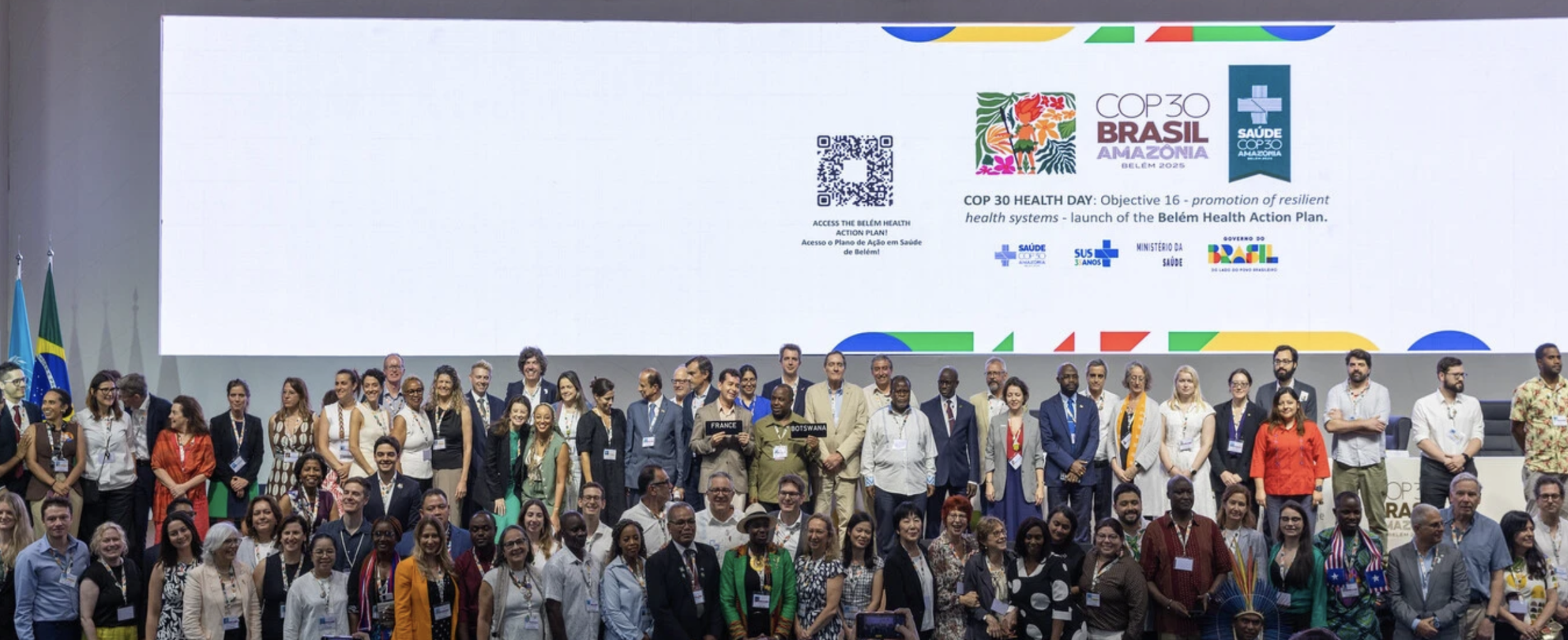
Belém Health Action Plan Launch - Family Photo
COP30 began to correct how Mental Health was included in the discussions. Through the Belém Health Action Plan (BHAP), Brazil’s COP30 presidency helped reframe the global climate–health agenda by asserting mental health as both a climate-impacted outcome and a core pillar of resilient health systems. While the Plan acknowledges persistent evidence gaps, geographic inequities, and the historical underintegration of mental health in climate strategies, it also sends a clear political signal: mental health can no longer remain peripheral to adaptation and resilience policies. Instead, it must be recognized as essential infrastructure for prevention, preparedness, and community-based recovery.
It is important to emphasize the important role of the COP30 Stag, led by Alessandro Massaza, Juliana Fleury and Marcio Gagliato, together with the Environment Working group, in this incidence to highlight mental health in the Belem Health Action Plan working together the WHO, GCHA and the Brazilian Ministry of Health. Also, the support of United for Global Mental Health together the COP30 Stag that commissioned the collection of case studies on how climate change is impacting mental health in two areas of Brazil: (i) among Indigenous communities living in the Tapajos region (work being led by the University of Parà), (ii) among people affected by the flooding in the Rio Grande do Sul region (work being led by Federal University of Rio Grande so Sul). These case studies were presented at a COP30 Event that was organized together with the University of Parà that took place in Belém during the first week of COP.
All these collective actions were able to influence the Belém Health Action Plan to position mental health not as an add-on, but as a structural pillar of climate adaptation, explicitly integrating Mental Health and Psychosocial Support (MHPSS) into national climate–health policies, emergency preparedness, health workforce training, and community resilience strategies. It recognizes that climate change is intensifying psychosocial distress—particularly among children, Indigenous peoples, workers, and other populations in vulnerable situations—and therefore calls for mental health systems capable of anticipating and responding to climate shocks, guaranteeing continuity of care, access to essential medicines, and the development of indicators to track climate-related mental health impacts. By embedding mental health within its cross-cutting principles of health equity, climate justice, and participatory governance, the Belém Plan elevates psychological well-being as both a public health imperative and a social justice priority, fundamental to building truly climate-resilient health systems in the lead-up to COP30 and beyond. Ale’s review was precise in evaluating how Mental Health was highlighted in the BHAP.
At the same time, the spirit of Bem Viver / Buen Vivir, was also incorporated with the emphasis on climate justice, health equity, social participation, territorial approaches, and the recognition of Indigenous and traditional knowledge as valid sources of evidence and action. The plans promote community-based and intercultural responses, especially for vulnerable populations, children, and Indigenous peoples, and highlight the need to integrate health, education, environment, and culture as part of a holistic response to the climate crisis.
This is a shift towards a civilizational response to climate change, where mental health is treated as critical resilience infrastructure and where principles aligned with Buen Vivir—such as collective care, harmony with territories, and intergenerational responsibility—become foundational to climate and health governance.
The Belém Health Action Plan (BHAP) represents a significant political and technical milestone in positioning health—particularly mental health and system resilience—within the global climate adaptation agenda. It has been endorsed by approximately 80 countries and 50 partner organizations, including WHO and PAHO, signalling broad normative support for its principles. However, this endorsement has not yet translated into strong formal political commitment: during COP30 negotiations, only around two dozen of the 195 parties provided official governmental endorsement, reflecting the continued gap between recognition and binding political alignment. Despite the participation of several high-income countries such as Japan, Canada and the UK, no direct governmental financing was secured for the Plan at this stage. Instead, the financial backbone of its early implementation has been provided by the Climate & Health Funders Coalition—a group of over 35 philanthropic organizations led by Wellcome—which committed a one-off US $300 million to accelerate climate-resilient health action, particularly in low- and middle-income countries.
From an implementation perspective, the BHAP seeks to embed health into national climate adaptation policies through three operational pillars: strengthening climate-informed epidemiological surveillance, building climate-resilient health infrastructure (including hospitals and supply chains), and preparing multidisciplinary emergency and community response teams, with explicit integration of Mental Health and Psychosocial Support (MHPSS). Endorsing countries are expected to report progress towards these actions by COP33 (2028), aligning with the Global Goal on Adaptation reporting framework. The current architecture—combining partial political endorsement, significant philanthropic financing, and an emerging monitoring and accountability mechanism—illustrates a hybrid model of global health governance, where philanthropic leadership is temporarily compensating for limited public financial commitment, while creating pressure and pathways for eventual governmental scaling and integration.
This is definitely a high priority that we must keep pushing, including the design of innovative financing mechanisms to bring governments and the private sector to this Mental Health Financing Agenda.
Another great collective movement was the Common Position of Latin America and the Caribbean on Climate Change and Health, promoted by Global Climate and Health Alliance and endorsed by over 100 organizations, including GMHAN, is also a north for the BHAP implementation. The document calls for placing health at the center of climate action, linking climate justice, social equity and resilient health systems. It highlights that the region, despite contributing little to global emissions, is already suffering major health impacts from climate change, including heat stress, infectious diseases, food insecurity and psychosocial distress. Mental health is recognized as a critical yet under-addressed impact, with rising anxiety, depression, trauma and suicide risk, particularly among children, Indigenous peoples and vulnerable communities, and the document urges its integration into national adaptation policies, surveillance systems and health workforce training. Its vision also enlightens the Buen vivir perspective and is reflected in the emphasis on territorial approaches, collective care, interculturality and harmony between people and nature. Children, adolescents and youth are acknowledged as highly affected populations, but their role remains mostly framed in terms of vulnerability, revealing a need to further strengthen their agency and participation in shaping climate and health governance. Endorse the Common Position.
From youth voices to youth infrastructure: Launching “What Does Peace Mean to You?”
On November 17th, at the COP30 WHO Pavilion, I had the opportunity to participate and join this collective call. Leveraging this #Mutirão spirit, we have launched a collective call to action in partnership with WHO Youth Council, Catalyst Now, Youth4Planet, Alliance for Youth Led Futures, Soulbeegood and global creative youth networks to launch at the WHO pavilion the campaign Peace and Health highlighting a single question “What Does Peace Mean to You?” — and launched this open call invitation for young people worldwide to express their vision of peace through art, storytelling, music, science and collective imagination. Because peace is not only the absence of war. In the age of climate crisis, peace is access to clean water, safe territories, stable ecosystems and mental wellbeing.
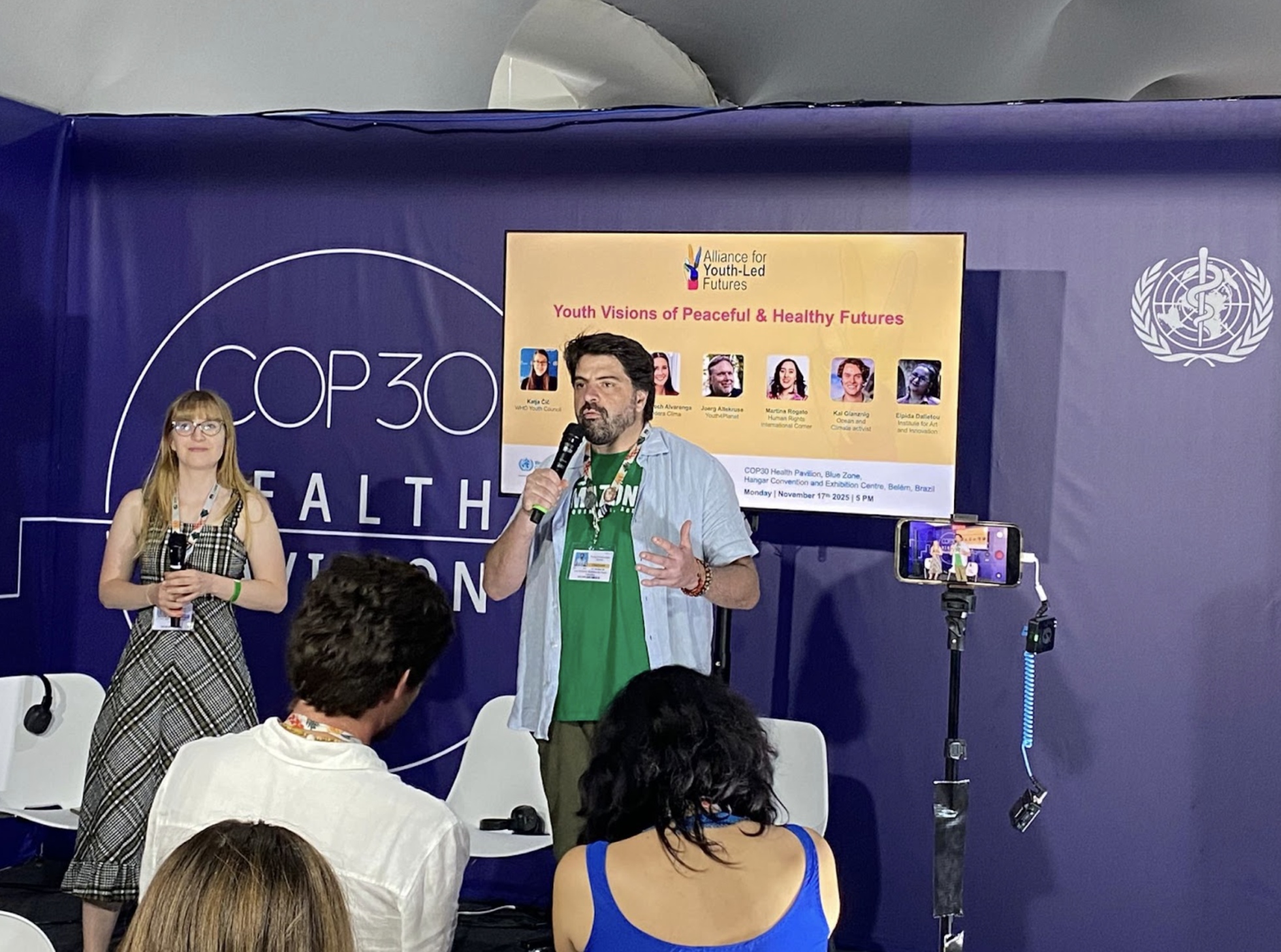
Launch of Peace and Health Youth Call & UN Youth Mental Health and Wellbeing Flagship at the WHO Pavilion
The campaign is now gathering youth voices across continents, bridging climate, health, creativity and civic participation. It represents a crucial step toward transforming youth engagement from protest into co-creation of future narratives and policy culture.
The UN Youth Office, Unicef, WHO and Unesco - Youth Mental Health and Wellbeing Flagship
Beyond the Alliance for Youth Led Futures Call I also presented the Youth Mental Health Flagship. During this year I was glad to contribute for the collective construction of the UN Youth Office’s Youth Mental Health & Well-Being Flagship Initiative positioning youth mental health as a human right and a systemic development priority, shifting the narrative from crisis response to collective resilience through an ecosystem approach centered on care, connection, community and intersectoral action (spanning education, climate, arts, governance, technology and livelihoods), and mobilizing youth-led networks through advocacy, convening and partnerships worldwide.
To leverage and complementing this Flagship, the inter-agency Joint Call by the UN Youth Office, WHO, UNICEF and UNESCO urges Member States and stakeholders to close structural policy and financing gaps by elevating child and youth mental health as a standalone global policy and investment priority, strengthening national strategies, ensuring meaningful youth participation, integrating mental health indicators into development monitoring systems, and scaling prevention-focused, community-based and school-based services through aligned governance and accountability mechanisms. Together, the Flagship provides the vision, architecture and mobilization platform, while the Joint Call defines the policy and investment roadmap needed to translate that vision into structural change and sustainable impact.
We hope that this initiative could gain traction in 2026 so we could aim for more specific member states endorsement, but also mobilize funding from philanthropy, governments and the private sector.
The #Mutirão Call for Youth Led Futures and Resilient Communities
We need to advance in the implementation Agenda. That is why COP30 also marked the launch of the #Mutirão, to encourage local and collective actions. At the COP30 Social Innovation House I could once again present the Resilient Communities approach, a High Impact Ecosystem for Regenerative Economy and Learning systems for action and engagement model that integrates mental health, climate resilience, and local empowerment through place-based, youth-centered #Colmeia (Hive) ecosystems. Each Colmeia functions as a living intergenerational platform connecting schools, health services, cultural spaces, and community leaders to co-create solutions for psychosocial care, climate adaptation, and sustainable livelihoods.
Rooted in the principles of Buen Vivir and Ubuntu, the initiative combines art, citizen science, digital tools, and community finance to strengthen belonging, resilience, and local agency in vulnerable territories. Youth are positioned not only as beneficiaries but as co-designers, communicators, and governance actors, supported by intergenerational leadership structures.
The project also develops and proposes an innovative financing and governance architecture, aligned with Child-Lens Investing, blending public, tax deduction mechanisms, philanthropic, and impact capital to scale locally anchored solutions with measurable social, psychological, and environmental outcomes. Through its Resilience Observatory, integrated to the Billion Minds Global structure to codesign the Bee-Metrics framework and communities measurement networks. The proposal suggests an implementation system that, based on academic support for evidence-based interventions, culturally adaption to create the infrastructure for local data generation, evaluating local gaps and needs in well-being, financing, connection, safety, and climate resilience, generating evidence for policy influence and investment mobilization in Brazil and across the Global South.
During these almost 2 weeks I was in Belém, we could connect with several initiatives from different countries to codesign proposals and partnerships for the #Mutirão to integrate the Resilient Communities and #Colmeia for Intergenerational and Collective convergence for a propositive agenda for 2026 connecting
Storytelling and Creativity, safe spaces and meaningful relationships
Comprehensive climate, emotional and environmental education
Community-based mental health and psychosocial support (MHPSS)
Citizen science and low-tech climate solutions
Living culture and ancestral knowledge
Youth civic media and educommunication.
The pilot implementation will start in February 2026 in 3 school communities from Porto Alegre - Rio Grande do Sul. We plan to expand this project in Schools in São Paulo and Belém, evaluating the implementation of the #Colmeia - Mental Health and Wellbeing Communities of Practice in vulnerable school communities in three different Biomes (Pampa, Mata Atlântica and Amazon and different Climate and mental health challenges conditions (floods, draughts, fires, air pollution, water, biodiversity). In these implementations we intend to work in this Agenda proposing some Languages reflections to break Mental Health stigma and reinforce the connection to ancient and traditional knowledges like Buen Vivir and Ubuntu by reflecting analogies from three topics from communities perspectives and relationships between:
Water (life, memory, territory)
Bees (cooperation, organisation, pollination)
Honey (collective knowledge, nourishment, future).
This model engages intergenerational meaningful relationships from:
Children (6–10) through play, ritual and imagination
Adolescents (11–17) through community mapping, investigation and civic voice
Young adults (18–24) through leadership, prototyping, community entrepreneurship and advocacy
Elders and ancestral guardians as holders of spiritual, ecological and cultural memory.
What we are proposing is not a project.
It is a living ecosystem based on traditional knowledge reconnection based on Buen Vivir and Ubuntu.
The real test: can we fund care?
COP30 changed discourse.
But discourse does not protect children from floods.
The real battle now is financing and implementation.
The world cannot continue investing trillions in fossil fuels while allocating only fractions to child-centred resilience, community mental health, and educational ecosystems.
Without structural financing mechanisms — such as Child-Lens Climate Funds, integration with Global Goal on Adaptation indicators, and alignment with MDBs, TFFF and multilateral platforms — COP30 risks becoming another beautifully worded but materially fragile milestone. The recently launched Child-Lens Investing (CLI) Fund, launched for Latin America by CAF and UNICEF, represents a major step in aligning climate finance with the rights and needs of children and youth. Designed as a blended-finance mechanism, the fund mobilizes concessional capital, first-loss guarantees, and performance-based instruments to attract larger public and private investments. It focuses on climate adaptation, education, water security, and especially mental health and psychosocial resilience as essential pillars of sustainable development. Together with tools such as social/climate bonds, budget tagging for children, and pay-for-impact models, the CLI Fund helps governments and partners channel climate finance directly into child-centred, community-based solutions that strengthen resilience where it matters most.
Children and youth do not need more speeches.
They need systems of care.
Mental health must be recognised as a public good of the climate transition — alongside water, energy, mobility and food.
From Belém to the world
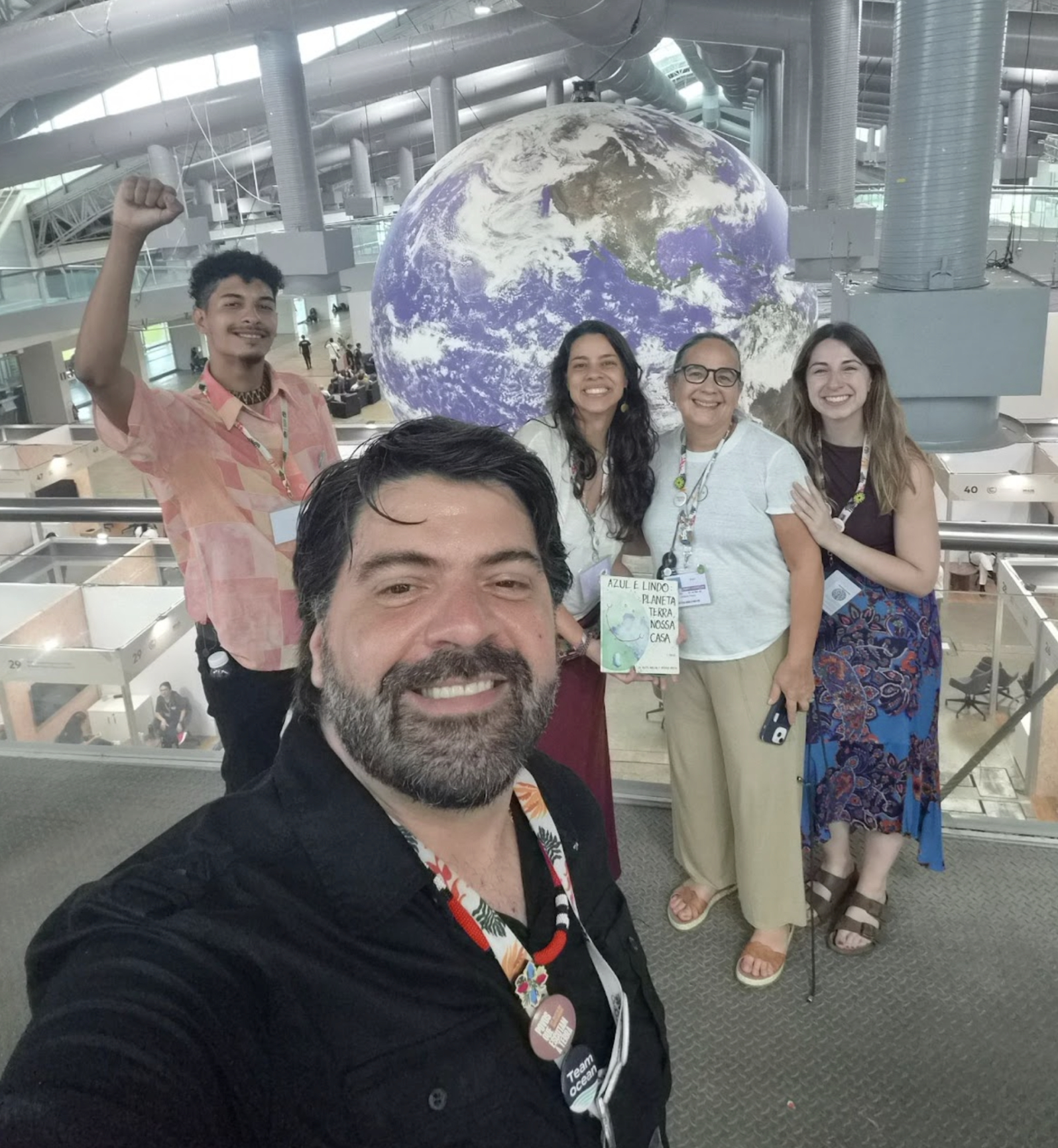
Together with Mental Health Advocates at the COP30 Globe
As someone living and working at the intersection of mental health, youth, climate and social innovation, I believe COP30 opened a door we cannot allow to close.
But doors do not stay open by themselves.
They are kept open by investment.
By governance.
By courage.
The COP30 delivered incremental progress, combining important but still insufficient steps for global health protection. While the conference launched the Belém Health Action Plan—the first international climate-adaptation plan centered on health, including mental health —and advanced discussions on a just transition and increased adaptation financing, but these commitments lack the implementation clarity, funding guarantees, and fossil-fuel phase-out obligations required to meaningfully safeguard vulnerable populations. We must keep pushing for concrete mechanisms, accelerated timelines, and substantial support for low- and middle-income countries, COP30’s outcomes risk remaining largely symbolic, leaving communities exposed to escalating climate-related health threats.
The children and youth of Belém did their part and were protagonists in building collective advocacy. But now the question remains:
Will global leaders be courageous enough to do theirs?