Unity. Hope. Possibility. A Reflection on the 4th Global Mental Health Advocacy Forum
By Tabitha Ellis
Global Mental Health Action Network, Global Health Advocate and Person with Lived Experience
Unity. Hope. Possibility.
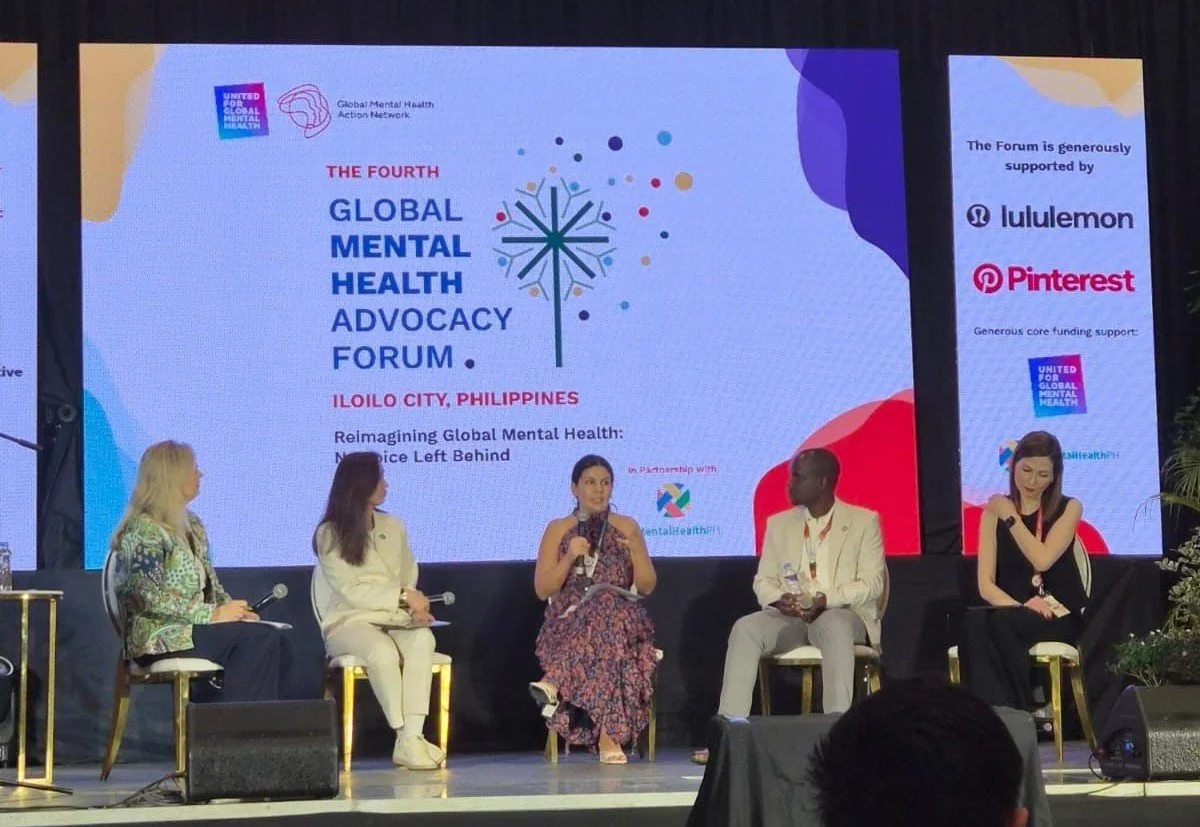
Three words echoed through the halls of the Convention Center during the 4th Global Mental Health Advocacy Forum in IloIlo City.
From February 2nd through the 4th, hundreds of participants gathered — policymakers, advocates, civil society leaders, researchers, and individuals with lived experience — to address some of the most pressing mental health challenges facing our global community. Yet what made this forum distinct was not simply the scale of participation. It was the shared recognition that global mental health reform has reached an inflection point.
Convened by United for Global Mental Health and the Global Mental Health Action Network, the Forum created more than space for dialogue. It fostered alignment — between lived experience and leadership, between political commitment and implementation, between aspiration and accountability.
In November 2025, the United Nations adopted a political declaration on non-communicable diseases that, for the first time, explicitly included mental health. This was not symbolic. It marked a structural shift in recognizing that mental and physical health are inseparable components of public health systems and economic stability.
Having personally been engaged in advocacy leading up to the UN High-Level Meeting, I felt the weight of that milestone deeply in IloIlo. The conversations were not abstract. They were informed by individuals who have lived within under-resourced systems, navigated stigma, and experienced firsthand the consequences of fragmented care. The forum reinforced an essential truth: policy must be informed by those it most directly impacts.
This work is not performative. For many of us, it is not a professional interest — it is a lived reality. And effective reform requires that lived expertise be embedded structurally into decision-making processes, not appended as a form of consultation.
As discussions progressed, one truth became impossible to ignore: recognition is not reform.
The inclusion of mental health in the United Nations political declaration is historic. But history will not measure us by what was written. It will measure us by what was implemented.
If we are serious about transforming mental health systems, we must be willing to be uncomfortable.
Real change lives just outside the environments we have always known. It asks institutions to question legacy structures. It asks governments to confront outdated and coercive models. It asks funders to move beyond short-term pilots toward sustained investment. It asks all of us to step beyond professional silos and into shared accountability.
Adaptable. Sustainable. Agile.
Those are not aspirational buzzwords. They are design requirements.
Mental health systems cannot be static. They must evolve with emerging research, demographic shifts, technological advancement, and lived experience. Policy should not be treated as a fixed endpoint, but as a living framework — responsive, evidence-informed, and continuously refined for the betterment of all citizens.
And as we push toward decriminalization of mental health conditions across legal systems, clarity becomes urgent. What is our standard of care? What outcomes define success? How do we ensure equitable access across geography, income, and identity? Reform without definition risks fragmentation. Reform with clarity builds momentum.
People invest in change when they believe in it.
They fund it.
They vote for it.
They advocate for it.
Belief is built through transparency, measurable goals, and communication that conveys both urgency and possibility. We must articulate not only the crisis but also the concrete solutions—and the societal return on investing in mental health as foundational infrastructure.
Leadership is not confined to title or office.
It belongs to those willing to create positive influence, build credibility, and mobilize action — in ministries, boardrooms, the community, organizations, research institutions, and digital spaces. Leadership is proximity. It is consistency. It is the courage to move conversations forward when it would be easier to remain silent. Leadership is influence that can multiply its investment in others because it is rooted in empathy, accountability, inclusivity, and authenticity.
We must listen widely — across sectors, across ideologies, across disciplines — while intentionally amplifying those too often excluded from policy formation. Inclusion is not, and cannot be, symbolic representation. It must be structural participation. It determines whose realities shape systems.
A question surfaced repeatedly during the forum: Where does change happen?
It happens at every level of connection.
In legislative reform.
In national budget allocations.
In workforce policies that embed mental health protections.
In community-based service models.
In public communications rooted in empathy rather than fear.
It happens in every handshake that builds a partnership.
In every meeting, someone chooses collaboration over division.
In every post, every speech, and every policy draft, where humanity is at its core.
Change does not wait for perfect consensus. It is created through consistent, courageous action.
So, this is our takeaway and call to action:
Move beyond declarations into disciplined implementation.
Define clear standards of care.
Align financing with commitment.
Decriminalize mental health conditions.
Build systems designed to evolve — not to calcify.
Communicate with clarity.
Measure with integrity.
Lead with dignity.
Unity. Hope. Possibility.
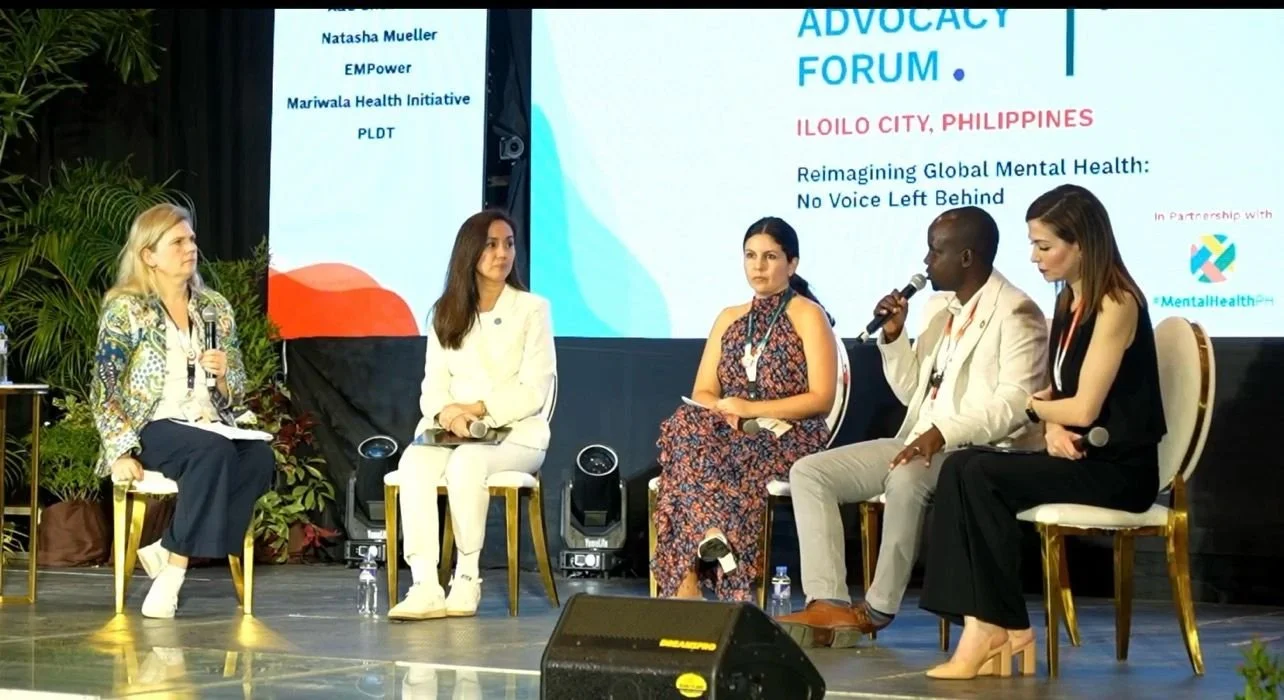
Those words filled the Convention Center during the 4th Global Mental Health Advocacy Forum.
Now they require something from us.
The opportunities are there. The question is not whether change is possible. The question is whether each of us is ready to put humanity at the forefront — above profit, above fear, above comfort.
Because the future of global mental health will not be shaped by declarations alone.
It will be shaped by individuals willing to act and LEAD.