How the UN system works for mental health
Demystifying what happens in the UN system and how to get involved
A guide for mental health advocatesWhy the UN matters for mental health
The United Nations can feel very distant from the daily work of mental health advocacy, whether this is running a peer support group, campaigning for a new mental health law or pressing a Ministry of Health to fund community services. But decisions taken in New York and Geneva shape the policies, budgets and priorities that governments bring home with them, and the commitments that Heads of State put their names to at the UN become tools that advocates can use, for years afterwards, to hold their own governments to account.
This guide is for mental health advocates who are new to the UN system, or who have attended a UN meeting and left unsure how all the pieces fit together. It explains how the system is organised, where decisions on mental health are made and when, how texts are negotiated, the different routes for getting involved (from those that need no accreditation at all to formal consultative status) and what to do when you are given the floor. It is also honest about the challenges, and it sets out how we at the Global Mental Health Action Network (GMHAN), hosted by United for Global Mental Health (UnitedGMH), support advocates to engage.
What engaging with the UN can offer
Taking part in UN processes offers mental health advocates several significant strategic and practical advantages.
It provides an unprecedented platform to put mental health at the heart of global agendas, and to drive transformative and progressive political and financial commitments from Heads of State and UN Member States.
It allows advocates to shape international policy directly, by contributing evidence, drafting specific text and presenting joint policy briefs to negotiating teams and to the central government ministries behind them, so that mental health priorities are written into the final texts rather than omitted.
It gives national advocates leverage at home, because agreements secured at UN High-Level Meetings can be used to apply pressure on governments and to advance domestic plans, policies and investment.
It brings experts by experience, young people and advocates from low- and middle-income countries (LMICs) into high-level discussions and, when done well, goes beyond symbolic representation so that diverse lived experience directly informs governance and strategy.
It helps test and drive the integration of mental health with physical health programmes (such as universal health coverage and emergency response) across the mandates of the different global health organisations.
It connects local advocates to a broader, coordinated global community of influence, where they can share tools, agree common messages and take part in global and regional policy dialogues.
So, the question for most advocates is less whether the UN matters to their work and more how, and when, to engage with it. The rest of this guide tries to answer this.
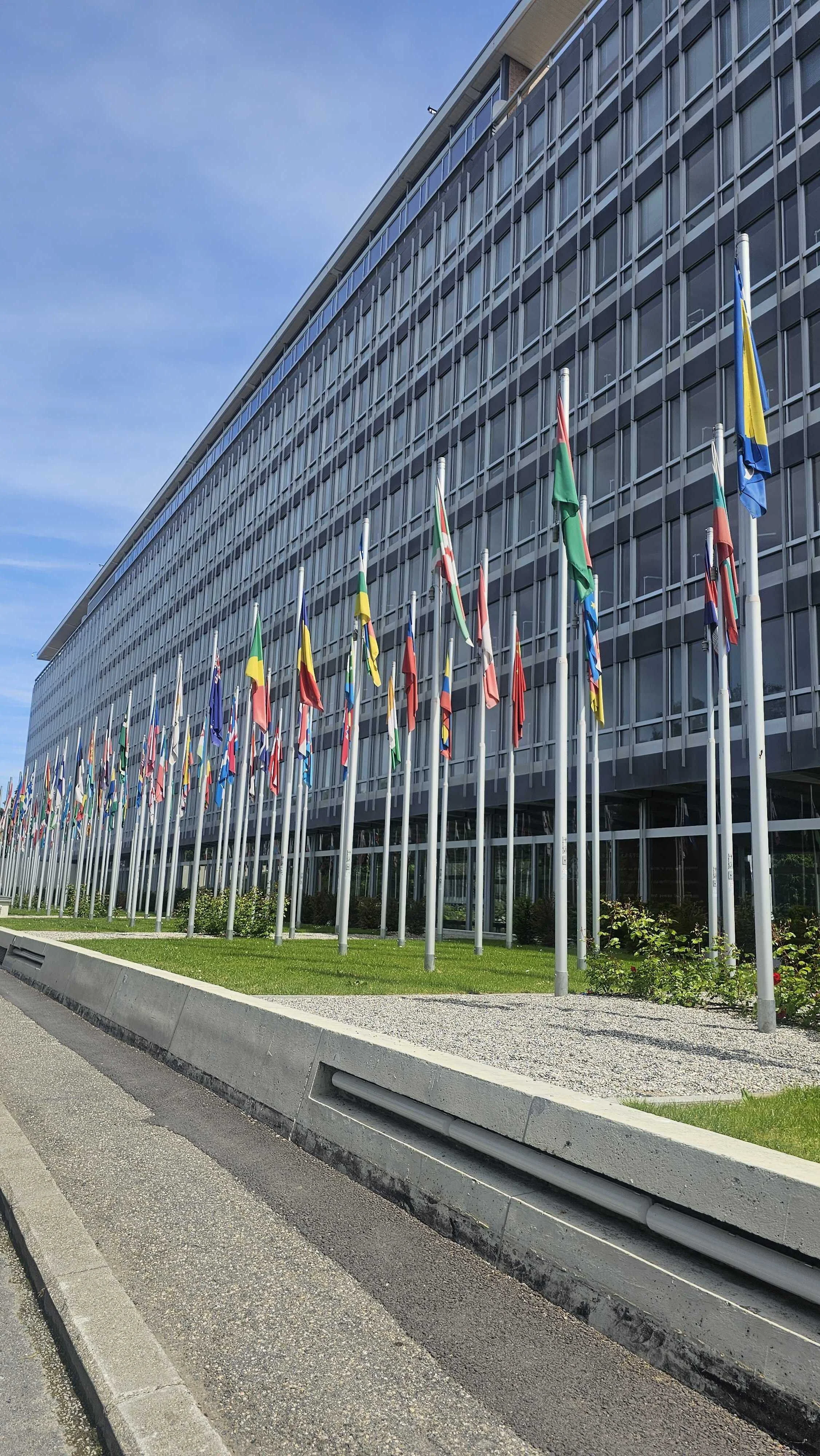
The UN and the UN system
What is the United Nations?
The United Nations is an international organisation founded in 1945, and it is currently made up of 193 Member States. The UN and its work are guided by the purposes and principles contained in its founding Charter, which also sets out how the organisation is structured (more on the UN is available here).
The Charter establishes six principal organs: the General Assembly, the Security Council, the Economic and Social Council (ECOSOC), the Trusteeship Council, the International Court of Justice and the Secretariat. Strictly speaking, the UN is these six organs plus the subsidiary bodies they have created over the decades, which includes the departments of the Secretariat, peace operations, the regional commissions, and the funds and programmes such as UNICEF, UNDP, UNFPA, UNEP and UN-Habitat, as well as entities such as UNHCR and UN Women, all of which were set up by the General Assembly.
The funds and programmes are financed through voluntary rather than assessed contributions. Assessed contributions are the dues that every Member State is obliged to pay under an agreed formula, whereas voluntary contributions are given by choice, and are often earmarked by donors for specific work.
Where power sits
The UN Secretary-General is the Chief Administrative Officer of the organisation and the independent head of the Secretariat. The Secretary-General is appointed by the General Assembly on the recommendation of the Security Council, and this means that the five permanent, veto-holding members of the Council (the P5: China, France, Russia, the United Kingdom and the United States) heavily influence who gets the job, as well as other top leadership appointments.
For mental health advocates, though, the Security Council plays almost no direct role. The decisions that matter for mental health are negotiated by Member States in the General Assembly and its committees, in ECOSOC and its commissions, in the Human Rights Council and in the governing bodies of the specialised agencies, above all the World Health Assembly.
Most General Assembly resolutions and high-level outcome documents are not legally binding. But governments negotiate them for months and put their names to them, the texts set global standards, and advocates can hold governments to the words they agreed. Also, the months of negotiation reveal how the positions of different countries are shifting. While the system is traditionally built on consensus and evidence-based decision-making, there is a growing tendency toward recorded voting (where each country's vote is formally registered and published), particularly in the current era of geopolitical friction
The UN system, inside and outside the UN
The United Nations is part of the wider UN system, which, in addition to the UN itself, comprises specialised agencies and related organisations, each with distinct areas of work, leadership and budget (see the UN system chart here). The specialised agencies are independent international organisations, set up by their own treaties and brought into relationship with the UN through formal agreements with ECOSOC, and they are funded by both voluntary and assessed contributions. The World Health Organization (WHO) is an example of a specialised agency, alongside, among others, the International Labour Organization (ILO), UNESCO and the Food and Agriculture Organization (FAO). Related organisations, such as the International Organization for Migration (IOM), have a looser relationship agreement with the UN.
This distinction is more than a technicality. WHO sits in the UN system but outside the UN itself, with its own membership, its own constitution and its own governing body, the World Health Assembly. So, the UN General Assembly cannot instruct WHO. A Political Declaration agreed in New York can only "request" or "invite" the WHO Director-General to act, and it is then for WHO's own Member States, meeting in Geneva, to decide how (and whether) to take this forward. This is why the World Health Assembly is the first real test of whether a UN commitment on mental health turns into concrete work.
The World Bank and the International Monetary Fund (IMF), known as the Bretton Woods institutions because they were created at a conference in Bretton Woods in 1944, are also specialised agencies and so part of the UN system, even though they often stress their independence from it. In simple terms, the same governments that sign UN health declarations also sit on the boards of the World Bank, and the World Bank and other Multilateral Development Banks (MDBs, the banks owned by groups of countries that lend to and invest in developing economies) are among the largest sources of development finance for health. This is why it is reasonable for advocates to ask them to invest in mental health.
Most organisations of the UN system coordinate through the UN System Chief Executives Board for Coordination (CEB), which the Secretary-General chairs. But the Secretary-General has no formal authority over the heads of the specialised agencies, who answer to their own governing bodies.
Organisations outside the UN system
Some organisations that work closely with the UN on global health sit outside the UN system altogether. The Global Fund to Fight AIDS, Tuberculosis and Malaria is an independent partnership, governed by its own board of donor and implementing governments, civil society, the private sector and affected communities. The UN Foundation is a charity based in the United States that supports UN causes and campaigns, and it is an important partner for many in global health, but it is not a UN body and does not speak for the UN. Both follow their own rules and decision-making processes, and it helps to know this before approaching them.
How does the UN operate?
The UN system works at three levels, and advocates can engage with each of them.
Global level. Centred on headquarters such as New York and Geneva, global structures focus on system-wide coordination, defining macro-strategies (the broad, long-term plans that guide the whole system, such as global action plans) and creating global public goods (things that benefit every country and that no single country can produce alone, such as tracking data and surveillance or treaties on pandemic preparedness).
Regional level. This is managed by regional bodies, such as the WHO Regional Committees. Because global multilateralism (countries working together through shared institutions) is experiencing fragmentation, power is shifting toward regional blocs, both within UN agencies and beyond the UN (for example, regional development banks). These groups increasingly bring country positions together, set region-specific priorities and allocate funding.
National level. Governments have the primary responsibility for achieving development targets. UN country teams, led by a Resident Coordinator, work directly with national ministries to build global targets into domestic budgets and programmes, and help deliver humanitarian response activities.
New York and Geneva
For mental health, most of the formal decision-making in the UN system happens in two cities. In New York, the UN General Assembly sets broad political direction, including through High-Level Meetings attended by Heads of State and Government. In Geneva, WHO's governing bodies turn this political direction into technical policy, budgets and monitoring, and the Human Rights Council, which also meets in Geneva, deals with the rights of people with mental health problems and psychosocial disabilities.
New York: the UN General Assembly
The UN General Assembly (UNGA) is the main policy-making and representative organ of the United Nations, comprising all 193 Member States, each with an equal vote. Meeting in New York, it acts as a kind of global parliament on broad social and development issues, which since 2015 have been framed around the Sustainable Development Goals (SDGs). It does not pass laws, but its resolutions set the political agenda that much of the rest of the system follows.
Each September, the UNGA opens its new session with a High-Level Week attended by Heads of State and Government and other global leaders. This is a major platform for building universal political momentum, and the days around it are crowded with side events (meetings organised alongside the official programme, often jointly by governments, UN agencies and civil society). Resolutions and outcome documents of the UNGA are legally non-binding, but they are negotiated over months, governments put their names to them, and the agreed wording becomes a reference point that advocates can quote back to their own governments for years.
Much of the Assembly's work is done in six Main Committees. The Third Committee, which deals with social, humanitarian and human rights issues, and the Second Committee, which deals with economic and development issues, are the most relevant to mental health, alongside the plenary sessions in which High-Level Meetings take place.
-
DescriHigh-Level Meetings (HLMs) are specialised summits convened during the UNGA to secure top-level political commitments on pressing global issues. In health, the General Assembly has held HLMs on HIV and AIDS, noncommunicable diseases (NCDs), universal health coverage (UHC), tuberculosis, antimicrobial resistance and pandemic prevention, preparedness and response.ption text goes here
-
Topics and themes are decided by Member States through formal General Assembly resolutions and "modalities resolutions" (the resolutions that set the date, format, participation rules and preparatory process for a specific meeting), which are passed months or years in advance. The choice of topic is often driven by the evolving global burden of disease or by pressing global crises, and by the countries willing to champion it.
-
Description text Commitments are formalised in a negotiated Political Declaration, approved by consensus or (if necessary) by a vote of UN Member States. Political Declarations usually ask the Secretary-General to report on progress ahead of the next meeting on the same topic, which creates a cycle of review every few years. It is challenging to measure the commitments made at HLMs, though, and progress may stall with a change of government in a Member State (a new government may not feel bound by its predecessor's promises etc). This is why the follow-up at the World Health Assembly, and at national level, matters so much.goes here
Geneva: the World Health Organization
WHO's decisions are made by its Member States through a cycle of governing body meetings that runs through the year, from the regions to Geneva. Understanding this sequence is perhaps the single most useful thing an advocate can learn about WHO, because by the time a proposal reaches the World Health Assembly in May, most of the important decisions about it have already been taken.
-
WHO has six regions (Africa, the Americas, South-East Asia, Europe, the Eastern Mediterranean and the Western Pacific), each with a Regional Committee made up of the health ministries of the countries in the region. The Regional Committees meet once a year, usually between August and October. They set regional priorities, adopt regional strategies and action plans (including on mental health), review progress, and increasingly shape the positions that countries in the region later take in Geneva. Non-State actors can take part and make statements, and some regions also have a procedure to accredit regional organisations that are not in official relations with WHO globally.
-
The WHO Executive Board (EB) is comprised of 34 technically qualified members, elected for three-year terms on a rotating regional basis. The main functions of the Board are to implement the decisions and policies of the World Health Assembly, and to advise and facilitate its work. It meets mainly in January or February, with a shorter session straight after the Assembly in May or June.
Because the EB prepares the agenda of the Assembly, its January meeting typically covers a broad agenda. Proposals are usually set before January, and the EB meeting is often the first opportunity for Member States to share their views on record. A range of other meetings between partners with an interest in this agenda also takes place around the EB, as civil society organisations, philanthropies, industry and other non-State groups seek to influence the agenda, deliberations and resolutions. This preparatory partnership work allows for more extensive discussion of issues before the Assembly, and it is seen as a useful way to build consensus in advance. The Programme, Budget and Administration Committee (PBAC), a smaller committee of the Board, meets ahead of both the EB and the Assembly to look at budget and financial matters.
-
DescrThe World Health Assembly (WHA) is the supreme decision-making and governing body of WHO, convening all 194 Member States each May in Geneva, Switzerland. As one of the only multilateral forums in global health, it ensures every country has a seat at the table and, at least in theory, a voice in discussions. The Assembly sets WHO priorities, adopts formal resolutions and decisions, approves the WHO budget, reviews country progress against global health action plans, and guides the strategic direction of the WHO Secretariat (the staff of WHO, led by the Director-General). The agenda for the WHA indicates the global health priorities of Member States, although in practice global health priorities are also explored in the meetings of other global health agencies (e.g. a meeting of the Global Fund board).
Formal action at the WHA tends to take the shape of a decision or a resolution, and resolutions are formal expressions of the opinion or will of Member States. Discussions on resolutions can begin weeks or months before the Assembly, and both the formal open meetings and the informal, closed-door negotiations and drafting groups of Member States can be important in shaping the outcome. WHA decisions and resolutions are not always legally binding, but they reflect political consensus and set precedents, and they carry political weight as agreed statements of policy that governments, political parties, industry and non-governmental organisations can all use at home.
The WHA acts as the first major testing ground for translating high-level political declarations, such as those of the UN General Assembly, into concrete implementation policies and operational mandates (the specific tasks WHO is formally asked to carry out). Member States use the Assembly to report on domestic targets, to debate issues such as health emergencies and health security (for example, the WHO Pandemic Agreement, adopted in 2025), and to agree the governing policies and funding of WHO.
At the WHA in May 2026, discussions focused on the future of the Global Health Architecture (the overall set of global health organisations, funds and partnerships, and how they are structured, governed and funded), health financing and contentious issues including health security. Mental health champions used the Assembly to ensure that the standalone mental health agenda item remained, which means annual reporting from WHO and Member States will continue through 2031, when the next UN High-Level Meeting on NCDs and mental health is due to be held.
Over the years, the number of countries speaking on mental health at the WHA has increased exponentially, from a handful to over a hundred. And the number of mental health side events has also increased, from one or two to ten or more, with a rise in Member States, civil society organisations and private sector actors wishing to discuss the issue.
From New York to Geneva, and back home
The two cities are linked. A Political Declaration agreed at the General Assembly usually asks WHO to support its implementation, and the WHA then decides what this means in practice, through resolutions, workplans and reporting. In turn, WHO's technical work and data feed into the progress reports of the Secretary-General ahead of the next HLM on the same topic. For mental health, this loop currently runs from the 2025 Political Declaration on NCDs and mental health, through annual reporting at the WHA, to the next HLM in 2031.
There is one practical consequence of this that many advocates miss, and it is well described by Eugene Chen in his primer on the UN system. The diplomats negotiating a General Assembly declaration in New York usually work for, and take instructions from, the Ministry of Foreign Affairs, while delegations to the World Health Assembly in Geneva are usually (but not always) led by the Ministry of Health. These teams often report to different parts of the national bureaucracy, and they do not always talk to each other. An advocate who only engages the Ministry of Health will miss half of the process. For any major UN health process, it pays to identify both the health official responsible in the Ministry of Health and the diplomat at your country's Permanent Mission (its embassy to the UN) in New York or Geneva, and to brief both of them.
The year at a glance
Most UN and WHO meetings follow a regular annual rhythm. Exact dates change from year to year and should always be checked on the official websites, but the pattern below holds, and knowing it allows advocates to plan months ahead rather than react to texts that are already close to agreement.
| When | Meeting or moment | Where | Why it matters for mental health |
|---|---|---|---|
| January to February | WHO Executive Board (preceded by its Programme, Budget and Administration Committee) | Geneva | Prepares the WHA agenda; often the first time Member States put their views on new proposals on record. |
| January and May | ECOSOC Committee on NGOs (regular and resumed sessions) | New York | Reviews applications for ECOSOC consultative status. |
| February | Commission for Social Development | New York | ECOSOC commission on social policy, including disability, ageing and youth. |
| February to April | Human Rights Council (first and longest of three annual sessions) | Geneva | The session at which the Council has usually adopted its resolutions on mental health and human rights. |
| March | Commission on the Status of Women (CSW) | New York | The largest annual UN gathering on gender equality, and an opening for women's and girls' mental health. |
| May | World Health Assembly, followed by a short Executive Board session | Geneva | Adopts resolutions and the WHO budget; hosts the annual mental health reporting. |
| June to July | Human Rights Council (second session) | Geneva | Resolutions, reports of Special Rapporteurs and adoption of UPR outcomes. |
| July | High-Level Political Forum on Sustainable Development (HLPF) | New York | Reviews progress on the SDGs, including SDG 3, through countries' Voluntary National Reviews. |
| August to October | WHO Regional Committees | Six regional venues | Set regional priorities and shape regional positions ahead of the EB and WHA. |
| September | UNGA High-Level Week, and High-Level Meetings when scheduled | New York | The main moment for political commitments by Heads of State and Government. |
| September to October | Human Rights Council (third session) | Geneva | Resolutions and reports, including on disability and health. |
High-Level Meetings follow their own, longer timetable. The modalities resolution is usually adopted around one year ahead, the multi-stakeholder hearing and the first draft of the Political Declaration usually come in the spring of the year of the meeting, and negotiations run through the summer.
So, a realistic plan for influencing a WHA resolution starts with the Regional Committees in the autumn of the previous year, continues through the Executive Board in January and the informal negotiations between February and May, and only ends with the Assembly itself. And a plan for influencing a High-Level Meeting starts as soon as the modalities resolution is adopted.
Our Advocacy Roadmap
GMHAN maintains an Advocacy Roadmap, which brings together in one calendar the global and regional moments of the coming year (and beyond) where mental health advocates can have influence, from WHO governing body meetings and Human Rights Council sessions to the UN General Assembly and upcoming High-Level Meetings. Our most recent Roadmap is always linked from our homepage, gmhan.org.
How a declaration or resolution gets made
UN texts are negotiated line by line by Member States, and the opportunities to influence them close one by one as negotiations move forward. The earlier an advocate gets involved, the more the text can still change. This section describes the two processes most relevant to mental health: the negotiation of a Political Declaration for a UN High-Level Meeting in New York, and the negotiation of a resolution at the World Health Assembly in Geneva.
A Political Declaration for a High-Level Meeting
The modalities resolution
The General Assembly adopts a resolution setting the date, format, panel themes, participation rules and preparatory process for the meeting. It is at this stage that Member States decide, among other things, whether civil society organisations without ECOSOC status can apply for special accreditation and how many speaking slots stakeholders will have.
Where you can step in: the earliest advocacy is with your own government and its Permanent Mission, on whether the meeting should cover your issue and on rules that allow meaningful civil society participation.
The appointment of co-facilitators
The President of the General Assembly (PGA) appoints two co-facilitators, usually the Permanent Representatives (ambassadors to the UN) of two countries, often one from a high-income and one from a low- or middle-income country, to lead the negotiations. The co-facilitators "hold the pen", which means they write and revise the drafts on the basis of what Member States tell them.
Where you can step in: the co-facilitators and their teams often meet civil society early in the process and accept written input, and a short, well-evidenced brief at this stage can influence the structure and emphasis of the first draft.
The multi-stakeholder hearing
A few months before the HLM, the PGA convenes an interactive multi-stakeholder hearing (MSH), which gathers insights from civil society, academics, parliamentarians, the private sector and affected communities. Organisations in consultative status with ECOSOC can register directly, while others need special accreditation, which usually covers both the hearing and the HLM itself. Speakers are selected in advance from applications, and speaking time is short.
Where you can step in: apply to speak, submit written input, attend, and bring local evidence on the determinants of mental health and on financing reform. The PGA usually produces a summary of the hearing, which is shared with Member States as an input to the negotiations.
The zero draft
The co-facilitators circulate a first draft of the declaration, known as the "zero draft", to all Member States. This is the text that every subsequent negotiation works from.
Where you can step in: compare the draft with your priorities, prepare specific language (with paragraph numbers) for additions and amendments, and send it to friendly delegations. Only Member States can propose amendments, so your language has to be adopted by a government to make it into the text.
Informal negotiations, or "readings"
Member States go through the text paragraph by paragraph in several rounds, proposing additions, deletions and alternative wording, often speaking for negotiating groups such as the European Union, the African Group, or the Group of 77 and China. The co-facilitators issue revised drafts after each round. Most of these sessions are closed to civil society, although some co-facilitators brief stakeholders as negotiations progress.
Where you can step in: work through capitals and missions. Ask your government what position it is taking on the paragraphs you care about, offer evidence on contested paragraphs, and coordinate with other advocates so that several countries from different regions support the same language.
The silence procedure
When the co-facilitators judge that a text is close to agreement, they place it "under silence" for a set period, often a day or two. If no Member State objects before the deadline, the text is considered agreed. If any Member State objects, the silence is "broken", and the co-facilitators either reopen negotiations or send the text forward without consensus.
Where you can step in: by this stage, the text is very unlikely to improve. Advocacy focuses on protecting the language that is already there, and on making sure that allies do not reopen or break silence over mental health paragraphs.
Adoption
The Political Declaration is usually adopted at the HLM itself, by consensus. If a Member State objects, the text can be referred back to the General Assembly for a recorded vote. This is what happened in 2025, when the Political Declaration on NCDs and mental health, due to be adopted by consensus at the HLM on 25 September, was instead adopted by the General Assembly on 15 December 2025 by 175 votes to two, with one abstention (A/RES/80/117).
Where you can step in: once adopted, the declaration becomes an advocacy tool. Publicise the commitments, translate them into national asks, and follow the progress reports that the Secretary-General prepares ahead of the next meeting
A resolution at the World Health Assembly
The process at WHO follows the annual cycle described in section 3. A Member State, or more often a group of Member States, proposes a draft resolution, usually in the months before the January Executive Board. The EB discusses the proposal and recommends a text to the Assembly, sometimes leaving outstanding issues for further negotiation. Member States then negotiate the text in informal consultations in Geneva, led by the sponsoring countries, often over many rounds between February and May. At the Assembly itself, items are discussed in Committee A (mostly programme and technical matters) and Committee B (mostly budget, management and legal matters), which agree resolutions and send them to the plenary for final adoption.
Where you can step in: engage the sponsoring countries and your own Ministry of Health early, use the Regional Committees in the autumn to build support among countries in your region, follow the EB debate in January (where positions first appear on record), and feed specific language into the informal consultations through friendly delegations. If your organisation is in official relations with WHO, or works with one that is, you can also make or join a statement at the EB and the WHA. WHO also runs regular consultations, many of them online, on draft strategies, guidance and reports, and these are open to a much wider range of organisations.
Consensus and voting
Both the General Assembly and the WHA traditionally aim for consensus, which means a text is agreed without a vote when no Member State formally objects. This tradition gives every country, however small, real leverage over the text, but it also means that a single country can delay or dilute it. Recorded votes, in which each Member State's vote is registered and published, have become more frequent in recent years. A vote does not make a text legally weaker, and it tells advocates exactly which governments stand behind a commitment, which is useful information for accountability at home.
Mental health at the UN General Assembly
Mental health has moved from the margins of global health politics to the centre of several UN processes in little more than a decade. Since 2018, UnitedGMH and GMHAN have worked to raise the profile of mental health at the UNGA through side events, and to advocate for action on mental health through the UN High-Level Meeting process. The milestones below show how far this has come.
2013 to 2015: the Action Plan and the SDGs
The 66th World Health Assembly adopted WHO's Comprehensive Mental Health Action Plan in 2013, and in 2015 the General Assembly adopted the 2030 Agenda for Sustainable Development. SDG target 3.4 commits countries to promote mental health and well-being, alongside reducing premature deaths from NCDs, with the suicide mortality rate as one of its indicators, while target 3.5 covers the prevention and treatment of substance use.
2018 UN High-Level Meeting on NCDs
The third HLM on NCDs brought mental health into the text of an NCD Political Declaration, and it was the moment UnitedGMH and GMHAN began their organised advocacy at UNGA.
2023 UN High-Level Meeting on UHC
This meeting resulted in a landmark Political Declaration containing a dedicated, standalone paragraph on mental health. In it, Member States committed to scale up measures to promote and improve mental health and well-being as an essential component of UHC, addressing the determinants and conditions influencing brain health, neurological conditions, "substance abuse" (the term used in the text) and suicide, with full respect for human rights.
2025 UN High-Level Meeting on NCDs and Mental Health
This session marked a rare and historic moment, in which mental health was placed on an equal footing with NCDs at the heart of a UN HLM. The process achieved significant normative advances (that is, it set new global standards), including a Political Declaration with concrete, measurable targets, among them 150 million more people with access to mental health care by 2030, and strong cross-regional endorsement.
However, the United States and Argentina declined to support the Political Declaration, due to points on gender equity, reproductive rights and international health governance. As a result, the declaration could not be adopted by consensus at the HLM in September 2025, and it was adopted instead by a recorded vote of the General Assembly in December 2025, with 175 Member States in favour, the United States and Argentina against, and Paraguay abstaining.
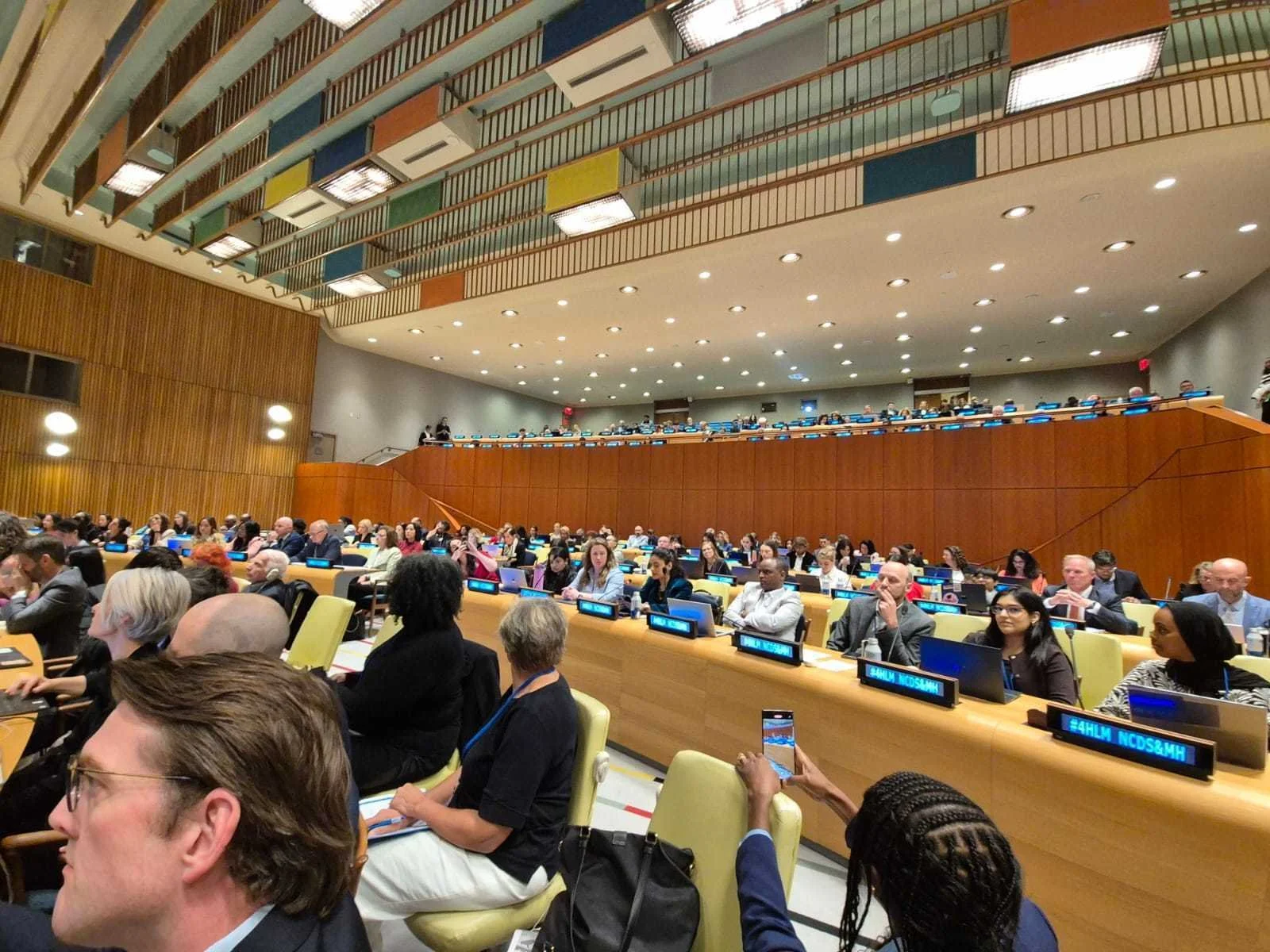
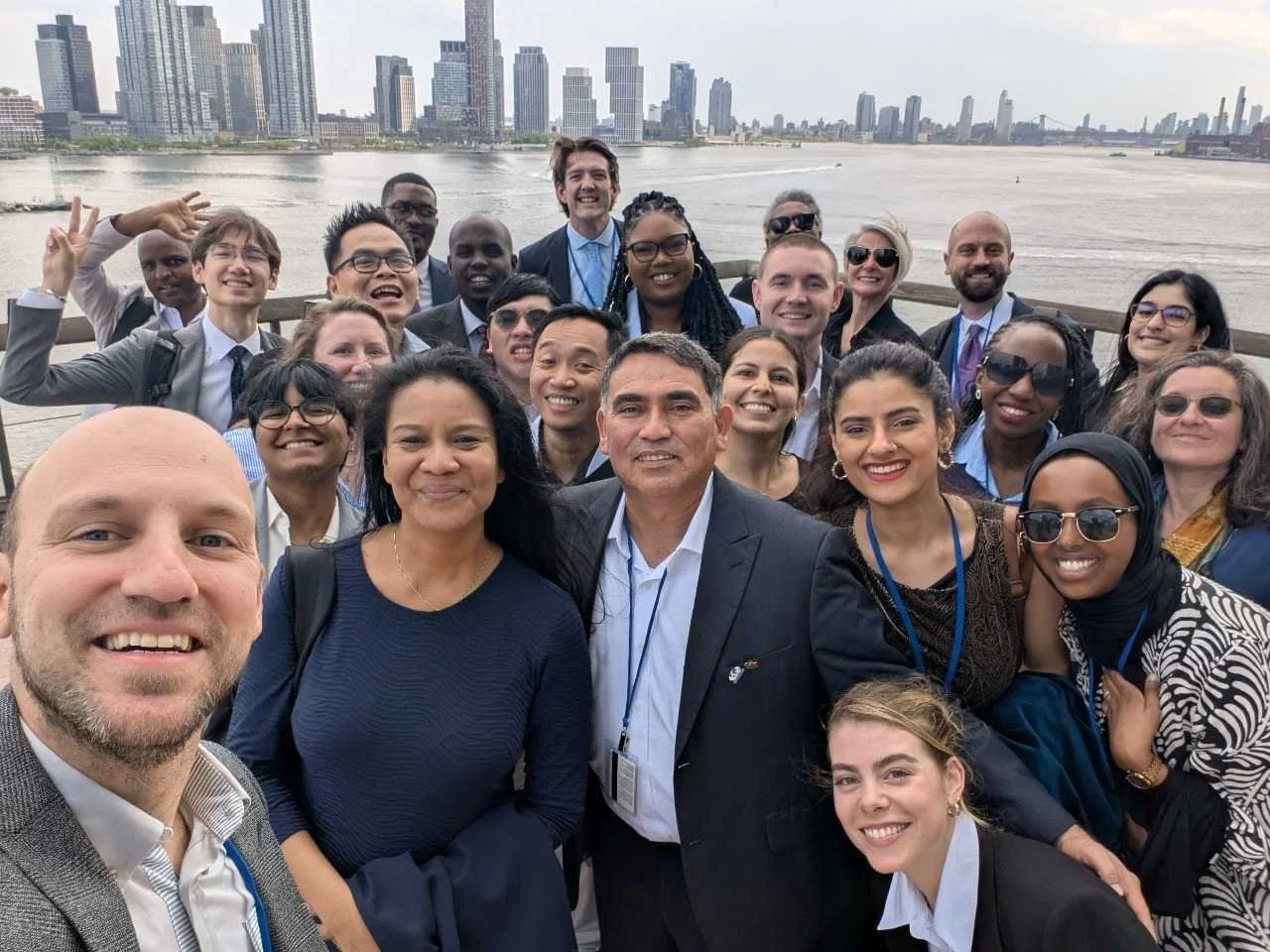
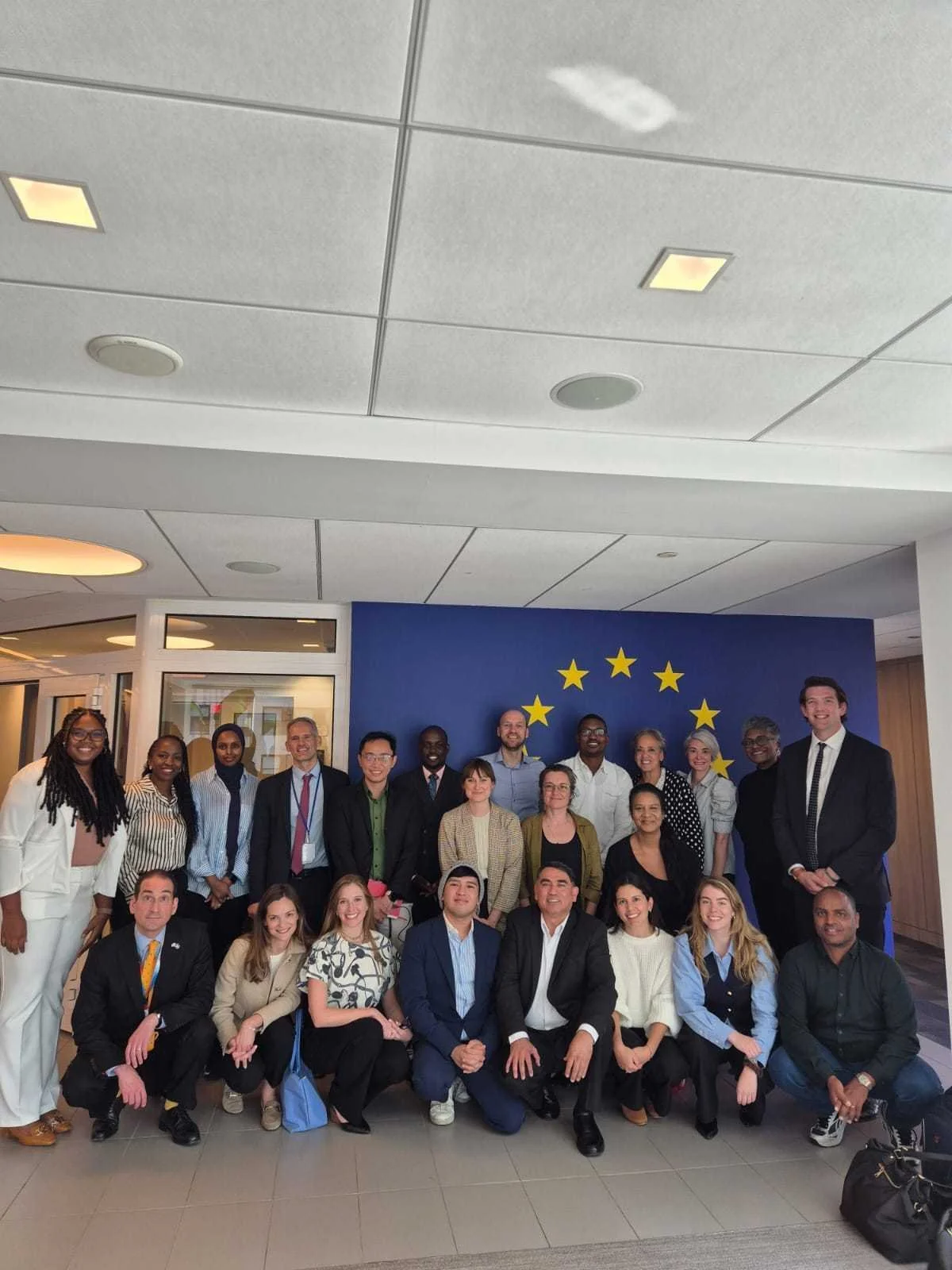
Case study: our community and the 2025 High-Level Meeting
On the road to the 2025 UN High-Level Meeting on NCDs and Mental Health, GMHAN convened a Short-Term Action Group (STAG), a task-and-finish group of 45 advocates, civil society representatives and people with lived experience from 36 countries and regions, which met at each milestone of the process and supported members who wanted to use the HLM to drive change nationally or internationally. Its members set their own priorities, both those specific to mental health (child and adolescent mental health, stigma and discrimination, suicide prevention including decriminalisation, and service reform including deinstitutionalisation) and those shared with NCDs, such as the social and commercial determinants of health, financing and governance, the health workforce and primary health care. Alongside the STAG, an HLM Mental Health Taskforce brought together international mental health organisations, with WHO and UNICEF as observers, and wider consultations with our membership fed into both.
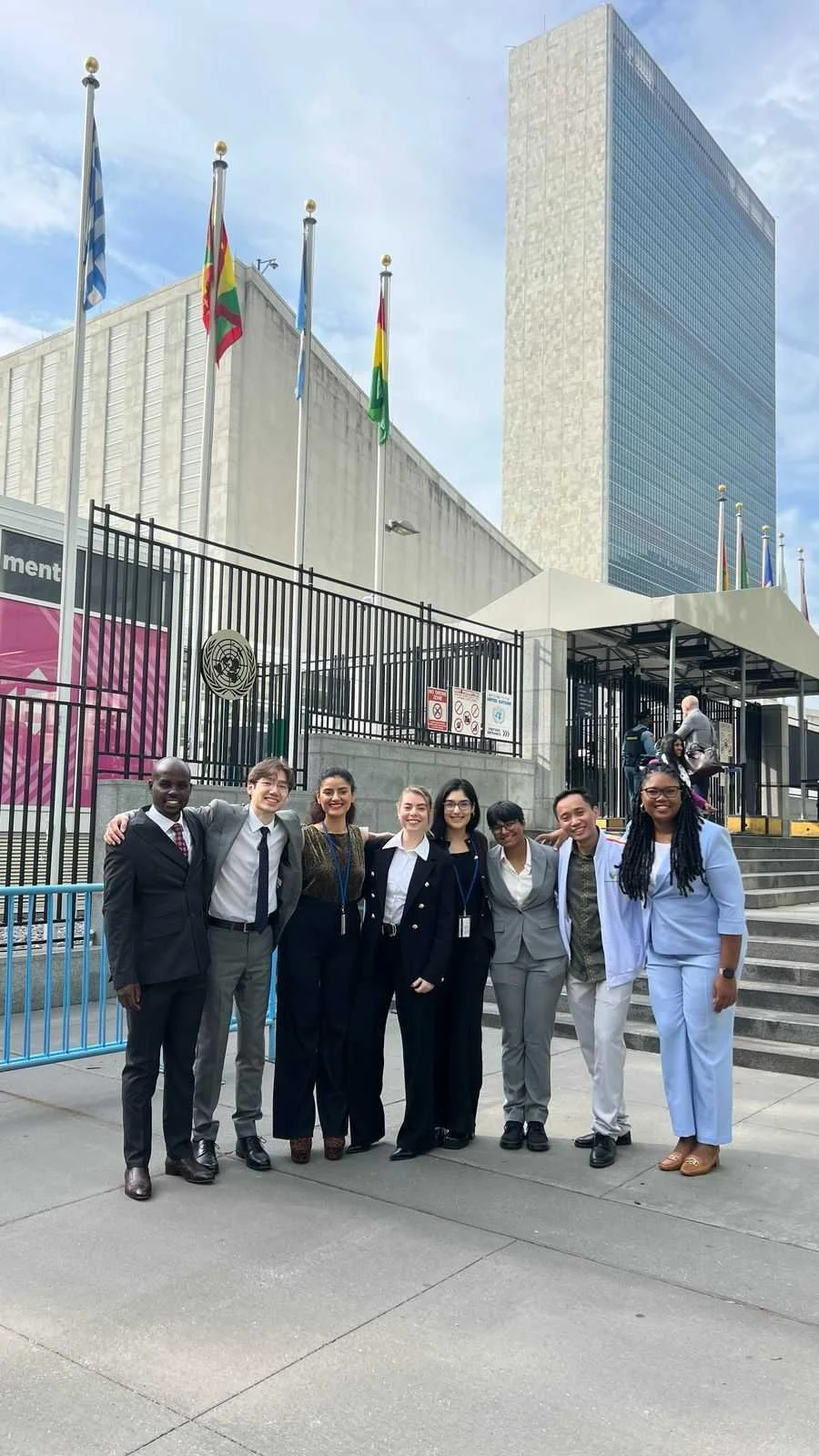
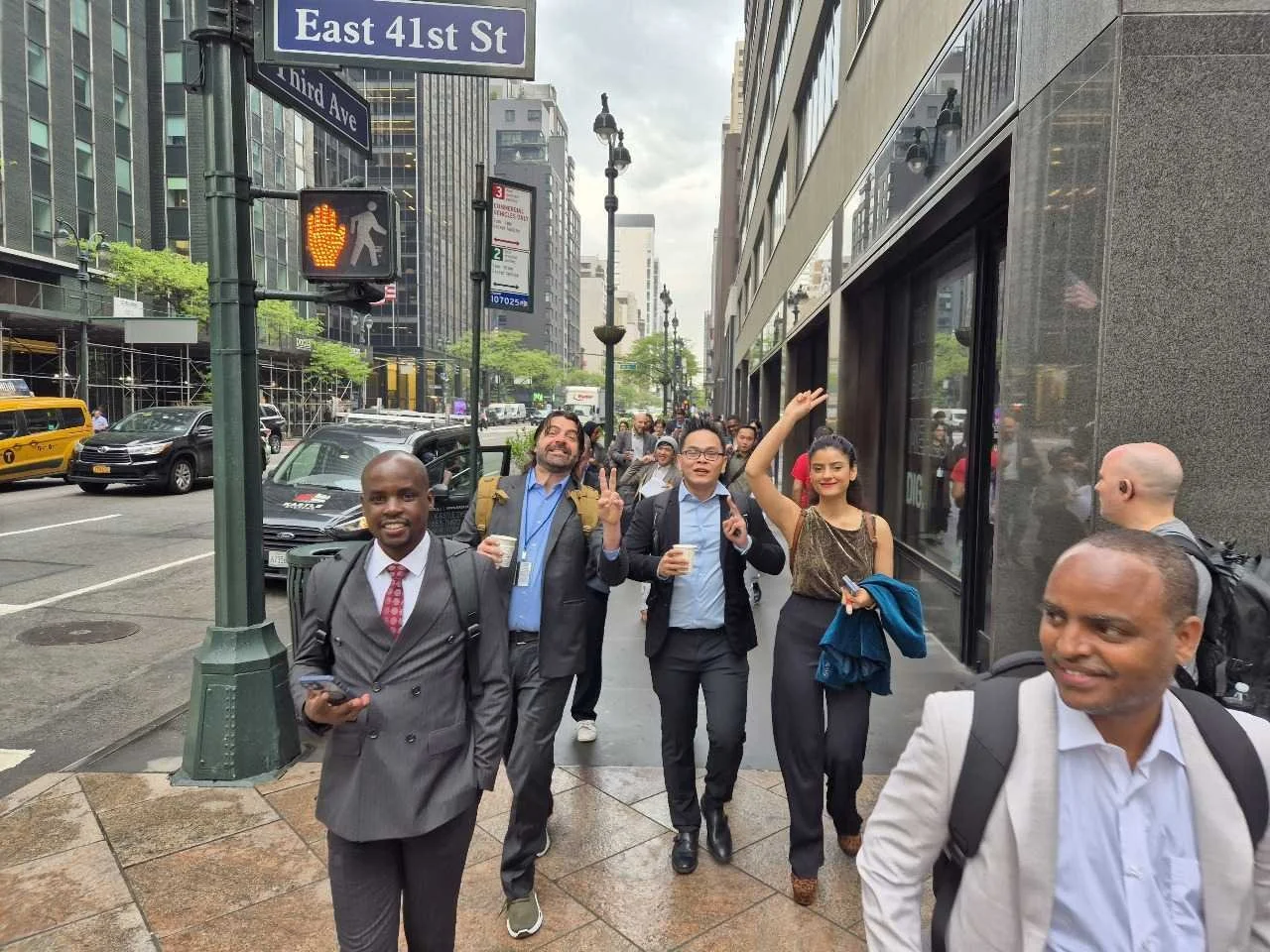
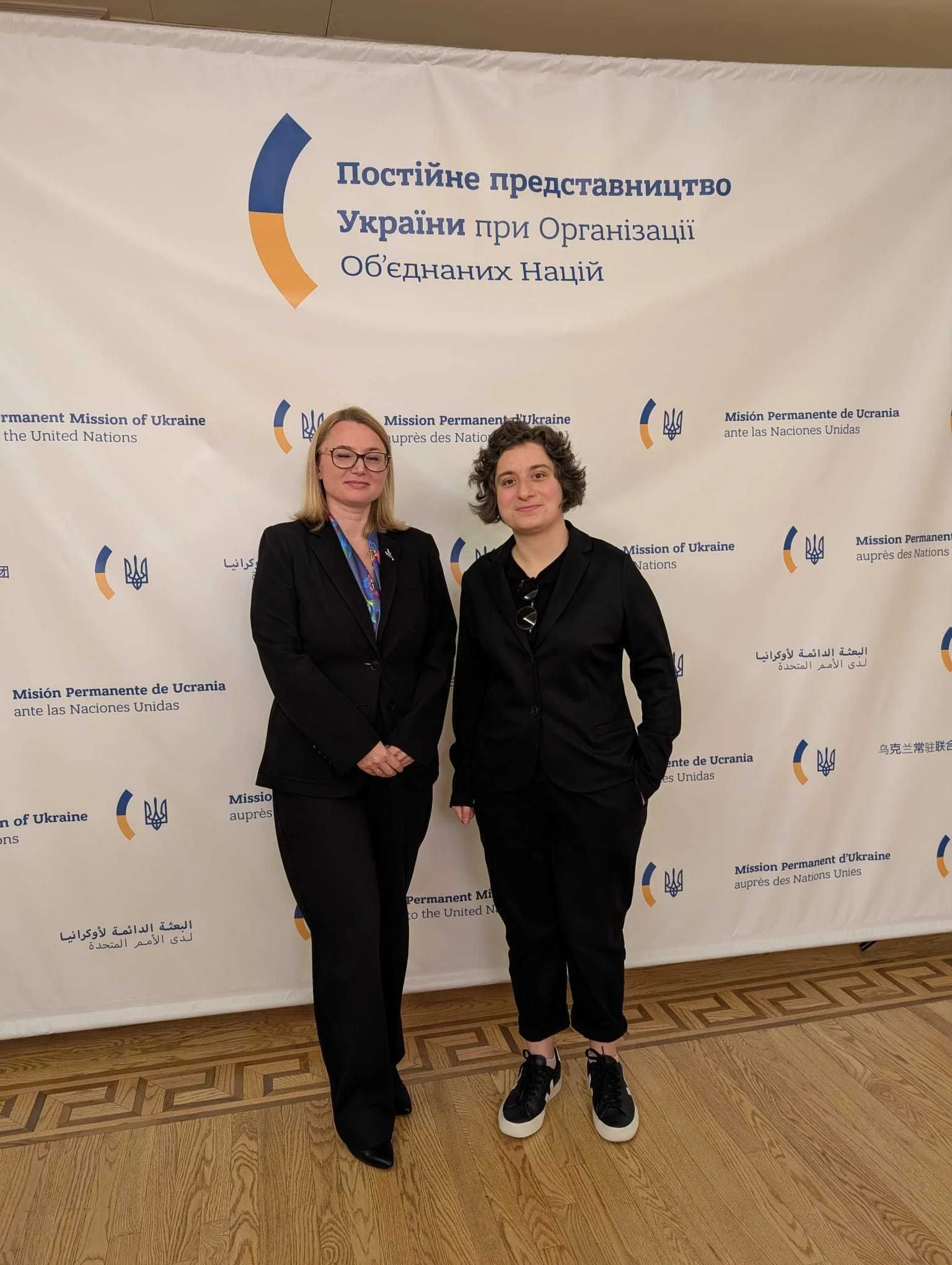
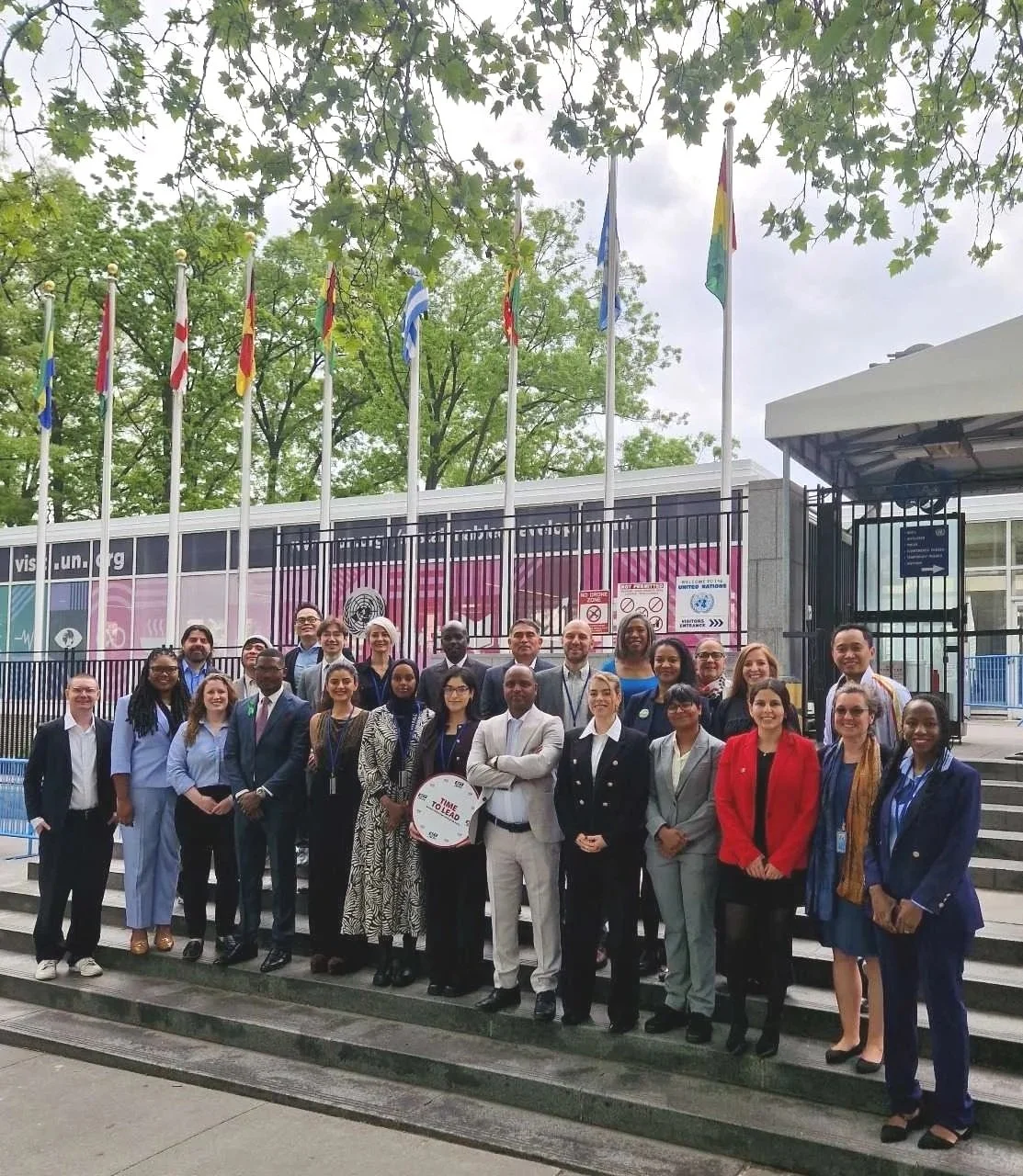
This work followed the negotiation cycle described earlier in this guide. A joint briefing on priorities for mental health, endorsed by the major international mental health organisations, was published in January 2025. In May, GMHAN brought a delegation of 40 advocates from 30 countries to New York, who held 23 meetings with Permanent Missions, took part in seven side events and made 14 interventions at the multi-stakeholder hearing, and later that same month, we published our response to the zero draft of the Political Declaration. More on this work, our resources and our impact is available on our website.
Who does what on mental health
WHO: leadership and technical standards
As the lead agency for health within the UN system, WHO sets global norms and standards on mental health. It developed the Comprehensive Mental Health Action Plan, which all WHO Member States agreed as the roadmap for improving mental health worldwide. The Plan was adopted by the 66th WHA in 2013, in response to the growing prevalence of mental health problems and the challenges health systems around the world have faced in responding to the needs of people with mental health problems. It was a landmark achievement that focused international attention on a long-neglected problem, and it is firmly rooted in the principles of human rights. In 2019, the 72nd WHA extended the Plan to 2030, to bring it in line with the 2030 Agenda for Sustainable Development, and in 2021 the 74th WHA endorsed updates to its targets and indicators.
WHO publishes monitoring tools, such as the WHO Mental Health Atlas, that track national, regional and global progress against the Plan, as well as technical guidance on areas such as community mental health services, mental health legislation and suicide prevention. It is also increasingly bringing civil society and people with lived experience directly into its policy development, and encouraging their involvement in country-level dialogue and decision-making on mental health.
While the Action Plan sets a number of specific and measurable global targets, mental health also needs to be part of many other global health conversations (for example on climate, health services, social policies etc). The characteristics and impacts of mental health problems mean that the mental health care system alone cannot solve all of the issues involved, and action across a big range of community and social policy areas is necessary.
Inter-agency and country-level delivery
Operationally, UN agencies coordinate at global and national levels to integrate mental health into their work. WHO traditionally coordinates inter-agency work on mental health and leads mental health activities with governments. In recent years, though, UNICEF has expanded its focus on child, adolescent and youth mental health, working directly with governments, UNFPA has done more to address the mental health of women and girls, and IOM has done more to address mental health in emergencies and among migrants.
Also, global health organisations have started to prioritise greater co-morbidity integration (treating mental health together with the physical health conditions that often occur alongside it). The Global Fund, for example, has been incorporating mental health services into HIV and TB programmes to improve outcomes at country level.
Mental health in emergencies
One means of reducing fragmentation in emergencies is the Inter-Agency Standing Committee (IASC), the forum of UN and non-UN humanitarian organisations, chaired by the UN Emergency Relief Coordinator, which coordinates humanitarian response. It has a reference group on mental health and psychosocial support (MHPSS, the term used in humanitarian settings for any support that protects or promotes psychosocial well-being or prevents or treats mental health problems), which works to improve coordination among the organisations delivering mental health support in emergencies.
At country level, a mental health and psychosocial support working group, linked to the humanitarian "clusters" (the groups of humanitarian organisations that coordinate each sector of an emergency response, such as health or protection), coordinates the work of the organisations delivering mental health support. It is led by WHO or another agency with the resources and technical knowledge to do so, usually co-led with the host government.
Gaps in the system
Mental health has traditionally received very limited international development assistance, and within WHO (and other agencies) it has a small budget and number of staff relative to other areas of work, and to population needs. Mental health activities have also been quite fragmented across the UN system, particularly during emergency responses at country level, which is why the coordination mechanisms above matter.
Human rights mechanisms
The UN human rights system, based in Geneva and supported by the Office of the UN High Commissioner for Human Rights (OHCHR), is one of the most important, and least used, routes for mental health advocates, particularly for organisations of people with lived experience and of persons with psychosocial disabilities. Several of its mechanisms are open to civil society without any accreditation at all.
The Human Rights Council
The Human Rights Council is made up of 47 Member States elected by the General Assembly, and it meets in three regular sessions each year in Geneva. It has adopted a series of resolutions on mental health and human rights, which call on countries to move toward community-based mental health services that respect the rights, will and preferences of people using them. Organisations with ECOSOC consultative status can make statements and hold side events at the Council.
Special Rapporteurs
Special Rapporteurs are independent experts appointed by the Human Rights Council to report on a theme or a country. The two most relevant to mental health are the Special Rapporteur on the right of everyone to the enjoyment of the highest attainable standard of physical and mental health, and the Special Rapporteur on the rights of persons with disabilities. In 2017, the then Special Rapporteur on the right to health, Dainius Pūras, used his report to the Council to call for a shift away from an over-reliance on the biomedical model and on coercion in mental health care. Special Rapporteurs regularly publish calls for input for their reports, and any organisation can respond.
The CRPD Committee
The Committee on the Rights of Persons with Disabilities is a body of 18 independent experts that monitors how countries implement the Convention on the Rights of Persons with Disabilities (CRPD). It reviews each country periodically, and civil society organisations, especially organisations of persons with disabilities, can submit alternative (or "shadow") reports and brief the Committee before a country is reviewed. The Committee's Guidelines on deinstitutionalization, including in emergencies (2022) explain what closing long-stay institutions and building community-based support means in practice, and they were developed through seven regional consultations with more than 500 persons with disabilities. They are the reference point whenever advocates ask governments to deinstitutionalise mental health care.
The Universal Periodic Review
Through the Universal Periodic Review (UPR), the human rights record of every UN Member State is reviewed by other states roughly every five years. Civil society organisations do not need ECOSOC status, or any previous experience of UN mechanisms, to send a written stakeholder submission, which OHCHR then summarises for the review. Individual submissions are limited to 2,815 words and joint submissions to 5,630 words, and they need to be sent several months before the review (guidance here). Only organisations with ECOSOC status can speak at the Human Rights Council when the outcome of a review is adopted. The UPR is one of the most accessible entry points available to a national organisation, because the recommendations that other countries make are public and governments are asked to report back on them at the next review.
Ways in
There are two broad ways for advocates to engage with the UN system, and most effective advocacy combines them.
Formal participation in UN proceedings, including delivering oral statements and submitting policy recommendations to Member State delegations. While this offers direct access to political leadership, it is highly regulated, with strict procedural rules and limited speaking opportunities.
Activities to influence Member States, including mobilising public support, coordinating side events during UN meetings and publishing independent reports. This allows for more flexible messaging, but it requires support from allied Member States to make sure advocates' priorities are reflected in discussions among governments and in the official negotiated texts.
The routes below are ordered as a ladder, starting with those open to any organisation and ending with formal status that can take years to obtain. Influence is possible at every step, and the first step is where most national advocacy actually happens.
Option one: routes that need no accreditation
Your own government is the most direct route into any UN process. Brief your Ministry of Health ahead of the Regional Committee, the Executive Board and the WHA, and your Ministry of Foreign Affairs and Permanent Mission ahead of General Assembly negotiations. Ask what positions they are taking, offer evidence and specific text, and ask to be included in national pre-consultations. Some countries include civil society representatives in their official delegations, and it is worth asking whether yours does.
Many governments run national consultations with civil society ahead of High-Level Meetings, before presenting a Voluntary National Review at the HLPF, and before their UPR. These are often advertised only briefly, so it helps to ask the relevant ministry to add your organisation to its mailing list.
Targeted civil society surveys are global surveys organised by different UN agencies to gather feedback directly. These are opportunities to contribute but, given the volume of data often submitted, the use of the information provided may be limited.
WHO public consultations and calls for input on draft strategies, guidance and reports are open to any organisation, and they are announced on the WHO website.
The human rights mechanisms described in section 7 (UPR stakeholder submissions, alternative reports to the CRPD Committee and calls for input from Special Rapporteurs) need no accreditation.
Side events organised outside the official venue, and online events, can be organised or joined by anyone, and the better ones attract delegates and UN staff.
Networks such as GMHAN allow organisations to pool evidence, contribute to joint briefs and statements, and reach the UN floor through members and partners with formal status.
Option two: WHO's civil society and youth mechanisms
WHO Civil Society Commission
The WHO Civil Society Commission (CSC) is a WHO-hosted network, launched in August 2023, that aims to optimise and systematise civil society engagement with WHO at global, regional and national levels. It has a WHO Secretariat, which organises consultations and briefing meetings for civil society on behalf of WHO in consultation with Commission members, a Steering Committee of up to 25 members chaired by WHO alongside two civil society Co-Chairs, thematic Working Groups, and an Annual General Meeting open to all participants. The Commission is an advisory and collaborative mechanism rather than a decision-making body, and its members do not speak on behalf of WHO.
Admission is open to non-governmental organisations, including community, faith-based and patient organisations, professional associations and networks, subject to a formal WHO due diligence process and conformity with WHO's Framework of Engagement with Non-State Actors (FENSA, the rules that govern WHO's relationships with civil society, the private sector, philanthropic foundations and academia). Individuals cannot apply in a personal capacity. Its priorities have included strengthening WHO and civil society engagement, social participation in health, country and regional engagement, sustainable health financing and youth engagement (more here). The Commission is distinct from the CSO and WHO Director-General Dialogues, which are a separate mechanism for direct exchange between civil society and the Director-General.
WHO Youth Council
The WHO Youth Council is a network that amplifies the voices and experiences of young people, and draws on their expertise, energy and ideas to promote public health. It has a WHO Secretariat, which works with members of the Council to organise meetings on youth-related issues (more here). They open up applications to join every two years.
GMHAN and the WHO Youth Council
GMHAN was approved as a member of the WHO Youth Council in 2026. Young advocates who want to help support this work can join our network and engage with the Co-Chairs of our Child and Youth Working Group.
Working with organisations in official relations
Organisations that are not in official relations with WHO can still have their evidence heard at the EB and WHA by working with organisations that are, for example by contributing to the constituency statements that only organisations in official relations can join.
Option three: accreditation for a specific meeting
Special accreditation for High-Level Meetings
When the modalities resolution for an HLM allows it, organisations without ECOSOC status can apply for special accreditation to attend the meeting and its multi-stakeholder hearing. Applications are made through the UN, and the list of proposed organisations is shared with Member States, which can object to individual names. One accreditation usually covers both the hearing and the meeting, and the deadlines tend to fall several months before the HLM.
Multi-stakeholder hearings
Multi-stakeholder hearings (MSHs) are panels that precede HLMs and gather insights from civil society and academic experts. In the lead-up to any HLM, these hearings offer a vital forum for advocates to present local evidence, e.g. on the determinants of health and on financing reform.
WHO Regional Committees
Some WHO regions have their own procedure for accrediting regional non-State actors that are not in official relations with WHO globally, which allows them to attend and make statements at the Regional Committee.
Option four: standing accreditation
Civil society organisations that want to take part in formal UN sessions in their own right need to use one of two established accreditation frameworks.
ECOSOC consultative status
What it is
A formal recognition granted by the UN Economic and Social Council (ECOSOC) to non-governmental organisations, on the recommendation of its Committee on NGOs, a body of 19 Member States that meets twice a year. The relationship is governed by ECOSOC resolution 1996/31, and more than 6,000 NGOs currently hold this status. There are three categories: general status, reserved for large international NGOs working across most of ECOSOC's agenda; special status, for NGOs with particular competence in a few of its areas; and roster status, for organisations that can make occasional, more technical contributions.
What it gives access to
Accredited organisations can attend ECOSOC and its subsidiary bodies, the Human Rights Council and other UN human rights mechanisms, many UN conferences, and special events organised by the President of the General Assembly. They receive grounds passes for UN premises, and organisations with general or special status can submit written statements and, where the rules of a meeting allow, make oral interventions, while organisations with general status can also propose items for ECOSOC's agenda. ECOSOC status does not give automatic access to every meeting of the General Assembly, because each HLM sets its own participation rules in its modalities resolution. But it typically allows organisations to register for summits without applying for special accreditation, although specific multi-stakeholder hearings may occasionally relax these requirements for everyone.
Who can get it
Registered NGOs that have been officially in existence for at least two years, whose work is relevant to the UN agenda, and which have a democratically adopted constitution and democratic, accountable governance structures. Applications are made online (more here). The process can be slow: the Committee on NGOs frequently defers applications by asking further questions, sometimes for several years, and deferrals can be political. Organisations with general or special status also have to submit a report on their activities every four years (the quadrennial report).
Non-State actors in official relations with WHO
What it is
A specialised status for international civil society networks, such as the World Federation for Mental Health, conferred by the WHO Executive Board under FENSA. It is based on a three-year plan of collaboration agreed with WHO, which the Board reviews every three years.
What it gives access to
Non-State actors (NSAs) in official relations can send delegations to the WHA, the Executive Board and the Regional Committees, deliver individual statements or join constituency statements, and propose side events. This provides a direct mechanism to influence health resolutions and technical standards through formal statements.
Who can get it
International or regional organisations with a structured membership and a demonstrated history of technical collaboration with WHO, usually at least two years of systematic engagement, that pass WHO's due diligence under FENSA.
Speaking at UN meetings
Speaking time at UN meetings varies with the forum. Individual statements at WHO governing bodies can be as short as one minute, while multi-stakeholder hearings and panels usually allow two or three. It helps to prepare a two-minute statement as your default, with a 90-second version that you know you can fall back on if the Chair asks speakers to shorten. Two minutes is roughly 260 to 300 words read at a pace interpreters can follow.
What has worked for mental health advocates
Mental health advocates can make statements to Member States following three broad approaches:
led with lived experience;
led with evidence and policy;
led with the authority of their organisation or profession.
The statements that delegates are most likely to remember combined all three: a personal or local experience, one or two numbers showing that this experience is far from unique, and a short set of clear asks.
The strongest asks are specific, addressed to Member States and carry a mechanism or a number. Statements that describe the problem vividly but end without an ask, or with a general appeal to “integrate mental health into everything”, are harder for delegates to act on.
A structure for two minutes
The Chair and who you are (about 10 seconds). “Thank you, Chair” is enough protocol. Then give your name, your organisation, your country and any network you belong to.
What only you can bring (about 40 seconds). This is a personal experience, a scene from your work or a fact about your place. Make it concrete and specific, and connect it to the system: what the service, the law or the insurance scheme did or failed to do.
The evidence (about 20 seconds). One or two numbers, with their source, that show your experience is far from an exception.
The asks (about 40 seconds). Two to four, numbered, addressed to Member States, each with an action and ideally a target or mechanism. Where a draft text is under negotiation, link each ask to the paragraph it would change.
The close (about 10 seconds). One line that returns to your opening, and then “Thank you.”
Before you speak
Read the statement aloud with a timer at least twice, at the pace you will use in the room. Speakers almost always read faster under pressure, which loses interpreters and delegates alike. Upload or send the written version in advance where the organisers allow it, so that your asks survive even if your time is cut.
If you are sharing lived experience, decide in advance, ideally with someone you trust, what you will and will not say. A statement can be powerful without disclosing anything you would rather keep private.
Statements at the 2025 multi-stakeholder hearing
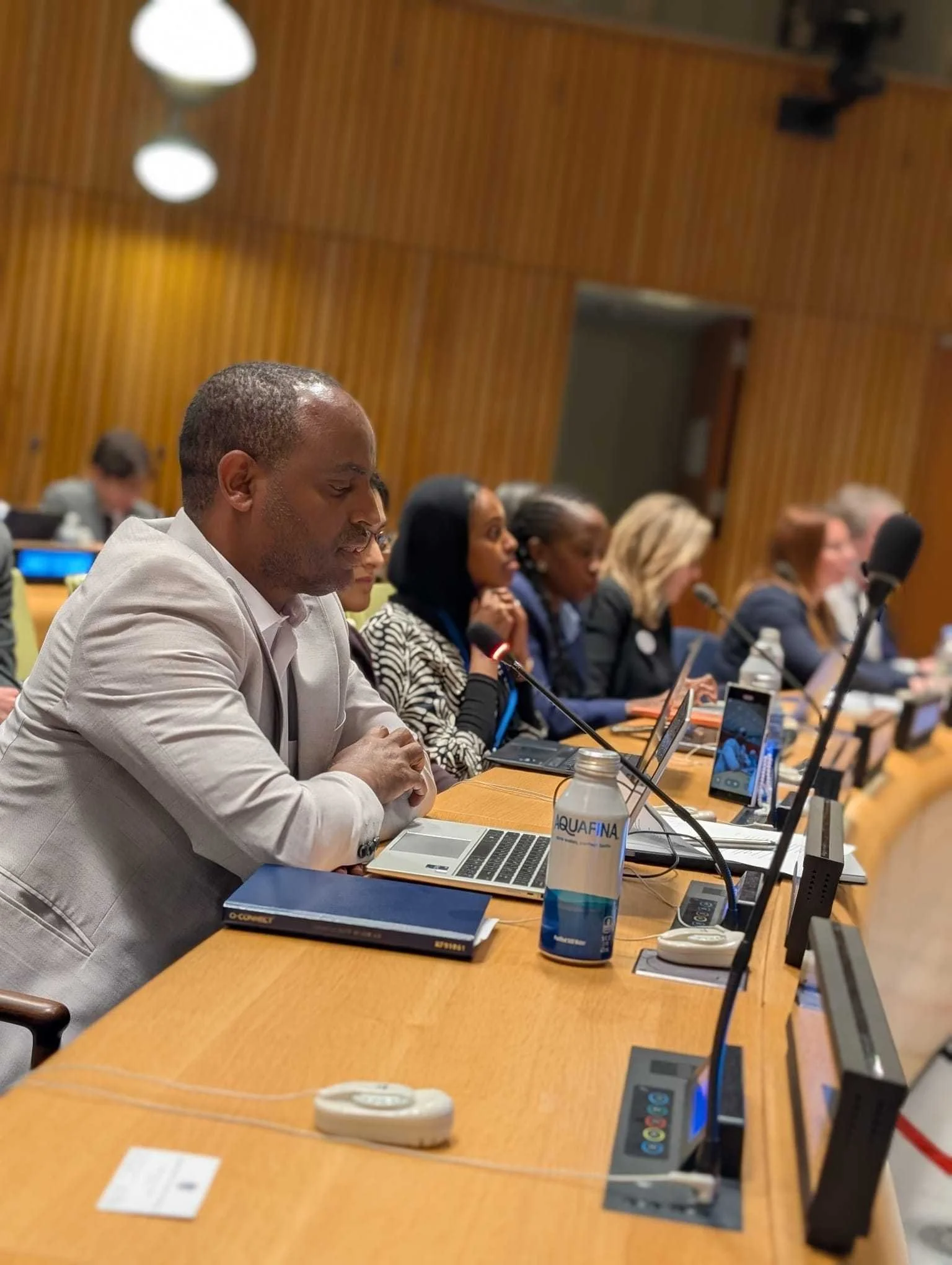
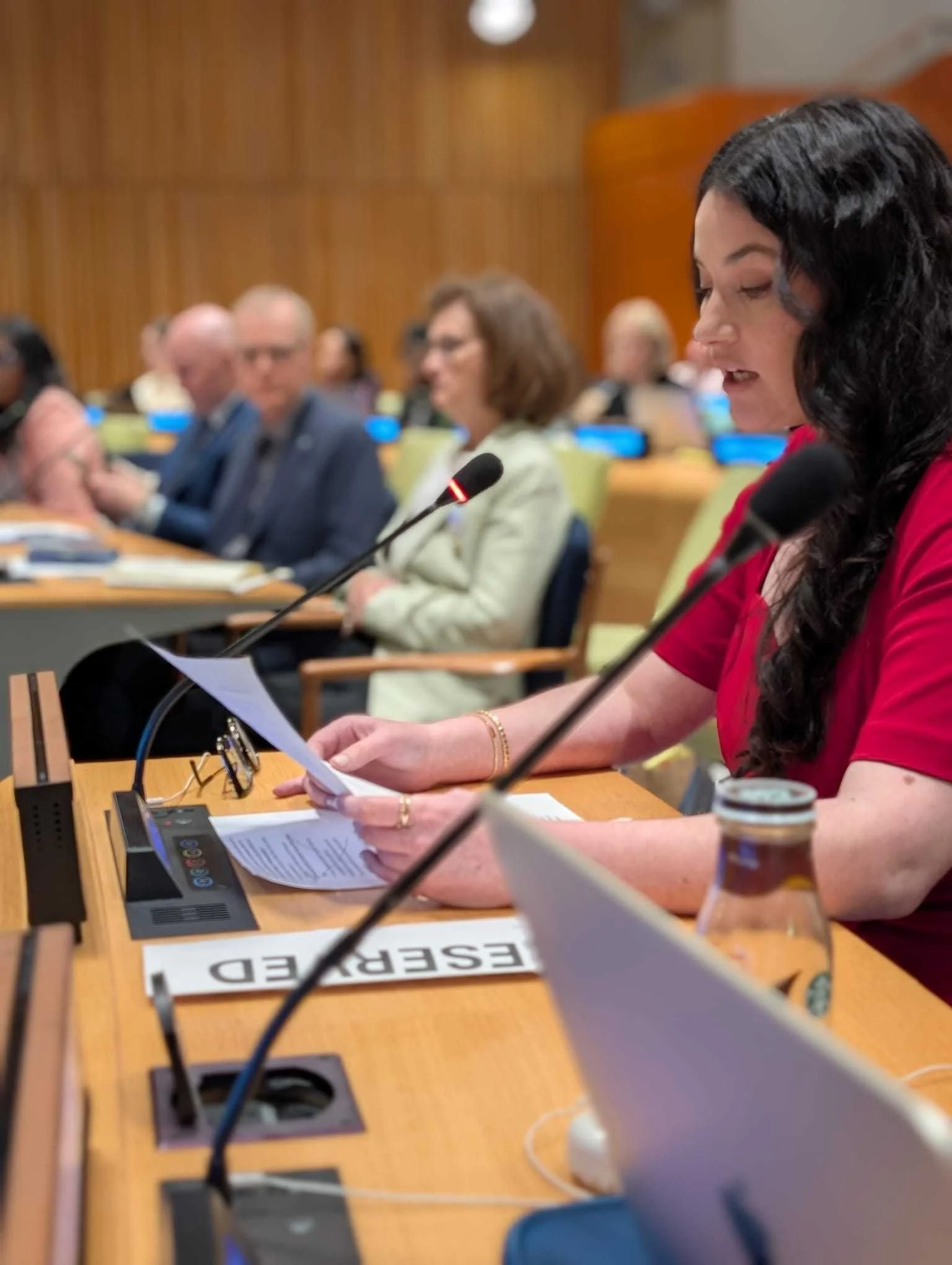
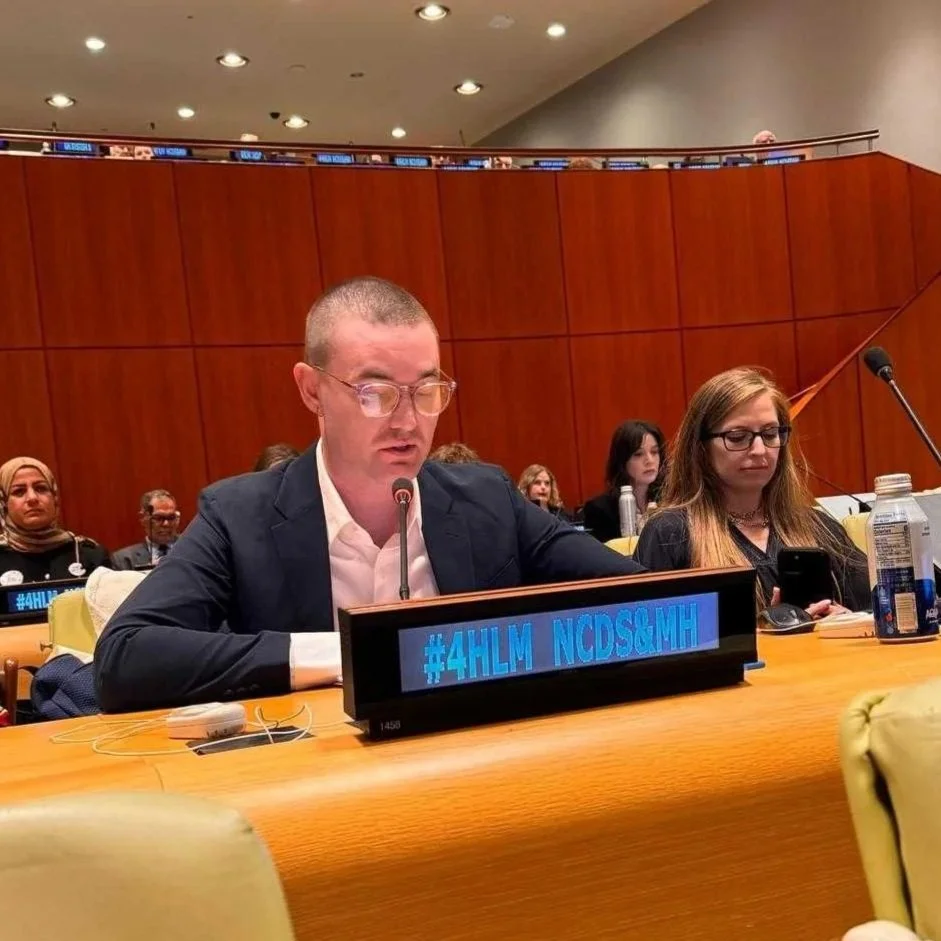
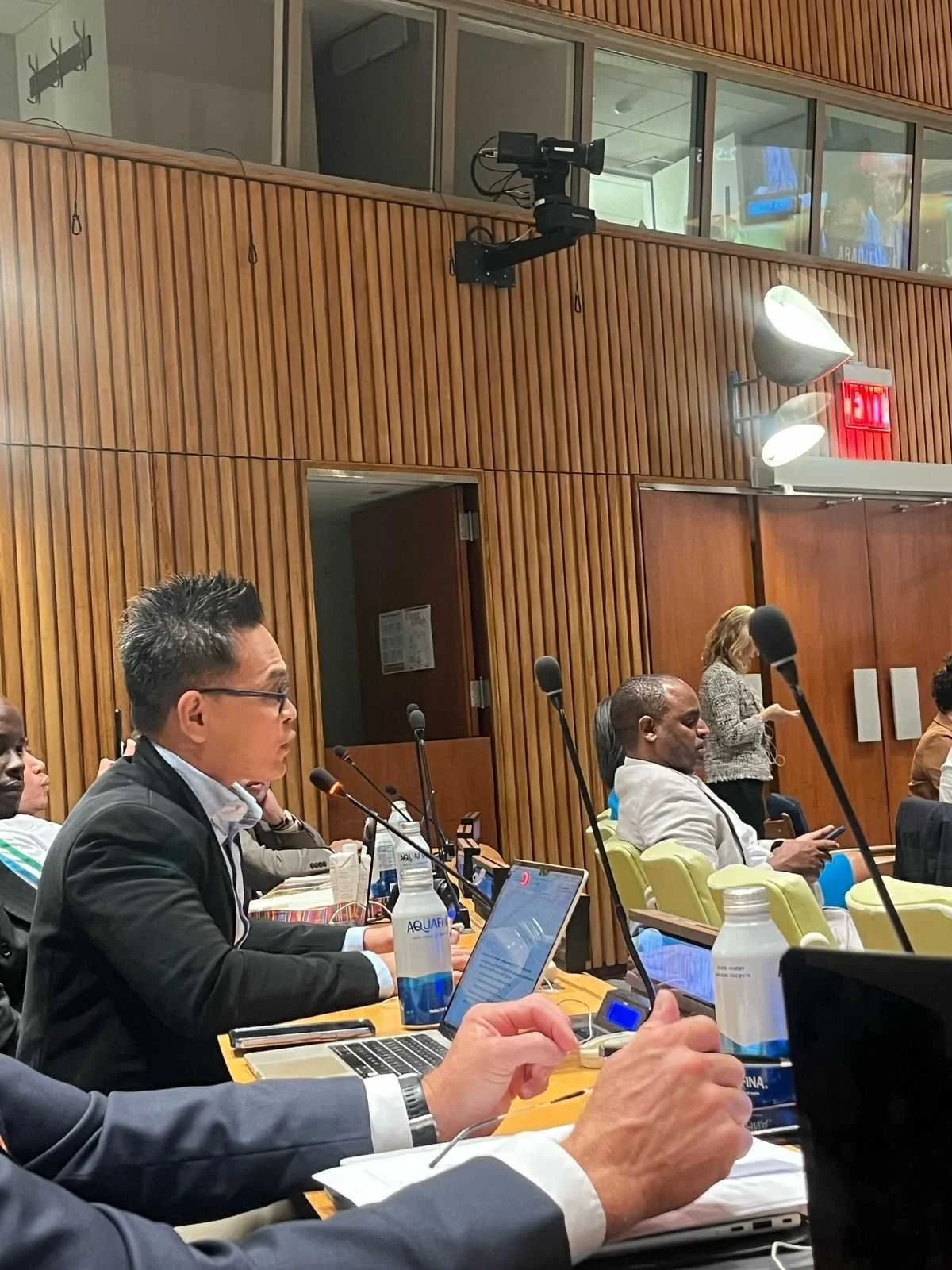
On 2 May 2025, GMHAN members and partners made 14 interventions at the UN multi-stakeholder hearing on NCDs and mental health, and together these show the different approaches to a statement described above, from lived experience to evidence and policy. Watch the statements of GMHAN members on YouTube.
Statements at WHO governing bodies
Only non-State actors in official relations can deliver statements in their own name at the Executive Board and the World Health Assembly, so most advocates take part by working with an organisation that has this status. The rules change from time to time and are published ahead of each session on the WHO governing bodies website (apps.who.int/gb), but they currently work as follows.
Statements are uploaded in advance through WHO's online statements platform, where they are published for a limited time, and they reflect only the views of the organisations that made them.
For a limited number of agenda items selected in advance, non-State actors can group into constituencies and deliver constituency statements, of which up to five per item are given the floor earlier in the debate, interspersed with Member States. At recent Assemblies, a constituency statement could contain up to around 330 words. Organisations that join a constituency statement cannot make an individual statement on the same item, and only organisations in official relations can join.
Individual statements are much shorter, around one minute, and usually come after Member States have spoken. If the meeting is running late, the Chair can limit the number of statements or the time allowed, so the written version uploaded in advance matters as much as the spoken one.
Regional Committees set their own rules. At the Western Pacific Regional Committee, for example, individual statements have been limited to three minutes and 300 words, and constituency statements to five minutes and 500 words.
Always name the agenda item and the document you are responding to (each has a reference number on the WHO governing bodies website), so that delegates can follow your point.
Hearings and panels
At a multi-stakeholder hearing, speakers are selected in advance from applications, and speaking time is set by the organisers, usually a few minutes at most. The strongest interventions bring evidence that delegates will not hear from anyone else (from a specific community, region or service) and end with a concrete ask linked to the Political Declaration being negotiated. Panels at side events usually allow more time, but the same rules about representation apply.
Meeting delegations
Many of the most productive conversations happen in short meetings with delegates, often of 15 or 20 minutes, in corridors or between sessions. Bring a one-page brief that says who you represent, what you are asking for and why, with the specific text you would like to see (and the paragraph numbers it refers to) and evidence from the delegate's own country or region where possible. Ask what the delegation needs from you, and follow up in writing the same day.
Side events
Official side events inside the main venue are limited and competitive. At the WHA, official side events are organised by Member States, with civil society organisations as co-sponsors, and at the UNGA, events inside UN premises generally need a Member State or UN entity to host them. Many civil society events take place outside the official venue or online, and they can still draw delegates if they are well timed and focused.
When acknowledging a network or commission at a side event, use only wording that has been agreed with its secretariat, such as "Co-organised by [Organisation] with the support of [Network]", "This event is being supported by members of [Network]" or, on social media, "In collaboration with members of [Network]". Do not imply that a network, commission or WHO is the lead organiser unless this has been confirmed in writing.
Names, logos and endorsements
Referring to a network, commission or UN body by name in your materials is acceptable. Using its logo is a different matter, and logos that incorporate the WHO or UN emblem need written approval from the relevant secretariat before they appear on any materials.
Online participation
When joining an online event, you can use the chat function to introduce yourself, ask a question or share a comment, for example: "[Name], [Organisation], member of [Network]. [Your question or comment.]" The same principles apply as for in-person interventions: speak as your organisation, and do not imply endorsement by a network or by WHO. Online participation also opens these meetings to advocates who cannot travel, although time zones can make this difficult.
Speaking to the media
If journalists approach you during a UN meeting, speak as a representative of your own organisation, and do not speak on behalf of any network or commission you belong to. Refer enquiries about a network or about WHO to the relevant secretariat, and if you are unsure, check before responding.
Language and lived experience
The language we use about mental health matters in statements as much as anywhere else. Avoid stigmatising or sensational terms, and prefer language that describes people and their experiences rather than reducing them to a diagnosis. Official UN texts sometimes still use older terms (for example, "substance abuse"), and it is fine to quote these accurately while using your own language around them.
When people with lived experience speak at UN meetings, prepare together well in advance, agree what will and will not be shared, provide accessible formats and a clear briefing on procedure, make sure safeguarding is in place, and pay people fairly for their time and expertise. Their role is to shape the argument, as partners and experts, rather than to provide a personal story at the end of someone else's presentation.
Our lived experience approach
GMHAN's approach to lived experience engagement and leadership is published on our website. It sets out how we understand lived experience (broadly, and without any need to fit a diagnostic framework), how we pay advocates fairly for their time, and how we approach safeguarding, consent and disclosure, accessibility, and the leadership of people with lived experience across the Network. Read it at gmhan.org/le-approach.
Challenges
Engaging with UN systems and processes presents several complex strategic and operational hurdles for mental health advocates, and it is better to know them before starting.
Systemic exclusion and tight control
The core structures of UN task forces and reform processes frequently give civil society organisations, youth networks and people with lived experience inadequate representation. Direct participation is often restricted to tightly controlled consultation loops, rather than a formal seat at the decision-making table.
The "NCD silo" and token integration
Broader civil society advocacy coalitions (and Member States) often place mental health under the wider umbrella of noncommunicable diseases (NCDs). Because UN conventions, especially at WHO, separate the negotiation and management of NCDs from mental health, this framing has frequently led to mental health inputs being omitted or watered down during final text edits.
Declining international budgets and service cuts
Strategic engagement takes place against a difficult backdrop of sharp cuts to foreign health aid from bilateral and international donors, which leaves UN departments (including those working on mental health) shrinking, and critical services under immediate threat.
Rigid accreditation frameworks
Gaining direct, inside-track access to deliver statements or submit policy recommendations requires formal ECOSOC consultative status or official relations with WHO. Both are heavily regulated, and they are difficult for smaller grassroots or national advocates to obtain on their own.
Accessibility and resource constraints
Meaningful involvement is frequently hampered by strict procedural rules and significant financial barriers, including high travel costs, visa challenges and mismatched time zones.
Divergent national priorities and accountability gaps
While advocates can secure pledges during High-Level Meetings, substantial uncertainty remains about how these commitments translate into country-level action, because government priorities vary and strong implementation and accountability mechanisms are lacking.
How GMHAN works with advocates
1. Local to global, and global to local
Our 2025–2035 Strategy, co-produced with members from more than 100 countries, commits us to enable advocates to influence global structures and decisions, and to advocate on a national and global stage for what matters locally. It is built on four pillars (Advocacy, Belongingness, Convening and Decentralisation of power), and together these make the Network a bridge that works in both directions.
From local to global, we bring the priorities, evidence and experience of our members, gathered through our Working Groups, our Short-Term Action Groups (STAGs, time-limited groups of members working together on a specific topic) and our consultations, into global processes, and we support members to take part in these processes themselves, including when they do not have their own accreditation.
From global to local, we share opportunities to engage, turn global commitments into tools and asks that members can use with their own governments, and support national organisations to hold their Ministries to account for what was agreed. And, across both, we work to decentralise power, so that the advocates who are most often excluded from global decision-making have a home, and a voice, within it.
2. Our approach to UN negotiations
To overcome the barriers above and navigate complex UN structures, GMHAN has a number of operating principles, all of them centred on moving away from separate, vertical campaigns (single-issue campaigns that run in parallel to the rest of the health system) toward integrated, country-led systems. We share them here so that other advocates can adapt them to their own work.
Organise asks around the objectives of each UN process
Every UN process has its own formal objectives, set out in the resolution or terms of reference that established it, and Member States judge each proposal by whether it helps them to deliver these. So, rather than pushing for a separate mental health track, advocates can position mental health as a practical test for integrated health systems, reading the objectives of each process closely and mapping every mental health ask against them. Asks framed in the terms of the process itself are easier for negotiators to adopt, because they help them deliver their own mandate, and they are harder to treat as an optional extra to be dropped in the final text edits.
Build a tiered group of supportive countries
To reduce the risk of mental health language being diluted in official texts, GMHAN typically uses a structured system to identify and mobilise allies among Member States, as for example in preparing for negotiations on the UN HLM on UHC.
Tier 1, champion states: secure commitments from at least 8 to 10 geographically diverse states willing to actively sponsor text amendments, co-sponsor side events or introduce specific provisions.
Tier 2, supporting states: build a broader coalition of 25 to 30 states willing to support the inclusion of mental health language and to raise the issue during consultations.
Tier 3, priority advocacy states: map high-influence states, based on their regional grouping or their role in negotiations, and target them with the aim of moving them into Tier 2.
Agree red lines and fallback language in advance
Prepare rigorous, pre-approved negotiation materials before drafting cycles begin, because once the readings start there is rarely time to agree positions from scratch. This includes an ambitious "target" version of the language, a politically achievable version and a minimum acceptable fallback, together with clear "red lines" that identify the formulations that would unacceptably dilute commitments.
Set up a rapid response mechanism
To keep pace with fast-moving UN timelines and frequent changes to the calendar, establish a rapid approval procedure. A small core group (e.g. a Campaign Lead, an Advocacy Lead and the Co-Chairs) can then jointly approve technical amendments and briefing notes within 72 hours of a new text being released, so that interventions arrive in time to make a difference.
Prepare jointly with governments before summits
Coordinate joint country-level briefings between national government representatives and civil society delegations before international summits begin. Agreeing positions at home makes it more likely that delegates arrive at global forums with unified policy positions. Also, use regional platforms and language-accessible workshops to support and represent partners who do not work in English.
Formalise the leadership of people with lived experience and young people
Move away from using people with lived experience as symbolic personal storytellers, and instead embed them as partners, decision-makers and co-authors within steering groups and policy development bodies. This participation should be structured under a formal framework that guarantees accessible formats, informed consent, safeguarding and fair payment for their technical contributions.
Young people and the High-Level Meeting
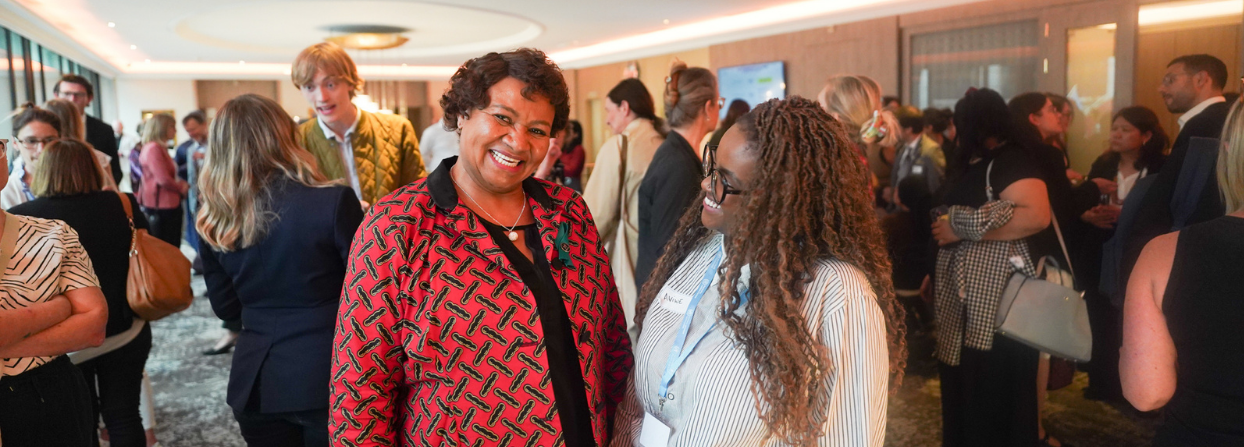
Young people took part throughout the 2025 HLM process, including at the youth multi-stakeholder hearing organised by WHO and as members of GMHAN's delegation to the UN in New York. Read more about youth involvement in the HLM, and what it means for how young people can be engaged or lead in future UN processes, on our website.
Join Us
Our shared goal is that mental health is recognised as a cross-cutting issue that requires attention, funding and global commitments. The UN system is complex and often frustrating, but it is also one of the few places where the governments of every country come together and put their commitments in writing. And these commitments only change lives when advocates in every country use them.
Membership of GMHAN is free and open to individuals and organisations, and it gives access to our Working Groups, webinars, global events and online community.
Glossary
| Term | What it means |
|---|---|
| Assessed contributions | The dues every Member State is obliged to pay to a UN organisation, calculated using an agreed formula. |
| Bretton Woods institutions | The World Bank and the International Monetary Fund, created in 1944 and part of the UN system as specialised agencies. |
| CEB | The UN System Chief Executives Board for Coordination, where the heads of UN system organisations coordinate, chaired by the Secretary-General. |
| Co-facilitators | Two ambassadors appointed to lead the negotiation of a General Assembly text, who write and revise the drafts. |
| Constituency statement | A joint statement delivered at WHO governing bodies on behalf of a group of non-State actors in official relations. |
| CRPD | The Convention on the Rights of Persons with Disabilities, and the Committee of independent experts that monitors it. |
| ECOSOC | The UN Economic and Social Council, one of the six principal organs of the UN, which also grants consultative status to NGOs. |
| EB | The WHO Executive Board, 34 members elected for three-year terms, which prepares and follows up the work of the World Health Assembly. |
| FENSA | WHO's Framework of Engagement with Non-State Actors (2016), the rules governing WHO's relationships with NGOs, the private sector, philanthropic foundations and academia. |
| Global Health Architecture (GHA) | The overall set of global health organisations, funds and partnerships, and how they are structured, governed and funded. |
| Global public goods | Things that benefit every country and that no single country can produce alone, such as shared health data or pandemic preparedness. |
| HLM | A UN High-Level Meeting, a summit during the General Assembly that ends in a Political Declaration. |
| HLPF | The High-Level Political Forum on Sustainable Development, which reviews progress on the SDGs every July. |
| IASC | The Inter-Agency Standing Committee, the forum of UN and non-UN humanitarian organisations that coordinates humanitarian response. |
| Macro-strategies | The broad, long-term plans that guide the whole UN system or a whole sector, such as global action plans. |
| MDBs | Multilateral Development Banks, banks owned by groups of countries that lend to and invest in developing economies |
Organisations and resources
Organisations
World Health Organization (WHO), the specialised agency for health within the UN system: who.int
Office of the UN High Commissioner for Human Rights (OHCHR), which supports the Human Rights Council, the Special Rapporteurs, the treaty bodies and the UPR: ohchr.org
UNICEF, UNFPA and IOM, which work on mental health among children and young people, women and girls, and migrants and people in emergencies respectively.
The World Bank and other Multilateral Development Banks, which finance health systems in many low- and middle-income countries.
The Global Fund to Fight AIDS, Tuberculosis and Malaria, an independent partnership outside the UN system: theglobalfund.org
UN Foundation, a US-based charity that supports UN causes, outside the UN system: unfoundation.org
United for Global Mental Health (UnitedGMH): unitedgmh.org
Global Mental Health Action Network (GMHAN): gmhan.org
World Federation for Mental Health, an NSA in official relations with WHO: wfmh.global
Useful resources
The essential UN, an introduction to the United Nations: un.org/en/essential-un
The UN system chart: un.org/en/about-us/un-system
WHO governing bodies documents and statements: apps.who.int/gb
WHO Civil Society Commission: who.int
WHO Youth Council: who.int
How to apply for ECOSOC consultative status: social.desa.un.org
UPR information for civil society: ohchr.org
CRPD Committee, Guidelines on deinstitutionalization, including in emergencies (2022): digitallibrary.un.org
Political Declaration of the fourth High-Level Meeting on NCDs and mental health (A/RES/80/117): digitallibrary.un.org