GMHAN’s Approach and Commitment to Lived Experience Engagement & Leadership
Our Definition
In our co-produced 10-year Strategy, we define a person with lived experience as: someone with experience of difficulties in maintaining their mental health, or of symptoms of a mental health condition or psychosocial disability, however mild or severe. We recognise that diagnostic systems can be limited, or applied inconsistently, so we also welcome people who self-report mental health challenges, or experiences of trauma or inequality; this includes the experience of caring for a loved one living with a mental health condition. We also recognise the lived expertise of people who have used, or been directed into, psychiatric and mental health systems, including people who have experienced harm or rights violations within them.
We use this definition deliberately broadly. Many people in our communities do not describe their experience in terms of difficulties or symptoms at all, and for some, seeking or being directed into psychiatric care, and what preceded, accompanied, or followed it, has become the defining part of their journey. Given the documented history of human rights violations within mental health systems across many countries, naming this explicitly is for us a matter of justice, and it matters particularly to our work on deinstitutionalisation. Lived experience does not need to fit within a diagnostic or symptom-based framework to be valid or relevant. We do not see lived experience as a separate category, nor as a property of a diagnosed few. We see it as a form of expertise, and we treat it as one.

Our Approach to Lived Experience Leadership
At GMHAN, lived experience sits at the very centre of all that we do. We believe that people with lived experience bring valuable expertise that is just as important as professional, academic or organisational knowledge. Our approach is built on equity, diversity, inclusion and shared decision-making, with lived experience perspectives directly shaping our governance, leadership and strategic priorities. For a global network, diversity also means geography, and we work deliberately to make sure that voices from every region of the world are represented, including from the Global South, which is still too often under-represented in global conversations.
This approach forms part of our wider commitment to decentralising power across the global mental health sector. We strive to lead by example, hold the sector to account, and champion diverse, culturally appropriate mental health leadership. By embedding lived experience throughout our work, we aim to transform systems and ensure that the knowledge, expertise and priorities of diverse, marginalised and excluded communities are reflected at the highest levels. We strive to ensure all members of the Network can fully participate in ways that suit them best.
Members are free to share as much or as little of their personal experiences as they choose, with no expectations for advocates to disclose specific details about their identity, history or circumstances in order to make a meaningful contribution. We are dedicated to forging safe and equitable mechanisms for participation built on trust and respect. We also recognise the importance of establishing multiple pathways for engagement to support participation from members with differing access needs and considerations. As opposed to separating lived experience voices into specific groups or activities, we integrate practices and processes that encourage their full participation in work taking place across the organisation.
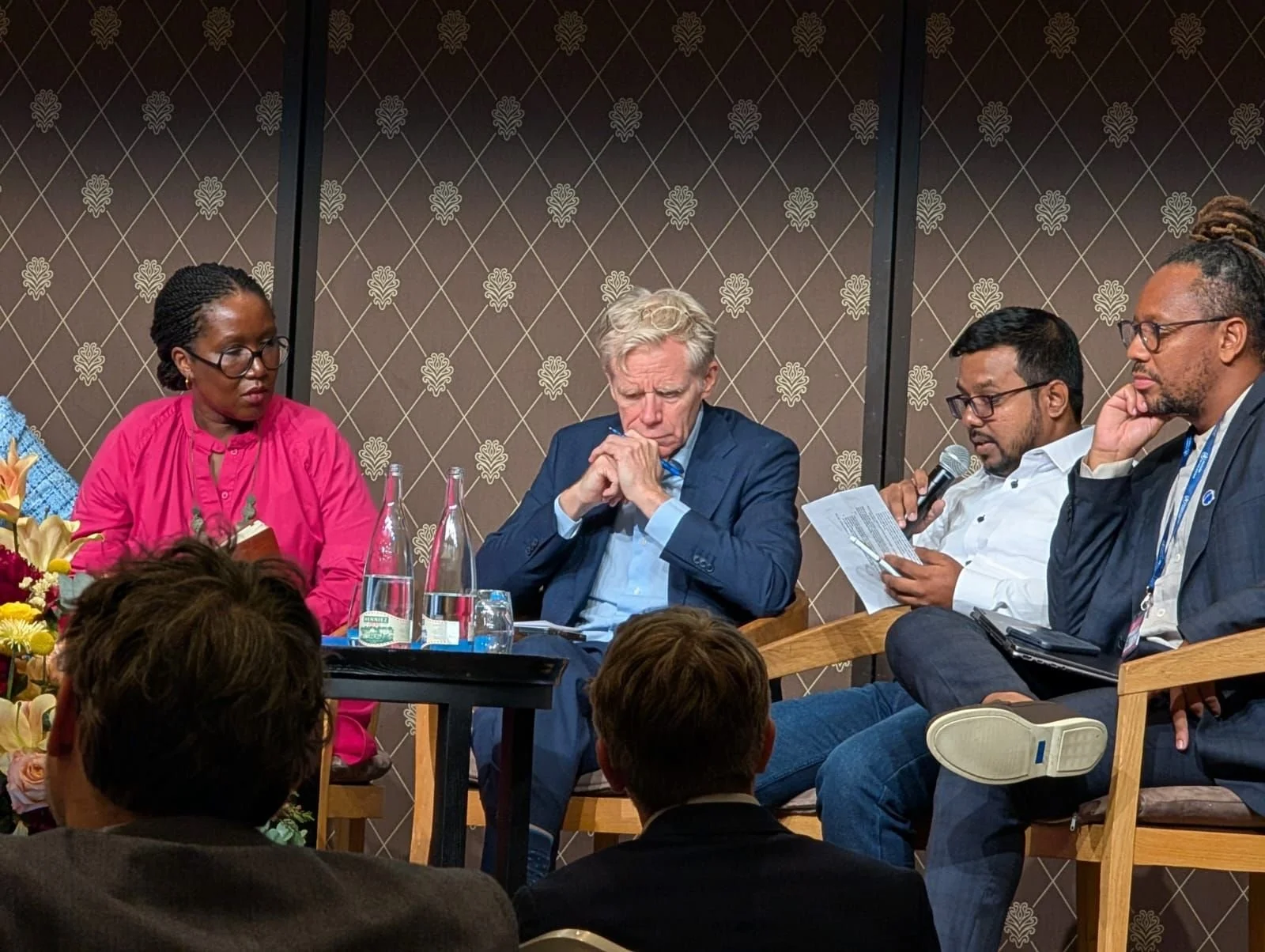
World Health Assembly 2026
In practice, this means that people with lived experience sit on our Leadership Group, take part in and lead our Working Groups and Short-Term Action Groups, co-author our resources, speak at our webinars and represent the Network at global moments such as the 2025 UN High-Level Meeting, rather than being consulted on this work once it is done. People with lived experience are also not a monolith; many bring academic, professional and community expertise alongside their lived expertise, and we encourage everyone to show up as their full selves, with all the dimensions of their expertise and identity. We believe the most meaningful involvement happens when people with lived experience are included alongside others, influencing outcomes, sharing ownership and contributing to collective accountability at every level.
Lived Experience as Expertise
Lived experience expertise is rarely an individual act. It carries the collective knowledge of the communities and movements that people come from, including the survivor, service user and Mad movements that first insisted this knowledge should count, so when an advocate draws on their experience, they are often speaking from, and on behalf of, many others. The values that guide how we work with this expertise are the ones these movements fought for: rights, justice and liberation, and ways of working that are holistic, person-led, co-designed and co-produced.
Treating lived experience as expertise has two key consequences for how we behave.
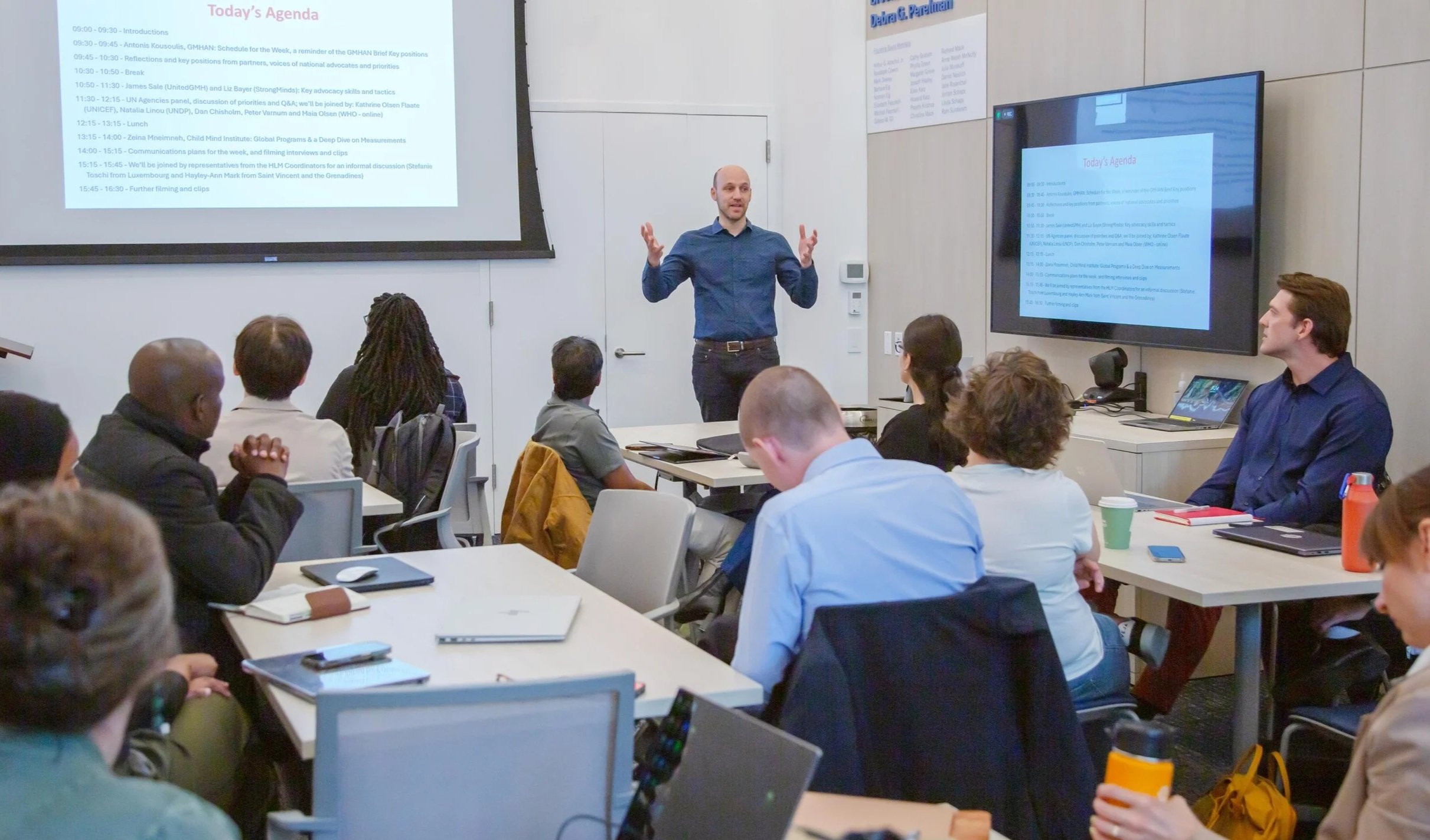
UN Multi-Stakeholder Hearing Preparations 2025
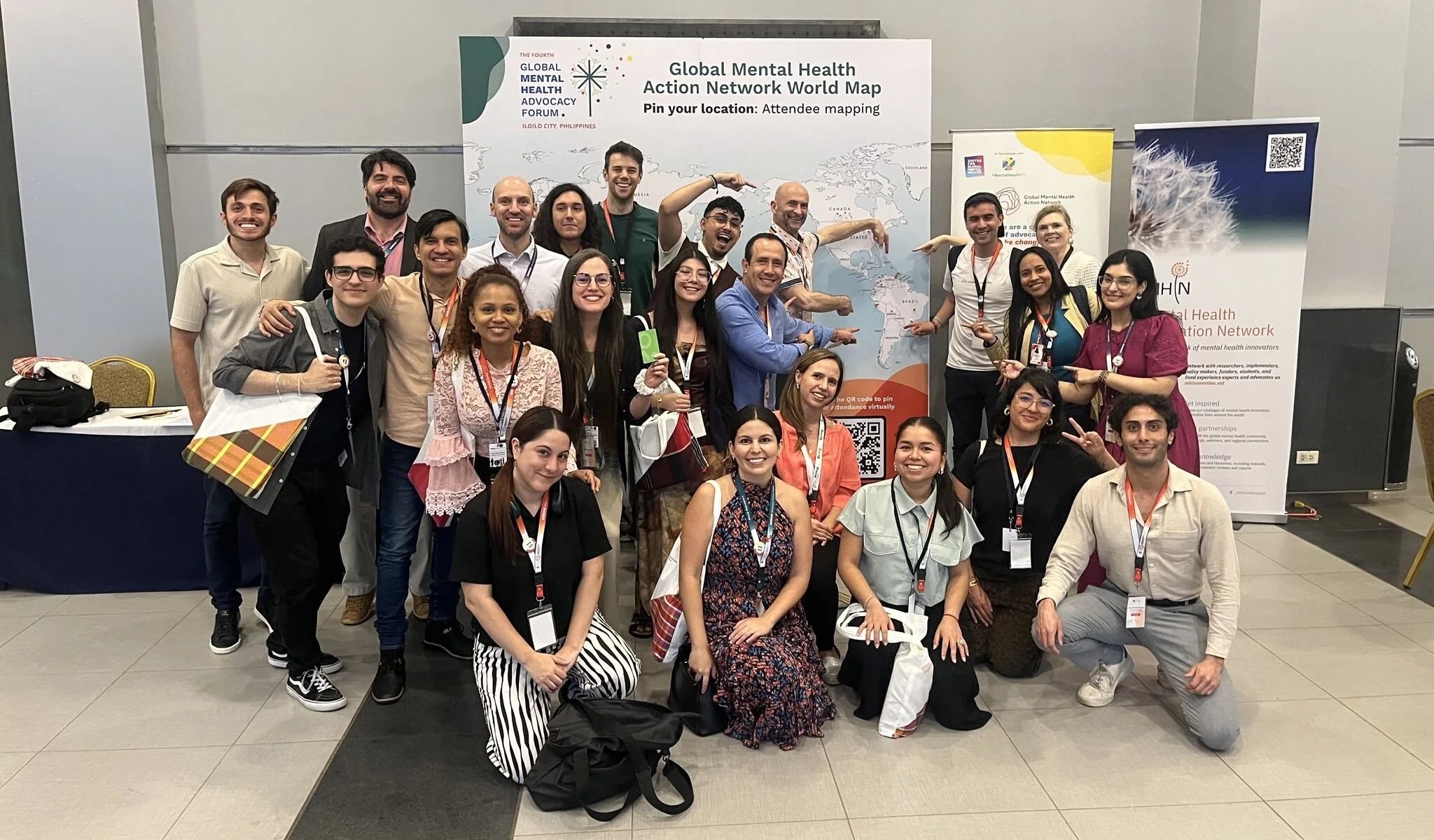
4th Global Mental Health Advocacy Forum
First, we invest in people rather than simply inviting them to speak. We orient advocates to the global mental health and global health landscape, and we build specific skills, in advocacy, in influencing, in navigating international processes, so that people can bring their own expertise into rooms that were never designed for them. We aim to set people up for success. Turning up is not the same as being equipped to shape a decision, and we take responsibility for the difference. Investing in people also means investing in the relationships between them.
Advocates tell us that much of what they value in the Network is its community: the solidarity, camaraderie and reciprocal mentorship and friendship between experts by experience, and the mutual learning, knowledge exchange and collaboration it makes possible between advocates and movements across the world. This carries into our projects and campaigns, but also back into people’s own communities and personal journeys, and it builds meaning well beyond the work itself; ultimately, this is good for our collective mental health.
Second, we take a more fluid view of identity. We appreciate that people arrive with multiple identities and different kinds and levels of expertise, and we resist sorting the world into “those who have lived experience” and “those who do not”. Where we describe someone as an expert by experience, we do so without reducing them to that label; they bring professional, cultural, political and personal knowledge alongside it. How someone chooses to lead, whether from their lived experience or from another form of expertise, often depends on the context, the environment and the scope of the work, and we leave this choice with them. Expertise is layered, and we treat it that way.
Our Approach to Safety and Disclosure
We take an open approach to disclosure. We generally do not ask people to disclose their lived experience, and we do not ask them to justify it. We make no assumptions about who in a room, a Working Group or a leadership role does or does not have lived experience of a mental health condition. Disclosure is never the price of participation, and it is never the evidence someone must produce to be taken seriously.
We allow people to decide for themselves what to share, when, with whom, and in how much detail. Some advocates draw openly on their own experience; others contribute from it without ever naming it. Both are equally valid. We appreciate that the membership of GMHAN is more likely to draw into its heart people with lived and family experience, and we appreciate this as one of our key strengths.
But the circumstances in which all this is happening are important. To allow safe disclosure, our collaborative spaces have to be built on the principles of psychological safety. We take a trauma-informed approach to creating and honouring safety. Psychologically safe spaces are the ones that help to reduce anxiety and make engagement feel more possible, particularly for people who may be less confident or have less experience in international settings. There is a long journey that comes into building safe spaces, and - in our experience - it often starts with normalising vulnerability, inviting equal participation, and responding with curiosity rather than judgement.
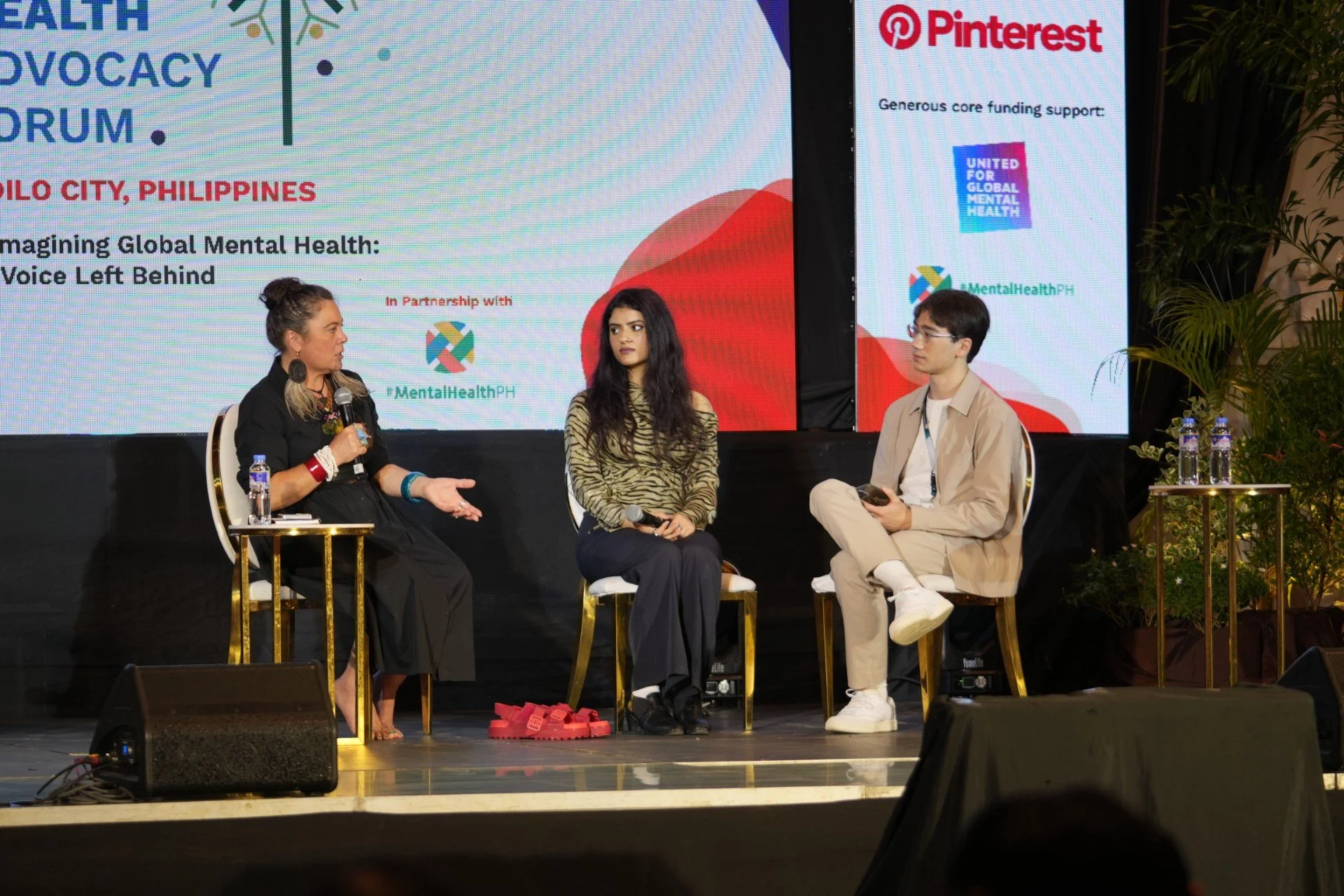
4th Global Mental Health Advocacy Forum
This all matters because the alternative is a sector that asks people to perform their pain in order to be heard. We are trying to build the opposite: spaces where expertise is assumed rather than extracted, and where the choice to speak about oneself stays with the person, not the institution.
Safeguarding
For us, safeguarding is about creating spaces where people feel empowered and able to show up and participate on their own terms. We are committed to protecting children, young people and vulnerable adults who have needs for care and support across all our work through four key strategic areas: establishing safe processes, safe practices, safe people and safe partnerships. This is, for us, the everyday work of making our meetings, events, travel and online spaces safe enough that people can contribute fully. Much of our activity brings together youth advocates and people with lived experience who may be navigating unfamiliar environments or carrying additional support needs; our approach is designed with them in mind.
We take a relational and trauma-informed approach that prioritises empathy, understanding and active listening over rigid management structures. Meetings, events, travel and public advocacy affect people in different ways, and our responses are tailored to the individual rather than applied as a single template. A safeguarding concern, for us, is not only a matter of abuse, harassment or neglect; it also includes an individual mental health crisis, whether acute distress, a panic attack or suicidal thoughts, and we prepare our people to respond to these with care.
We hold a zero-tolerance position on abuse, sexual harassment, bullying, discrimination and exploitation, set out in our Code of Conduct. Everyone involved in our work is expected to treat others with respect, dignity and worth, and to uphold each person's right to privacy, self-determination and autonomy. When we travel and convene, we operate as a team, with a designated safeguarding lead and clear routes to support.
We are also honest about the limits of confidentiality. If someone shares a concern, we will treat it seriously and without judgement; but we will not promise absolute confidentiality where someone's safety or wellbeing is at stake. We are transparent about this from the outset, so that people can make informed choices about what they share.
When we plan travel or in-person activities, we weigh wellbeing, accessibility and potential risks, and we work with people to identify any adjustments that will help them take part comfortably. Advocates are always empowered to prioritise their health; they can decline events, speaking slots or social activities if they do not feel comfortable, regardless of any prior commitment. Saying no carries no penalty.
Participation is only real if people can actually take part. For a global network, this means treating access as a design requirement.
Language is the most obvious barrier, so we work to lower it. We are expanding translation of key materials into the languages most spoken across our membership, including French, Spanish, Arabic and Chinese; we provide closed captions across a wide range of languages at our webinars; and we are creating non-English-speaking spaces on our Circle platform so that people can connect and contribute in their own language rather than through ours. We have also supported the creation of regional initiatives and coalitions across the Network, which make it easier for advocates who prefer to engage in their own language, and in their own regional context, to take part in our activities beyond the Circle platform. We keep working on how to make meetings themselves more accessible to people who do not work in English.
Accessibility and Participation
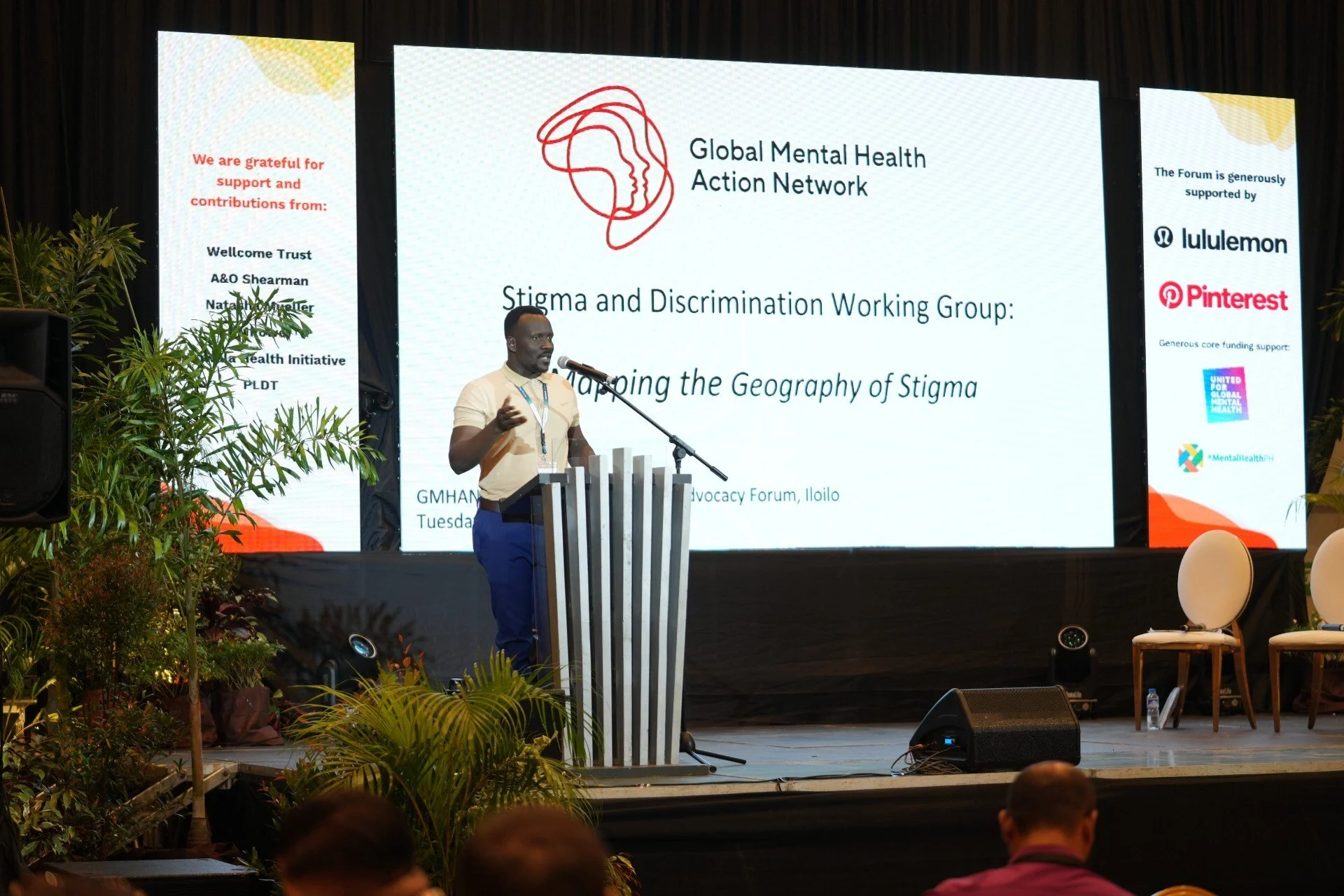

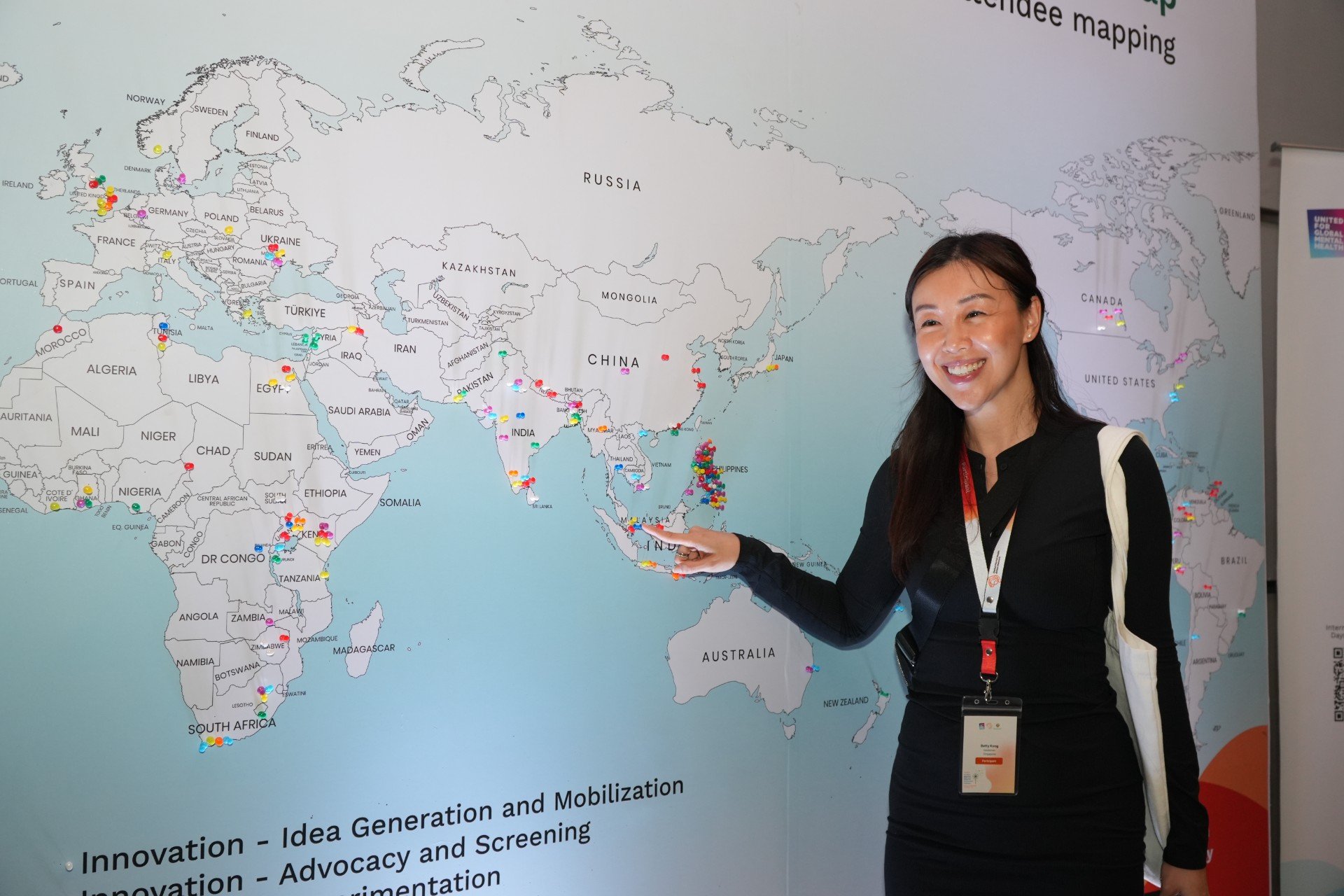
4th Global Mental Health Advocacy Forum
Access is also about who gets into the room at all. We strive to start meetings or conversations by asking or acknowledging “who is not in the room”. Some of our most important work has been getting advocates who are usually excluded into global moments where mental health is decided, and coordinating their voices so they land, for example through the strong lived experience representation we supported on the road to the 2025 UN High-Level Meeting.
Where we meet is also an access decision in and of itself. For our global convenings, we choose locations by listening to our members first, then testing each option against who will be able to reach it and take part safely. Some of that is practical: an international airport with good connections; a local currency that does not price out travellers from low- and middle-income countries; strong local partnerships on the ground. Some of it is not negotiable, such as a straightforward visa process that neither excludes participation by definition nor humiliates people in the process. We will not ask people to advocate in a place where their identity is criminalised, so a rights-respecting legal framework, including for LGBTQI+ people, and a country that does not criminalise suicide, are part of the criteria. We also use the choice to widen the room; holding our 4th Forum in the Philippines was partly a deliberate effort to grow representation from East Asia and the Pacific, under-represented at our previous in-person Forum in Cape Town. And choosing Iloilo City over a capital was a further, deliberate step: a city known regionally for progressive climate and conservation work, for putting mental health into its school curricula, and for its own community resilience initiative. Decentralising power includes decentralising the map.
We see young people as leaders in our work. We treat youth involvement as leadership rather than decoration, which means young people can help set direction.
In practice, this means paying young people for their contributions as a matter of course, supporting them into leadership roles, and backing them to take these roles on the global stage. We have worked to secure the strongest and broadest representation of young advocates at high-level global moments, including for the 2025 United Nations High-Level Meeting, and we have enabled spaces for young people to challenge what leadership itself should look like gmhan.org/webinars/youth-reimagining-leadership.
Young People as Leaders
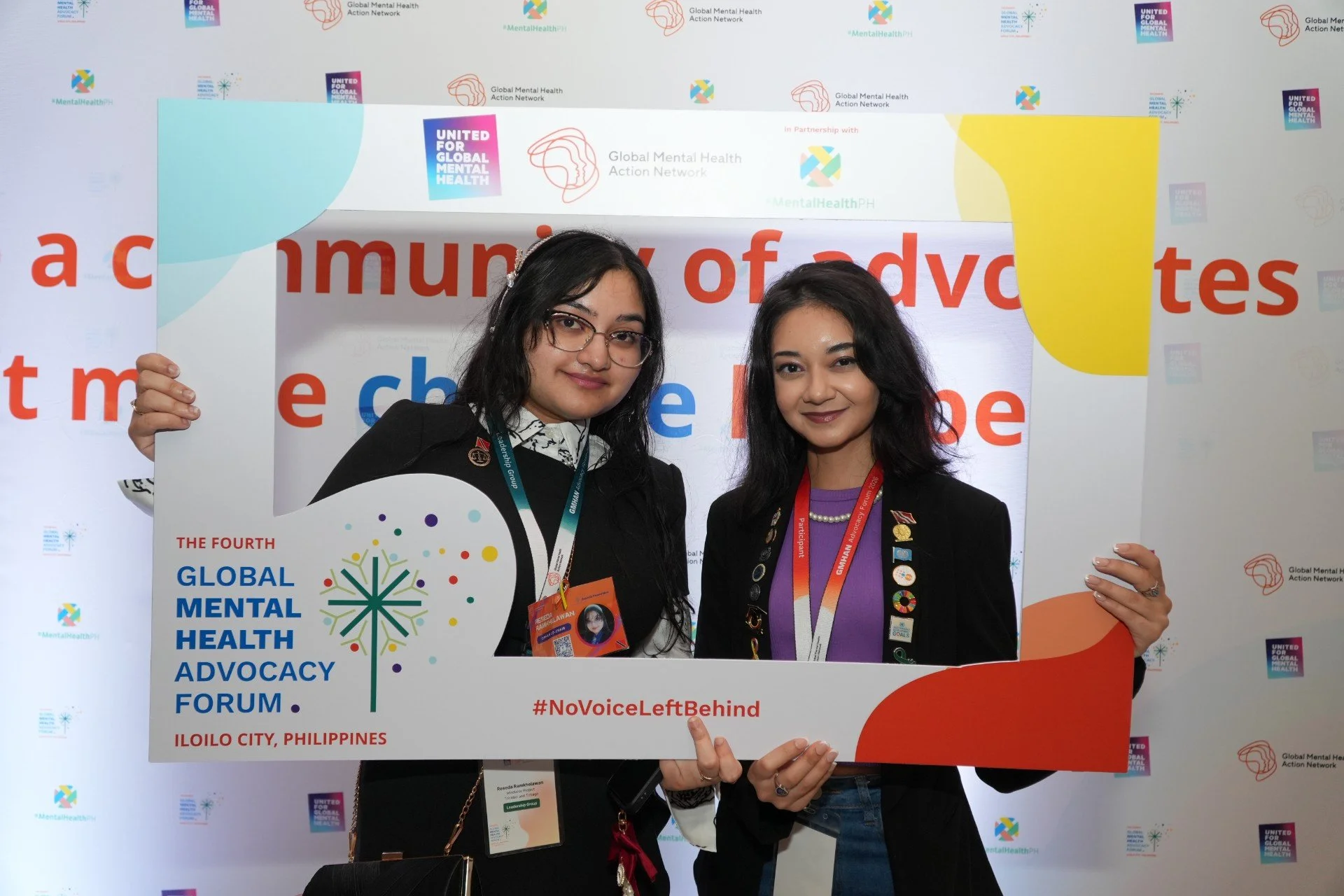
4th Global Mental Health Advocacy Forum
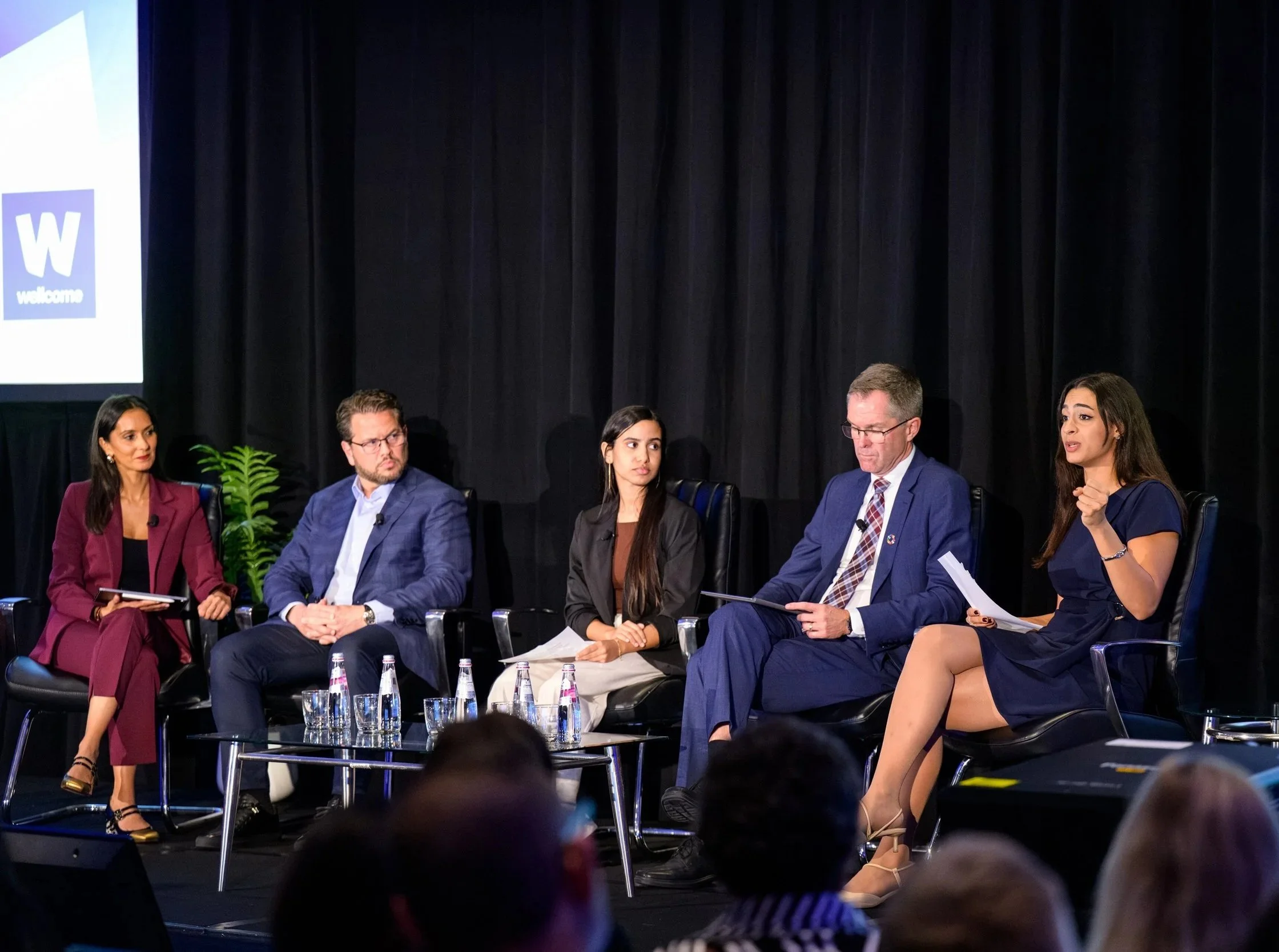
UN General Assembly 2025
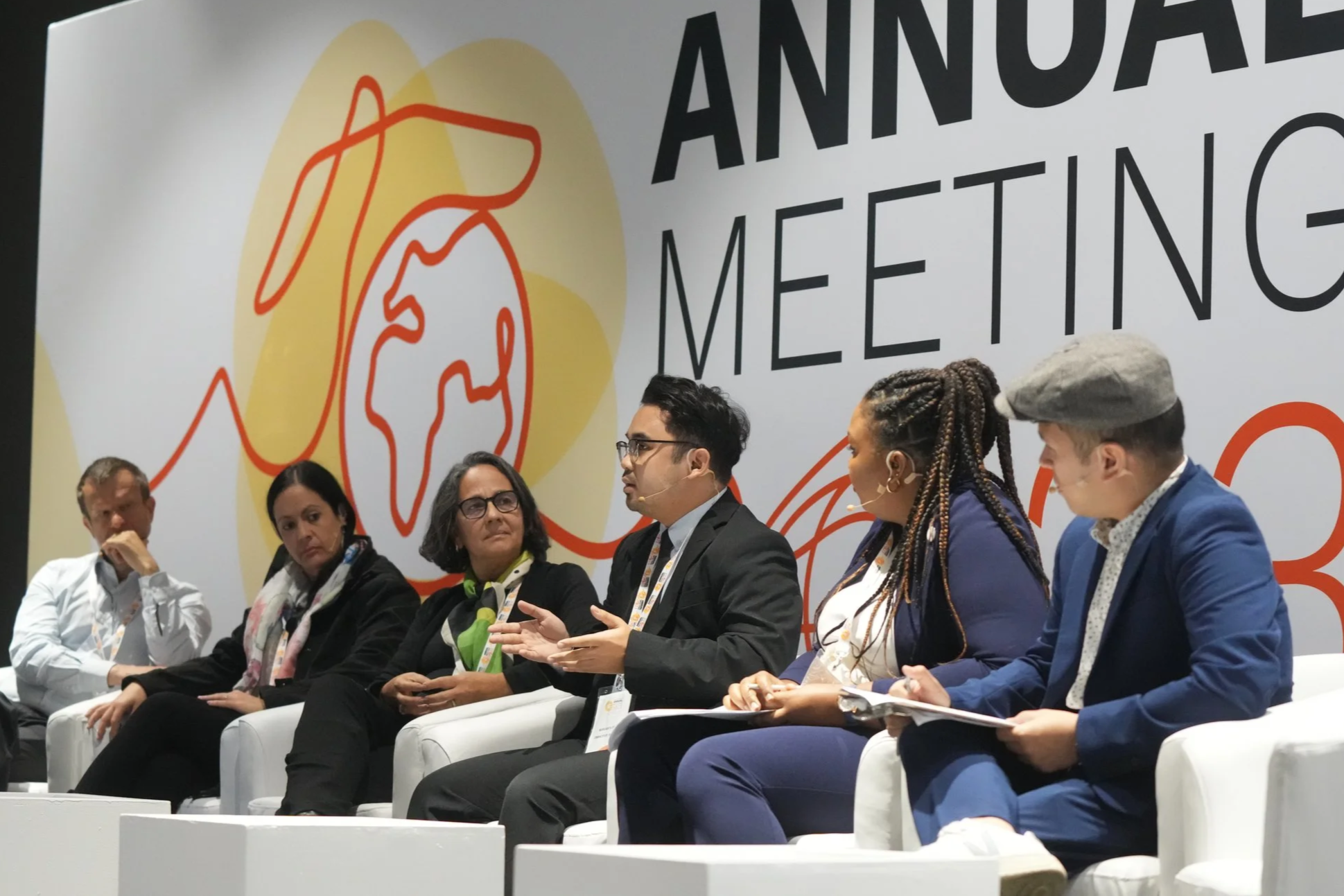
2nd Global Mental Health Advocacy Forum
Processes
Our processes are designed to support meaningful participation rather than create barriers. When participating in an event or global convening, all advocates are invited to join briefing and preparation sessions. As opposed to dictating what their participation will or should look like, these calls are set up to summarise the broader context of the event or convening, GMHAN’s core objectives and anticipated outcomes and general considerations for travel. We ensure that all participants are well-informed about the nature of their engagements and briefed on what to expect across the entire duration of their time participating in an event.
GMHAN may fully fund the travel, accommodation and per diems to support their participation in global convenings. However, all advocates representing GMHAN in a global moment will be fairly remunerated for their time and contributions.
Our day rates have been calculated on the basis of global wage estimates to ensure they are equitable for all participants. This information is shared transparently with all advocates and we share it here for others to use as a template:
The day rate was calculated using the most recent (2022-23) Global Wage Report by the International Labour Organization. Conversion of all the G20 countries’ average wages into US dollars using exchange rates based on purchasing power parity, yields a simple average wage of about US$4,000 per month in the advanced economies, and about US$1,800 per month in the emerging economies. We want to strive for equity around the world, so we are using the US$4,000 figure. Assuming a standard working week produces a $200 average day rate, which converts (in August 2024) to £152.85, we have rounded up to £160 per day.
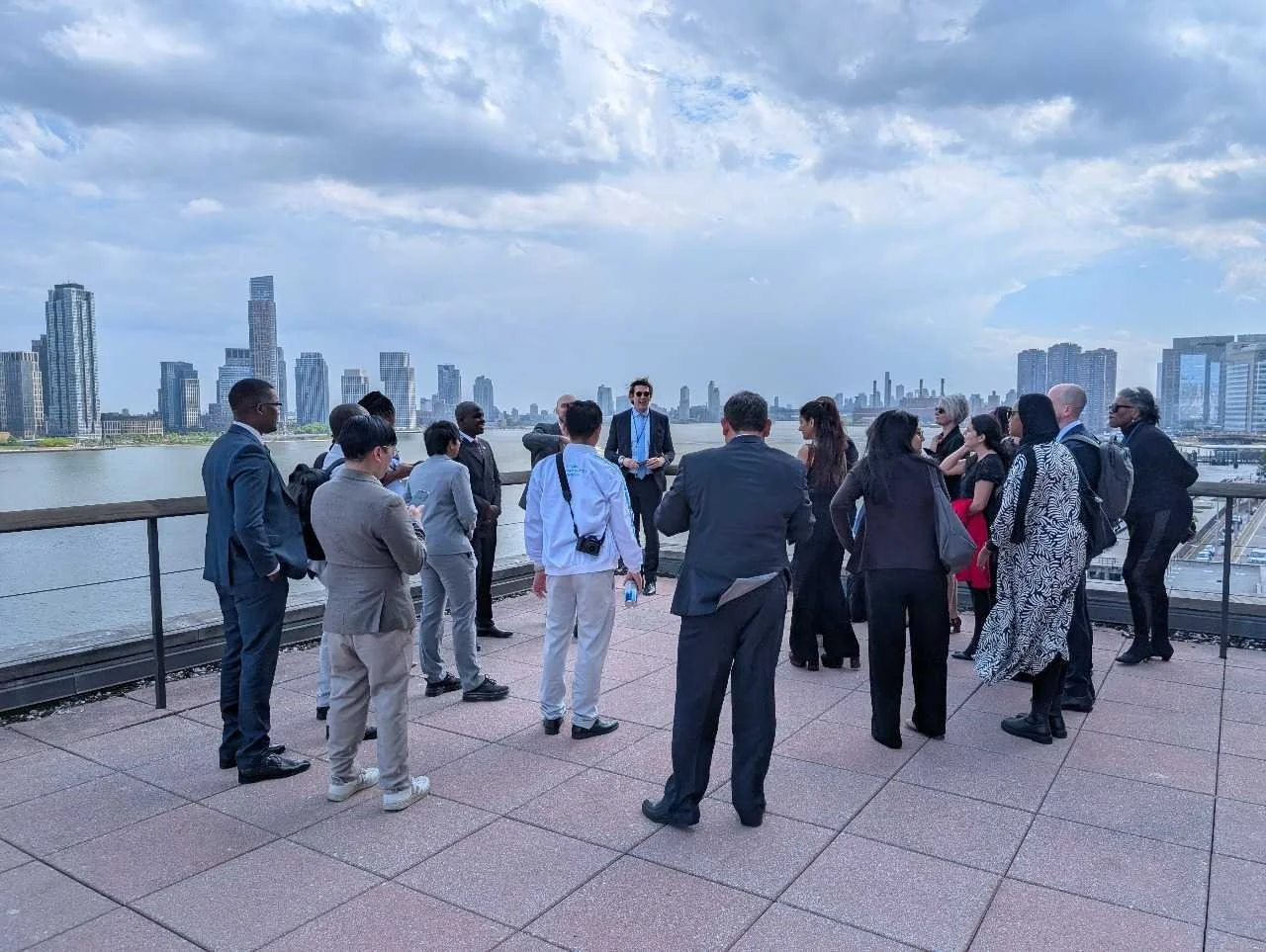
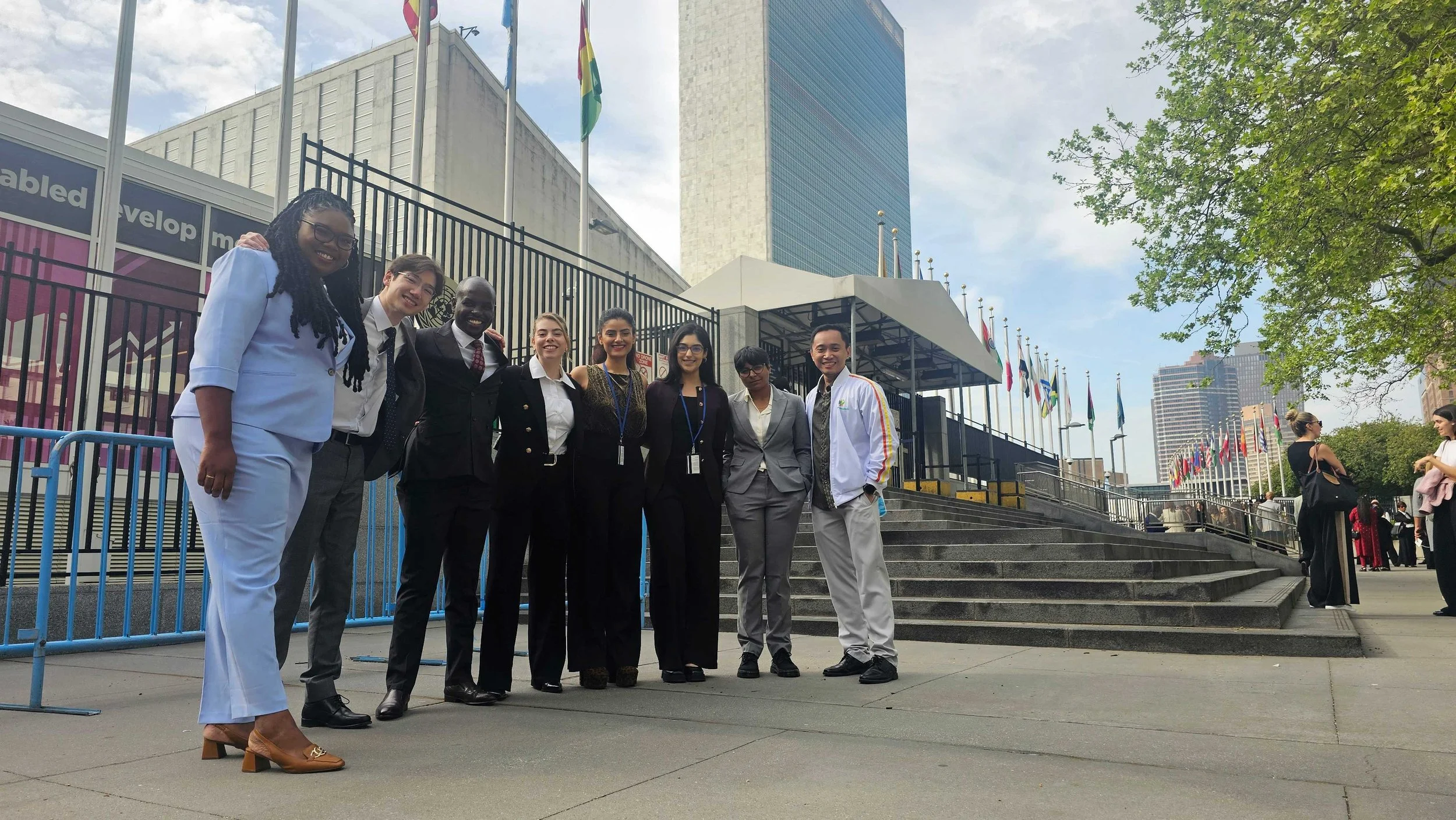
UN Multi-Stakeholder Hearing 2025
This is also the rate that we will pay people travelling to important events to represent our Network and their own work and experiences. Where an event is held in a High-Income Country, we provide an enhanced day rate of £250 to account for increased daily subsistence costs. Our rates are equal across age groups as well. These are rates that are equivalent or higher to what is considered in Aves’ “Remuneration Framework & Inclusion Assessment Tool” an “Advanced” level of expertise, and - because we strive for the identity of the advocate to be recognised at the same level of expertise as other professional identities - our rates are more than double the recommended rate in the same Framework of the “Expert Advocate” level of expertise.
We regularly review our policies and procedures and arrangements to make sure they provide appropriate support and protection for everyone involved in our work. Wherever possible, we aim to keep administrative processes simple, accessible and easy to navigate. We actively seek feedback on how our systems and processes are working and use this to improve what we do. Listening, learning and adapting are essential to ensuring our approach remains fair, inclusive and responsive. Continuous improvement is a key part of our commitment to meaningful lived experience engagement and genuine co-production.
Decentralisation of Power
Lived experience engagement is part of a larger argument about who holds power in global mental health, and it belongs alongside our commitment to decentralisation and decolonisation. "Nothing about us without us" is the same principle applied at the level of the individual and at the level of the sector.
This is inseparable from the fourth pillar in our Strategy: the Decentralisation of power. In global mental health, the decisions, the funding and the systems of knowledge production are still held by a small proportion of stakeholders in high-income countries, while the bulk of the need sits elsewhere. Lived experience engagement is one of the ways we push against that.
This principle points to a clear direction: towards localisation, towards the leadership of the global majority, and towards respect for indigenous and community knowledge as expertise in its own right. We are scoping how to reach and include indigenous communities and perspectives across our activities, amplifying their advocacy rather than speaking for it, whether through a dedicated Working Group or through partnership with organisations already leading this work.
We also know we did not start this conversation. We stand on the shoulders of giants; the survivors, service users and community Mad movements that fought, often at great personal cost, to be heard, and we are building emerging connections with Mad movements and the traditions of knowledge they carry. Honouring that history is part of our commitment to lived experience advocacy.
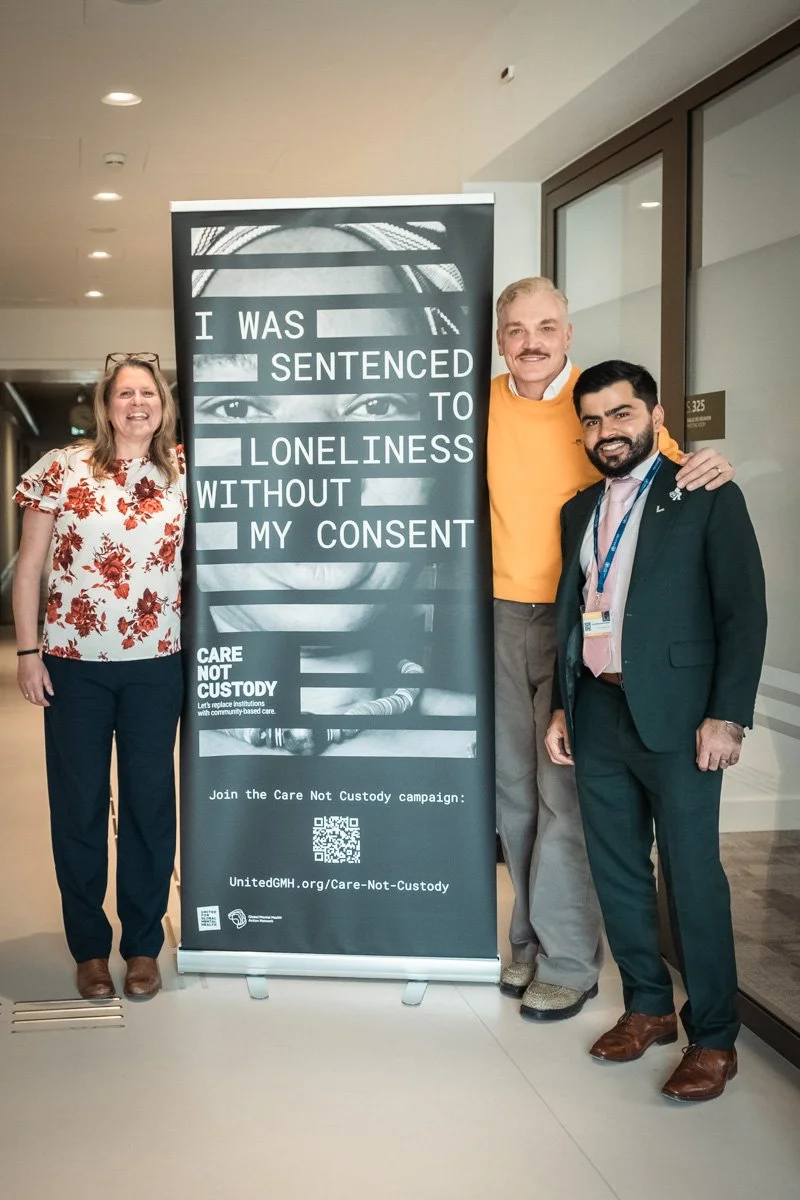
World Health Assembly 2026
Our work and frameworks are not finished. We are describing an approach we are still building, and we would rather be honest about that than present it as a solved problem. But we believe that it will be helpful for partners, other organisations and the broader sector. We are only starting to articulate what makes our events feel as inclusive and safe as members tell us they are, and how to hold onto that in a way that survives beyond any single gathering.
We take an incremental approach on purpose. Culture is built slowly, through repeated practice, feedback and adjustment; it is not declared in a document. We seek feedback on how our processes are working and we change them when they are not. Listening, learning and adapting are part of the commitment. We try to hold room for fluidity, for different ways of working, thinking and expressing ourselves, and for the curiosity to adapt as times and topics change (climate change is one recent example). Experiences evolve, and engagement has to evolve with them.
Our starting point is co-ownership. We have invested heavily in building a Network that its members own, rather than one that a Secretariat runs on their behalf. Our Leadership Group increasingly takes the initiative: forming new collaborations, onboarding members, and producing content for our channels. This expands what a small Secretariat can do, but that is not the main point. A Network owned by its members grows in a more equitable way, and models the shared power we ask the wider sector to adopt.
This includes how we pay the people who contribute to the Network and the fact that we do it routinely; leadership roles and representation are remunerated so that capacity and resources are not the barrier to who gets to lead. Fair compensation is often what separates participation from tokenism.
This is where we currently are, not where we intend to stop. We will keep testing what works, keep sharing what we learn, and keep handing over more of the Network to the people who make it what it is.
An Incremental Approach, Built on Co-ownership
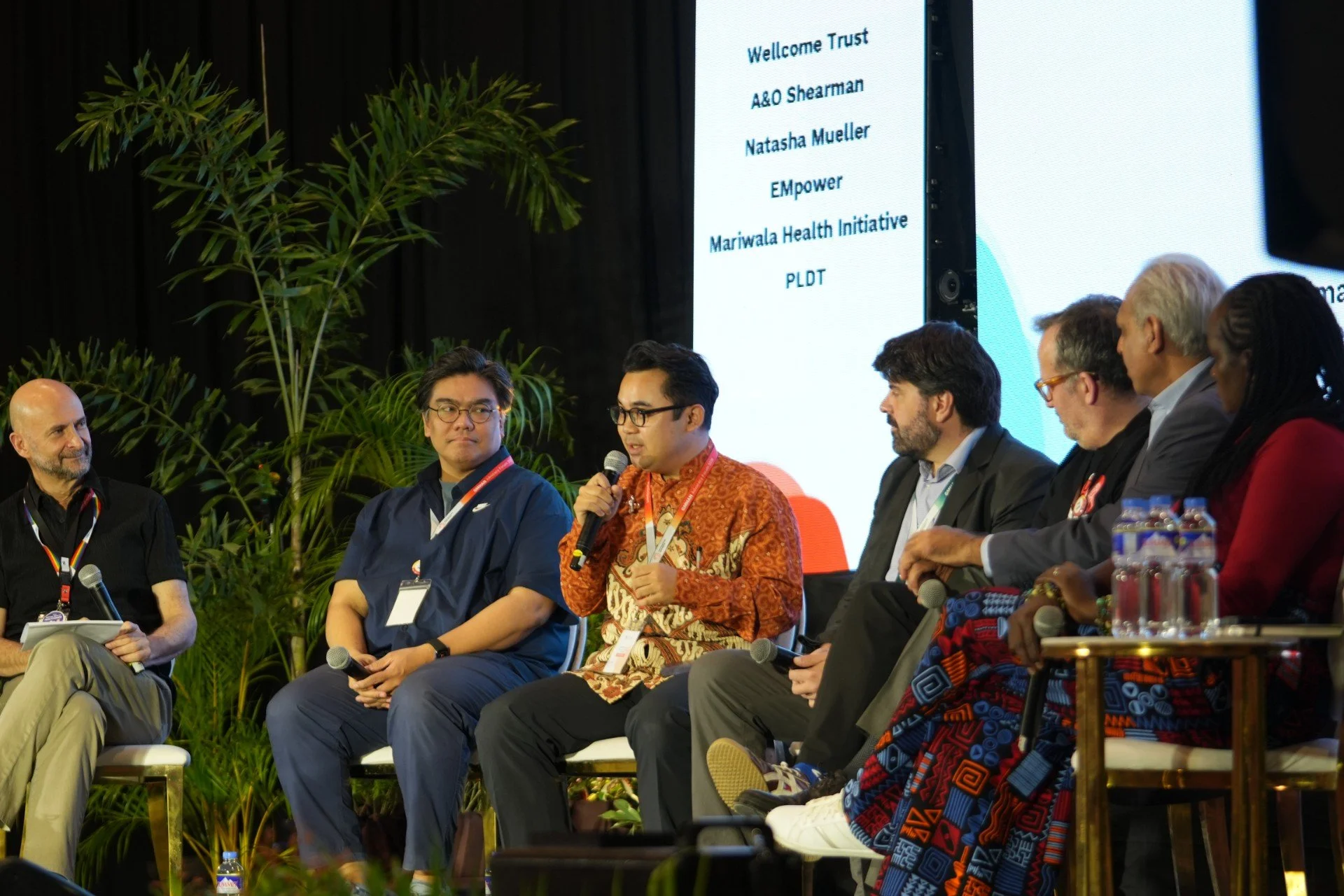
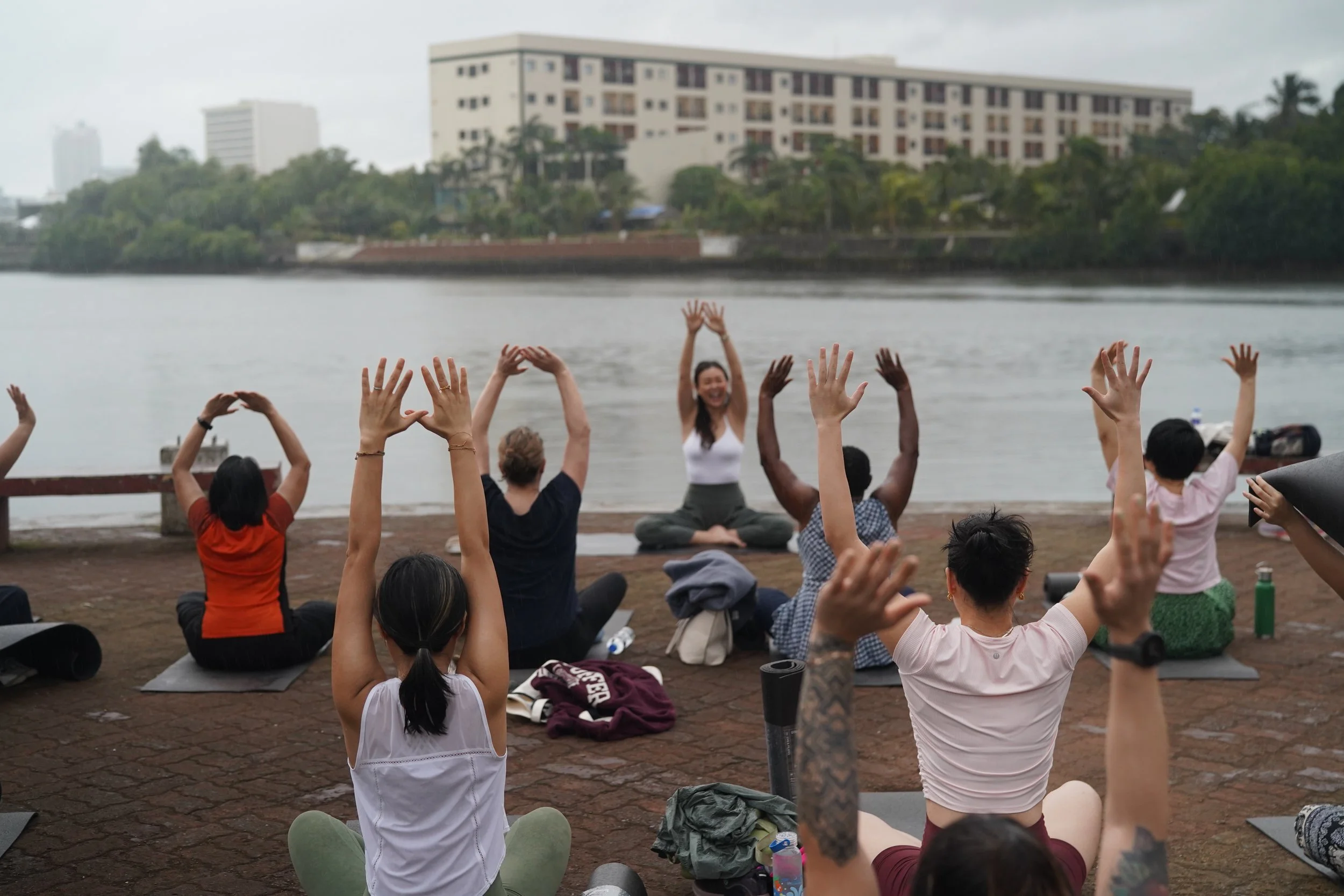
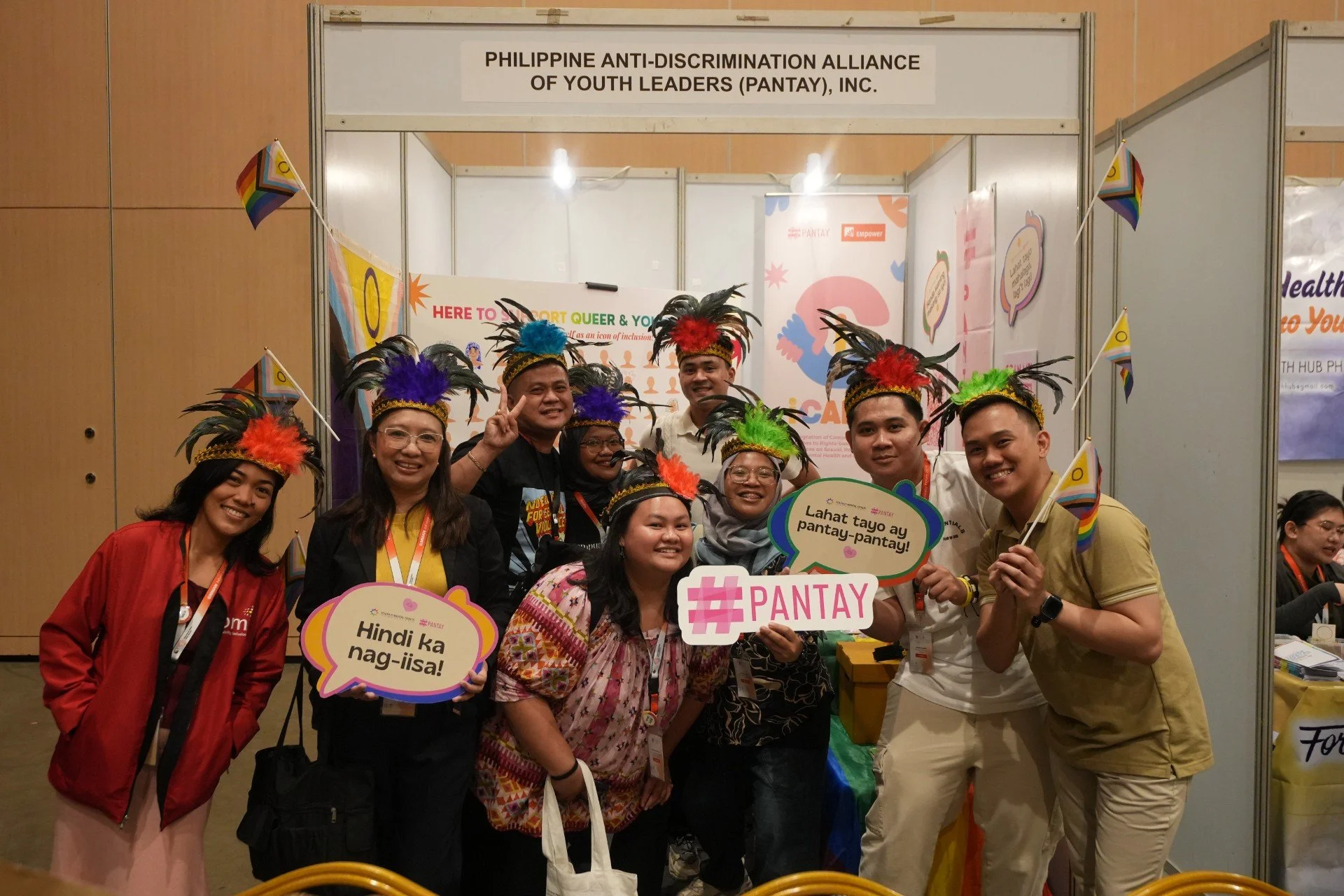
4th Global Mental Health Advocacy Forum