
“Geography of Stigma” Survey
“Isolated. Lost home. Lost family and friends. Lost job.”
Introduction and Summary of Findings
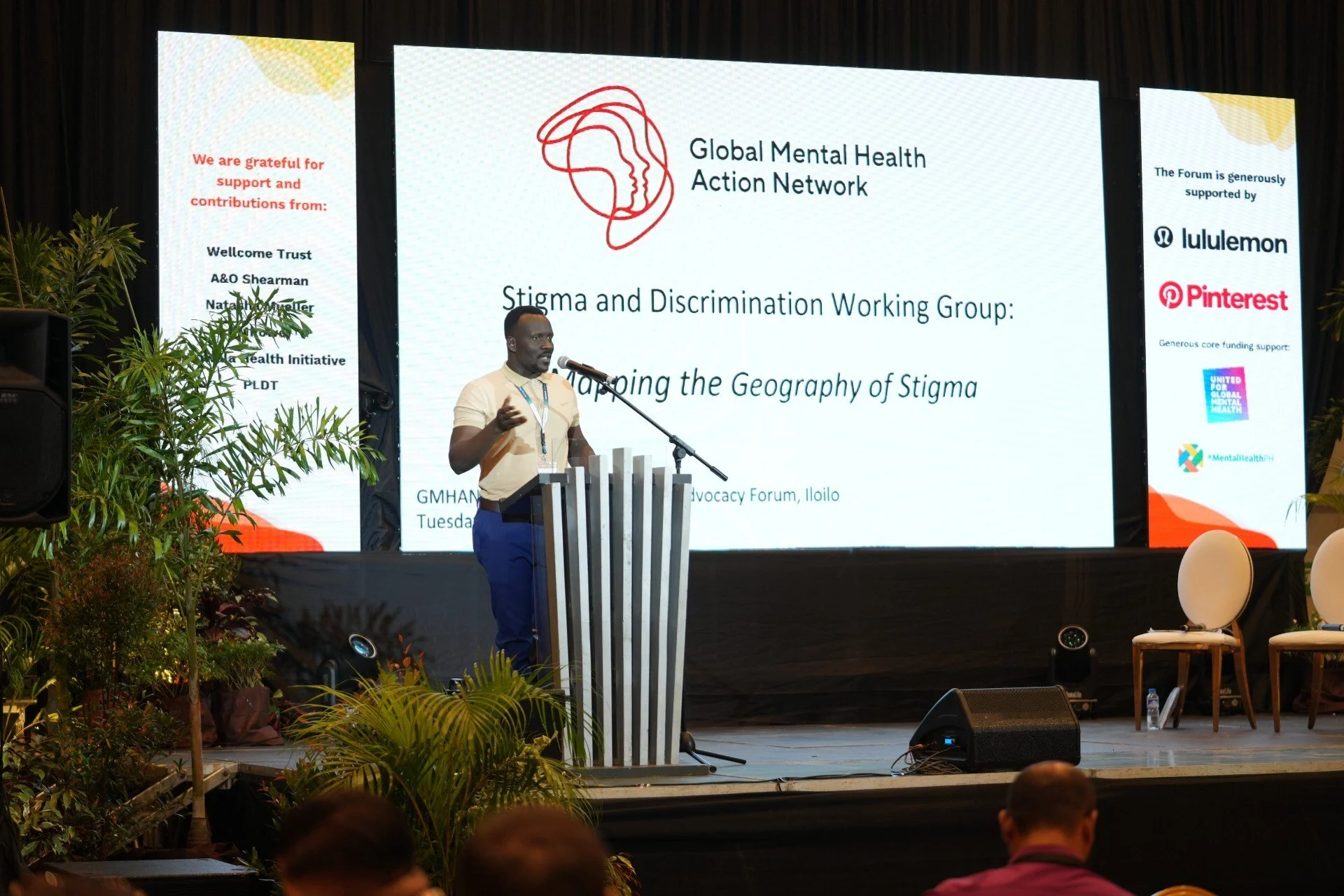
This snapshot survey of mental health advocates and campaigners, conducted during the Global Mental Health Action Network’s Advocacy Forum in February 2026, presents new insights into how stigma and discrimination are experienced and addressed across diverse global contexts.
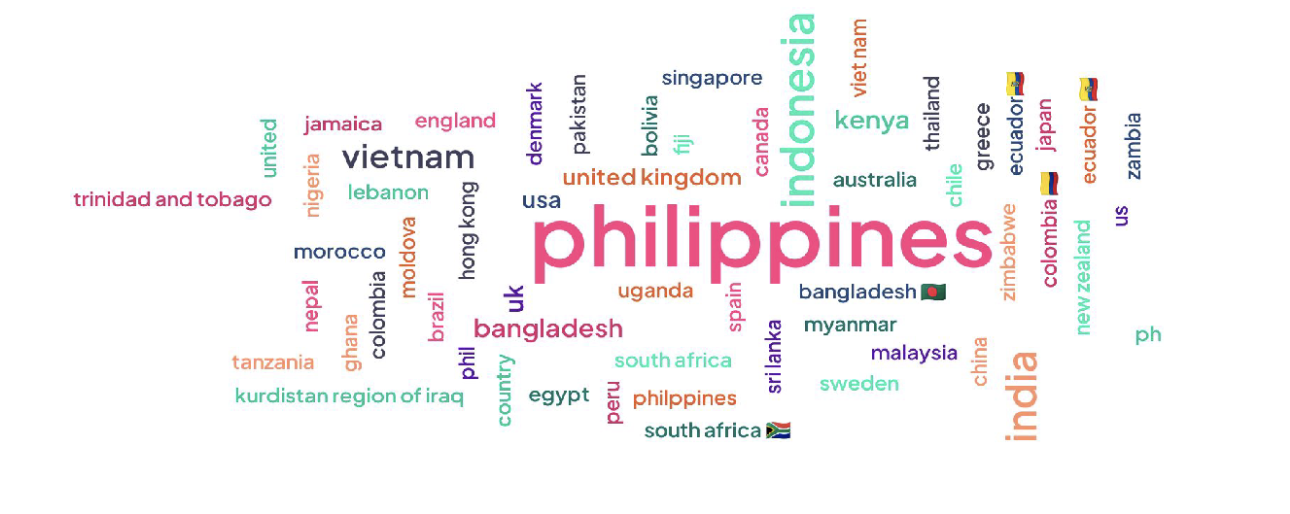
Drawing on responses from 228 participants representing 63 countries, the survey explores the extent and impact of mental health stigma on individuals’ lives, the actions being taken to challenge it, and the level of policy attention, funding, and institutional support dedicated to this work across all global regions.
The findings reveal that mental health stigma continues to exert significant impacts across settings, despite widespread engagement from advocates working to address it. While most respondents report actively contributing to anti-stigma efforts, these initiatives are often not matched by corresponding policy prioritization or sustained funding.
Instead, stigma reduction efforts are largely driven by NGOs and civil society organizations, frequently supported by international donors rather than domestic government investment.
Together, these insights provide an important foundation for understanding current gaps as well as opportunities to facilitate more peer learning in anti-stigma efforts across diverse contexts.
The findings will also inform development of the next phase of The Geography of Stigma, an initiative led by GMHAN’s Stigma and Discrimination Working Group, a peer learning network of over 2,200 members, aimed to advance more coordinated, evidence-informed context-specific approaches to reducing stigma worldwide and to collectively advocate for increased priority and investment in anti-stigma programmes.
Key Findings:
Stigma is still a common experience; over half of respondents had personal experience of mental health stigma and discrimination (58%).
Negative public attitudes and behaviour are most commonly experienced; Societal Stigma was most commonly experienced (39%), followed by structural stigma (23%), self-stigma (22%) and associated stigma (16%). The overriding impact of stigma was also mentioned, leading to mental health being seen as “not important as other areas”.
The majority of respondents had been tackling stigma; just over 80% had been involved in tackling stigma (63% currently and 18% had done so previously) with less than a fifth (19%) not having done any stigma activity.
A wide range of anti-stigma activities were undertaken with awareness workshops the most common and paid-for advertising campaigns the least common; Community-based awareness workshops were the most common form of activity (15%), followed by training advocates or ‘Champions’ to share lived experience (12%), social media campaigns (12%) and school-based interventions (11%). Social contact activity was undertaken by 8% of respondents, policy or legal advocacy campaigns were less common (7%) as was lived experience leadership as a central approach (6%), with the least common being paid-for advertising campaigns (0.35%).
Addressing mental health stigma and discrimination were not a policy priority in the majority of respondent’s countries/localities; Almost three quarters of respondents (73%) said addressing stigma and discrimination was not a policy priority whilst 19% said it was, and 8% didn’t know.
It was left to NGOS and CSOs to prioritise addressing stigma and discrimination; 30% of respondents who said yes (addressing stigma was a policy priority) said NGOs had led on this and 25% said Civil Society Organisation had also done so. Only 11% said Governments had made this a priority.
Funding for addressing stigma and discrimination is rare; Less than a fifth of respondents (19%) said there was funding in their country or region, more than half (52%) said there wasn’t funding, and 29% didn’t know about funding for stigma work.
The sources of funding were mostly likely to be from international funders and NGOs rather than Governments; 28% of respondents who said there was funding for stigma work in their country or region “Isolated. Lost home. Lost family and friends. Lost job” said the source was international funders, 21% said NGOs were the funders, 14% said Government was the funder, 12% said corporate sponsors, and 7% said global bodies.
The survey then asked about the resources respondents would want to see included in a potential Stigma Advocacy Toolkit, which could be developed as part of ‘The Geography of Stigma’ project, once the online interactive platform is developed in the first phase.
When asked what resources the Toolkit should include, the most popular responses were; practical tools (17%), lived experience narratives (17%), advocacy messaging and framing guidance (17%), and evidence based intervention summaries (17%), followed by monitoring and evaluation (15%), and country or regional case studies (15%).
FULL SURVEY FINDINGS
Survey respondent demographics
Total: 228
Not all respondents completed all the questions. On average 200 respondents completed the full survey.
Locations:
Sectors:
NGO/non-profit - 53%
Academic/Research institution - 13.1%
Other (responses included Government, media, multilateral organisations and donor agencies) - 13.1%
Private - 7.7%
Mental health service provider - 7.1%
For-profit/Social enterprise - 6%
Q1 Experience of MH Stigma and discrimination
Q2 Type of Stigma Experienced
Experiences of Stigma
“Not important as other areas”
“Isolated. Lost home. Lost family and friends. Lost job”
“When I experienced depression and suicidal ideation, the hardest part wasn’t only the illness itself, it was the societal and structural stigma around it. I learned how easily pain is dismissed, how silence is encouraged, and how systems often lack the language, policies, and compassion to support mental health early and well”
Societal/Public Stigma
“Called as crazy, misunderstood by society and family, blocked by friends”
“Derogatory terms for mental health like madness – Mulalu in local Luganda language”
“Mostly heard phase: mental health is for crazy people”
“Abandoned by the partner”
“Exclude from inheritance”
“Not declaring suicide death so the person be buried (religious reasons)”
“You are so lame (weak)”
“Unpredictable, violent, lazy, unreliable, unproductive, lifelong condition, fake”
“Gen Z stigmatised as weak at workplace (strawberry generation)”
“Considered dangerous”
“Hiding diagnosis because it would affect business”
“What I was going through, personally, was something that was a phase or something I had caught from
someone else. That I didn’t pray enough hence why I was always anxious and depressed”
“Denied job. Accused of faking it. Told to just man up”
“Bullying at school”
“Invalidated”
“Told it wasn’t real”
Structural Stigma
Workplace/careers
“I was told I couldn’t have a career”
“I had a hard time looking for a job. There was some workplace discrimination”
“I am experiencing stigma because I am a mental health nurse who cares for persons with mental health conditions. So I experience stigma at societal, structural and from other colleagues who are not mental health professionals”
“That mental health professionals are not allowed to have mental health concerns”
“We were having a medical camp and my workmates reused I set up a mental health tent claiming the clients would be disorganized”
“One of my friends sees a colleague being mocked at work because they disclosed a mental health condition, and my friend has begun to hide his own struggles”
Healthcare services
“My patients don’t get the right medical care if doctors see they have mental health disorders”
Associated Stigma
“I was ridiculed for taking up the profession of mental health service provider”
Self stigma
“My own self esteem and feeling like I am not enough”
Help seeking
“Couldn’t seek help because of fear of society”
“They said it was just in the mind and nothing is wrong”
“I wasn’t allowed to seek help because it’s for “crazy people” who “don’t have control of themselves”
Intersectional S&D
“Not queer sensitive mental health service”
“People with disability, especially deafblind individuals are often misdiagnosed and discriminated against. Specifically because of the stigma against them and their mental health”
Q3 Involvement in Anti Stigma Activity
Q4 Type of Anti Stigma Activity in the Past or Present
Examples of Anti Stigma Activity and Impacts
“Analysis of legislative frameworks”
“Campaign to get mental health promises in political party manifestos during elections”
“Policy work”
“Influencing policy and other decision makers to invest in anti-stigma work and brining innovators together”
“Peer Facilitating/Support Training – makes them more comfortable in reaching out and talking about their experiences”
“Trained mental health advocates”
“Youth engagement and meaningful participation”
“Through workplace mental health engagements, media interventions, and my platforms Unspoken Battles… I have used storytelling, education, lived experience to challenge harmful narratives, increase awareness, and normalize conversations around mental health”
“Normalising mental health conversations and help seeking through community level events, youth dialogues and campaigns”
“Home again initiative where community inclusion is fostered. Modelling stigma-free care and environment”
“Training community health workers”
“Embedding mental health into sport to cultural influence”
“School and teacher training”
“People get to know more about mental health in Camps setting it made the topic familiar and more accepting”
“Ensuring all events have people with lived experience leading and speaking”
“Raising awareness in churches”
“Mad pride events”
“Interactive sessions on mental health literacy which usually results in people opening up about their own struggles, but they come one-to-one, not in front of the whole group”
“Building acceptance of mental health problems in the UK in the public space, via corporate partnerships”
“Social media campaign showcasing the importance of mental health using quotes from persons with lived experience”
“Social media post and psycho education – created safe spaces for people to talk openly”
“Developed national multimedia campaign on mental health promotion using SBC framework – for the Together Against Stigma campaign”
“Developing testimonial videos featuring people with lived experience. It helped challenge stereotypes about people with lived experience in the Eastern Mediterranean Region”
“Awareness raising, working with community leaders, social media awareness, podcast, bringing lived experience, specific interventions – such as Time to Change Global”
“We have young Mothers go to high schools to share their experiences”
“Positive mental health photo library”
“Media guidelines on suicide news reporting”
“Writing a manuscript based on stigma study results”
Q5 The Extent to Which Addressing MH Stigma and Discrimination are a Policy Priority in Respondent’s Countries or Localities Systemic Disconect
Q6 Bodies that have made addressing MH stigma and discrimination a priority (from Respondent’s who answered yes):
Q7 Funding for Addressing MH Stigma and Discrimination in Respondent’s Countries or region
If Yes - please tell us who funds this stigma work
STIGMA ADVOCACY TOOLKIT
Q8 Resource Preferences for the Geography of Stigma Toolkit
“Very clear practical and easy to use especially to understanding how stigma operates differently across communities, cultures and spaces”