
What Does Mental Health Have to Do with the SDGs? More Than You Think
Reflections from the 13th Asia-Pacific Forum on Sustainable Development, Bangkok
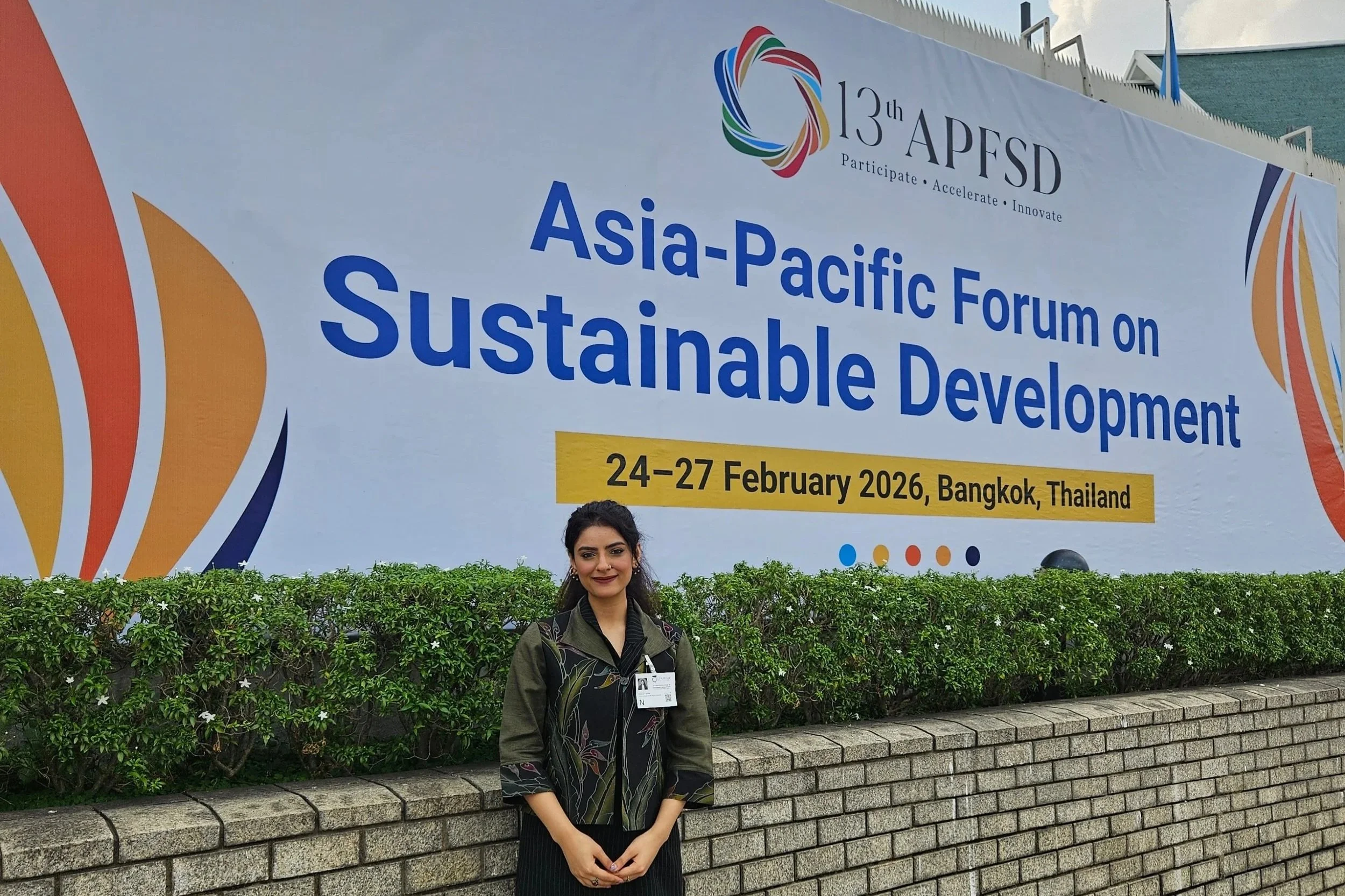
Muskan at the 13th APFSD
February in Bangkok is humid, busy, alive—and if you're navigating the UN Conference Center during the APFSD, full of people trying, in their own ways, to build a more just future. For four days, from 24 to 27 February 2026, the city hosted the 13th Asia-Pacific Forum on Sustainable Development (APFSD), a key regional convening feeding into the global 2030 Agenda process.
The Asia-Pacific region is, in many ways, where the tensions and possibilities of “sustainable development” are most visible: It holds the largest youth population on the planet, accounts for nearly half of global greenhouse gas emissions, and is home to some of the fastest-growing economies—while simultaneously encompassing some of the most climate-vulnerable countries, from small island developing states in the Pacific, to densely populated, heat-stressed urban centres across South and Southeast Asia. It is also home to two-thirds of the world's poor, with many communities navigating multiple crises at once. If the SDGs are going to mean anything, they have to mean something here.
About the APFSD and the UN process
The APFSD is convened annually by ESCAP (Economic and Social Commission for Asia and the Pacific), as a regional platform where 53 member states take stock of progress on the 17 SDGs and channel regional lessons into the globalHigh-Level Political Forum(HLPF) in New York, happening this year from 6 to 15 July 2026.
These reviews occur in a cyclical and interconnected manner. This year, the Forum focused on SDGs 6, 7, 9, 11, and 17: clean water, energy, industry, cities, and partnerships. In the many conversations, there was a strong push toward integrated rather than siloed SDG implementation.
We are increasingly talking about mental health as a priority beyond the health sector, affected by issues within housing, labour conditions, inequality, displacement, toxic environmental exposure, and social protection systems. The connections between the SDG themes and mental health are far more direct than they appear on a policy matrix—and yet, beyond a single suicide mortality indicator under SDG 3 (2025’s thematic focus), mental health is absent from mainstream SDG discourse. This matters when transitions are expected from people already exhausted, displaced, overheated, financially strained, and/or psychosocially unsupported.
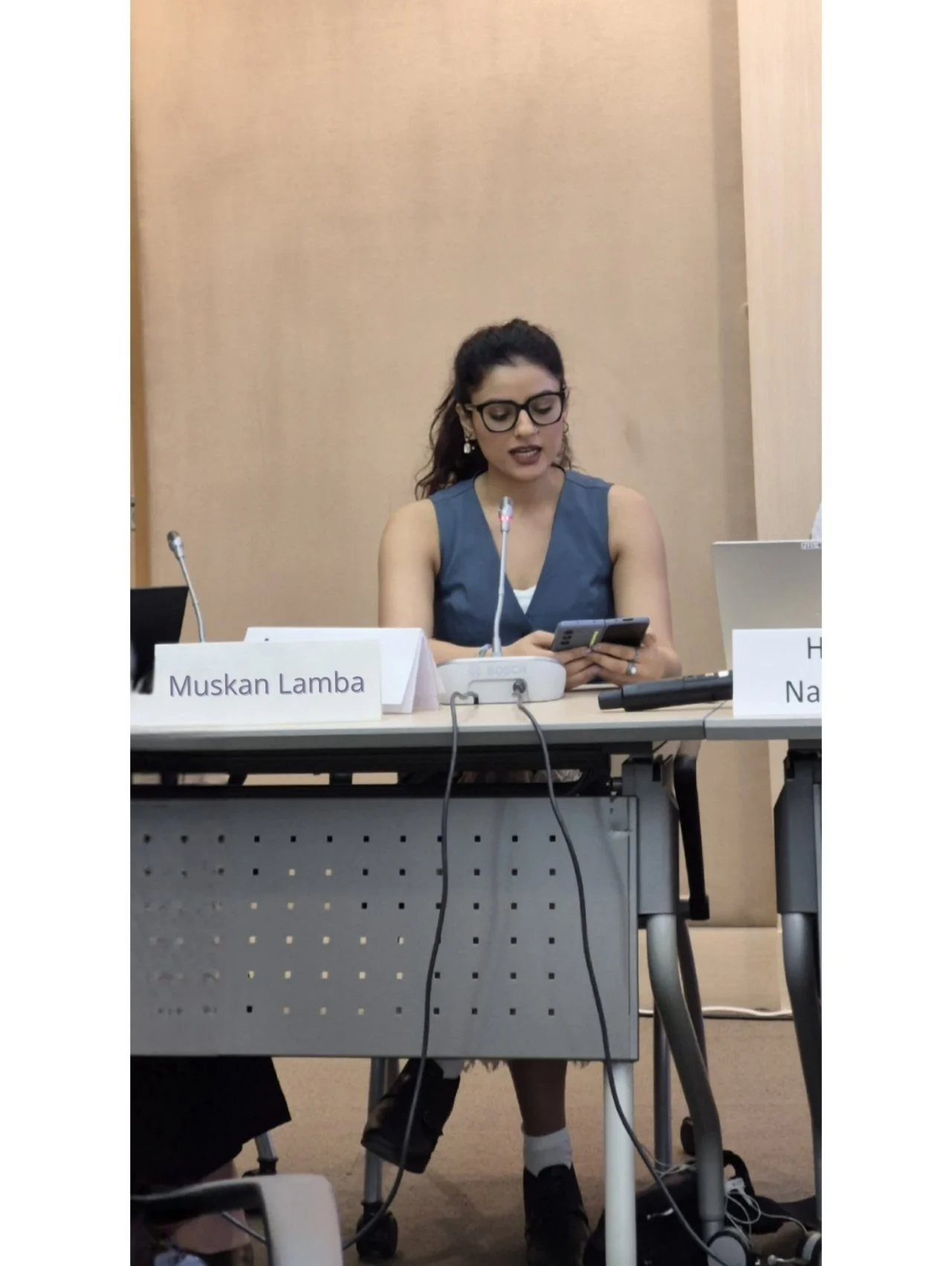

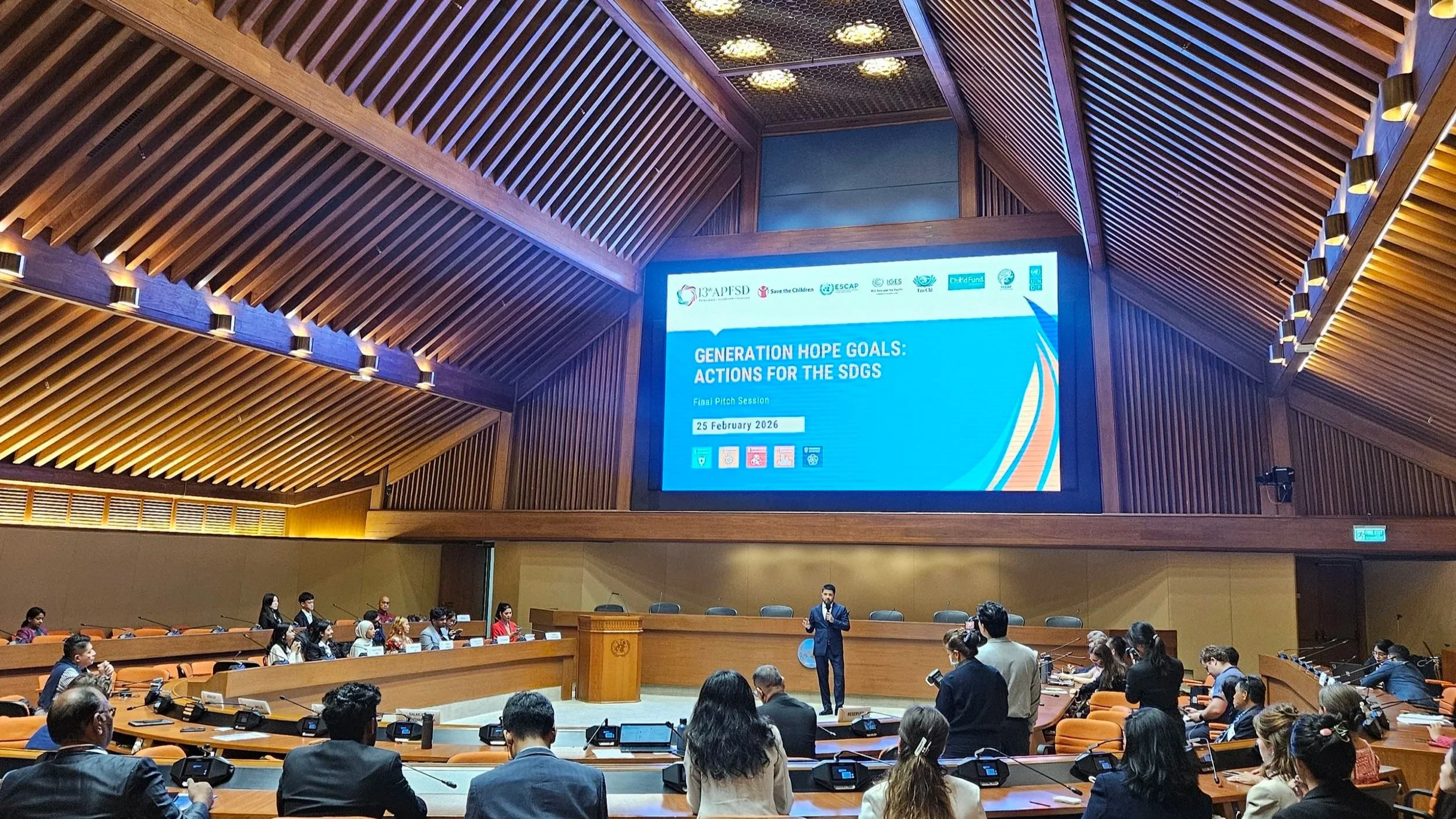
However, discussions at the APFSD's associated events and youth forum touched on many adjacent themes, from resilience and burnout to climate-health and collective wellbeing. It was acknowledged that the Asia-Pacific region remains significantly off-track on multiple SDG targets, with severe regression especially in environmental indicators. At the same time, there were inspiring conversations around Indigenous-led monitoring systems, youth co-design, community partnership, and direct access to financing for affected communities.
As a climate-mental health advocate, I had the opportunity to participate in the Forum and speak at an associated event: Synergistic Practices to Addressing Environmental Challenges and Achieving the SDGs, organised by the Ministry of Environment of Japan, ESCAP, UNEP, the Asian Development Bank, and IGES.
It was a half-day event dedicated to the theme of tackling the triple planetary crisis (climate change, biodiversity loss, and pollution) as interlocked problems that need integrated responses. The event built on a recent UN Environment Assembly resolution on “Promoting Synergies, Cooperation, and Collaboration,” reflecting a broader shift within environmental governance toward such integrated approaches. Their forthcoming Asia-Pacific Synergy Report includes a section on “Climate & Health” as one of its core pillars.
Mental health and the triple planetary crisis
When considering synergies, the default dialogue tends toward systems, infrastructure, finance, and governance. But what is the triple planetary crisis like for the people living through it?
Critics of dominant global mental health frameworks have long argued that distress cannot be separated from the political and economic conditions producing it. Post-disaster research shows that mental health impacts last two to five times longer than physical damage.
In terms of economics, depression and anxiety cost the global economy roughly US$1 trillion per year in lost productivity, and given climate change, labour productivity declines by approx. 2-4% for every 1°C rise above comfort thresholds.
The IPCC, in 2022, recognized that climate change has severe psychological and emotional impacts:
Climate change & extreme weather: Disrupts sleep, concentration, mood, and learning, and causes rising rates of depression, anxiety, distress, and suicide risk.
Pollution: Linked to chronic stress, cognitive strain, stigma, social withdrawal, and a persistent loss of dignity.
Biodiversity and ecological loss: Weaken cultural identity, place attachment, community cohesion, and spiritual relationships to land and water—especially for Indigenous, coastal, rural, and small-island communities.
And yet psychosocial recovery (or infrastructure) is often an afterthought, if featured at all, in resilience planning. It almost never appears in indicators, cost-benefit analyses, or financing frameworks. Mental health is also invisible in environmental data systems, even as climate finance is scaling up.
At the same time, integrated responses for the triple planetary crisis—from cleaner and more liveable cities to equitable green spaces, and climate-resilient infrastructure—can generate significant co-benefits for mental health.
Why the Asia-Pacific context matters
In the Asia-Pacific specifically, dominant mental health frameworks are heavily Western and individualised, but mental health issues are experienced and rooted in collective and relational ways which then go unnoticed and unaddressed in governance systems.
The Asia-Pacific region accounts for over 50% of the world's population but less than 20% of global mental health research output. And many countries across South and Southeast Asia have fewer than one mental health professional per 100,000 people. These figures are relevant for any conversation about SDG implementation, as mental health influences outcomes across poverty, education, labour, cities, climate adaptation, and inequality.
Youth presence at APFSD

One of the things I appreciated most about the Forum was watching peers navigate it. Youth delegates, such as from the Major Group for Children and Youth (MGCY), were everywhere—juggling sessions across different venues, stepping into speaking slots, creating space for other young people to be represented, keeping momentum alive. Even when formal structures don't always make it easy and are slow to materially respond, it matters that youth are invited to construct the agenda as much as to participate in discussions. The range of perspectives being held was wonderful to experience, from Indigenous voices to Pacific youth to those speaking from lived experience.
What I hope carries forward
At times, sustainability discourse can feel performative—rich in targets and frameworks, but thinner on questions of emotional and collective capacity. Sustainable development frameworks, too, assume an endless human capacity to adapt and remain resilient, under conditions that steadily worsen the emotional and social foundations required to do so.
Since the Forum, regional reports and follow-up processes have emphasised localisation, inclusive futures, governance capacity, and human-centred transitions. And I have been wondering: how do we make mental health a part of that?
I think the question needs to be asked more frequently and in more rooms: if we are designing transitions for people, what are we doing about the psychological and emotional conditions people are living under, the weight of multiple crises pressing down on them?
The 2030 Agenda was always an ambitious bet on the idea that leaving no one behind is possible. From Bangkok, I came away with a sense of possibility, but also a lingering question about whether our frameworks are yet honest enough about what leaving no one behind actually demands of us.
Muskan Lamba is a youth advocate and researcher on climate change and mental health, and Co-Chair of the Child & Youth Working Group at the Global Mental Health Action Network.