Representing GMHAN at the Global Leadership Exchange
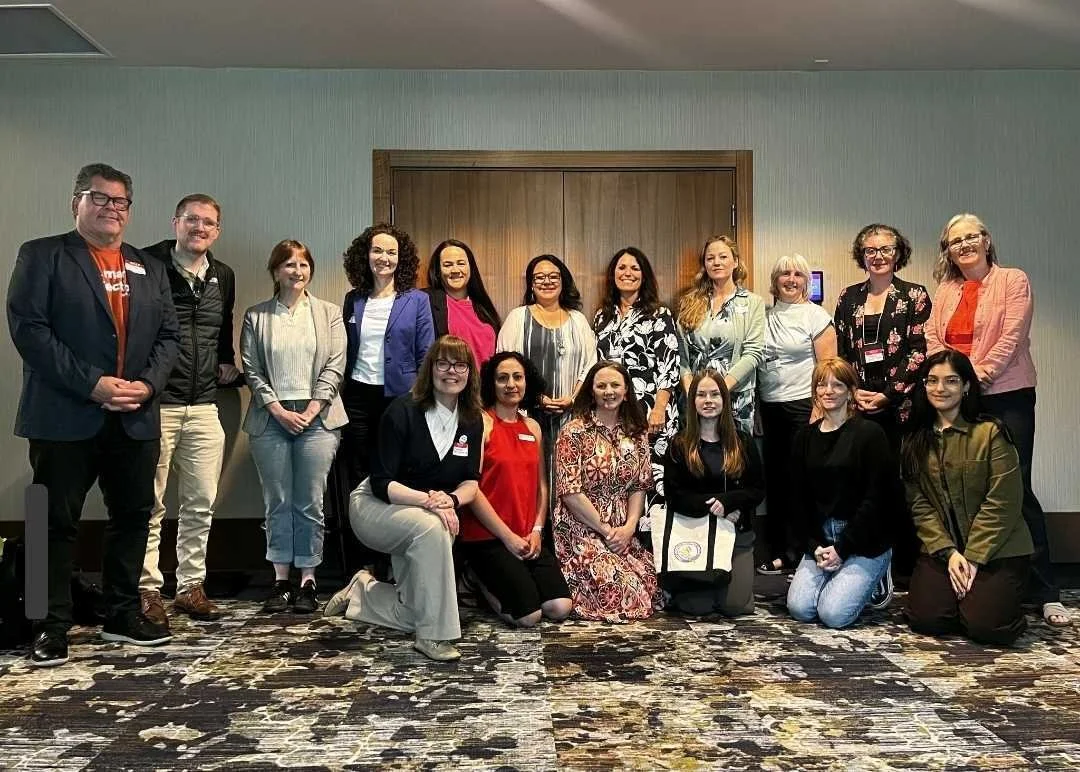
More than 500 mental health, disability, and substance use leaders travelled to Ottawa in June for the Global Leadership Exchange's 2026 Network Meeting, following more than 30 knowledge-exchange Matches held across Canada in the days before. We travelled with members of our wider community and were represented across a range of these conversations throughout the week: in Ottawa and in Matches on prevention, technology, lived experience leadership, and community-based care. GLE remains one of the genuinely useful spaces in this field: a place built for peer-to-peer learning among leaders of all kinds, from lived experience advocates to health ministries, and we came away from the week with more than we brought.
One observation kept resurfacing, in Ottawa and in the Matches alike: high-income and lower-income countries are often grappling with the same underlying problem, just distributed differently. Inequality, exclusion, and the erosion of local support systems drive the largest share of poor mental health wherever they occur, and it is the most disadvantaged communities - inside wealthy countries as much as in lower-income ones - who carry a disproportionate share of that burden. For a network with GMHAN's global footprint, that is a useful frame to bring into a room built mostly around national and regional policy: the dividing line that matters most is not between rich and poor countries, but between the included and the excluded within them.
Indigenous mental health was one clear illustration of this. The Network Meeting opened with reflections from an Indigenous Elder on working for the common good, respecting all forms of life, and seeking harmony; principles that set the tone for what followed. It was one of the most substantive and well-represented threads of the week, with strong Indigenous leadership across sessions. The inequalities we heard about there were some of the starkest in the room, inside one of the wealthiest countries represented.
Mental Health as a cross-government project
At a Match on population mental health hosted in Vancouver, colleagues from our Secretariat joined leaders from Canada, New Zealand and Ireland, across NGOs, academia, government and the healthcare sector, to look at what upstream investment actually requires. The strongest sessions were the most concrete: social prescribing built into college health services, and youth advocacy and civic engagement pathways built into high schools, both examples of prevention working through education and community life rather than treatment. We also used the session to bring the global picture into the room - presenting on our work through UnitedGMH and GMHAN, and drawing on discussions from the World Health Assembly. There was strong interest in our Care Not Custody campaign, in the wider debate on global health architecture, and in the ecosystem approach we're developing through the Being Initiative, work some delegates already knew well.
The same theme ran through Ottawa. Housing, employment, education and social protection came up as often as health services did; evidence, again, that mental health policy cannot sit inside a single ministry. Indigenous mental health surfaced here too, particularly through inclusion and social participation as protective factors, and through substance use prevention rooted in connection to environment and community; a reminder that the causes of poor mental health run through housing, land and belonging as much as through clinical services. Several delegates also described a growing trend of national governments tightening control over how local health budgets are spent, which squeezes exactly the kind of flexible, cross-sector investment that prevention depends on. Long-term, cross-government commitment to upstream mental health remains the hardest sell in any room, including ones as engaged as this one.
Deinstitutionalisation
Community-based alternatives to institutional care were a recurring point of reference throughout the week. This is a major area of advocacy for us. Toronto's Gerstein Crisis Centre, thirty years into a community-based model of crisis support, and the city's reformed community crisis response - now resolving the vast majority of mental health calls without police involvement (87%) and rarely ending in an emergency department admission (3.5%) - were both cited as evidence that non-coercive, community-led response works at scale. Alongside this sat a co-produced, non-medicalised definition of recovery, built around housing stability, access to services, social inclusion, and a person's own sense of purpose and autonomy, rather than symptom remission alone. This remains an area of long-standing importance to global mental health reform, and one we'll continue to track closely.
Technology and governance
Artificial intelligence sat underneath almost every conversation, whether the topic was crisis response, workforce capacity or funding. The consensus was not fear of AI but urgency: we need to be actively shaping how it gets built into mental health support, not reacting to it once it's built. That means pushing to democratise who develops these tools, calling for regulation before the tools are finalised rather than after, and making sure our own evidence and guidance are accessible through the platforms people are already using, at a moment when misinformation travels faster than correction. There was real concern that funders, governments included, will treat AI and digital tools as the cheaper option precisely when budgets are tight, using that as cover to under-invest in the human-led, relational work prevention actually requires. Technology has a role. It is a complement, not a substitute.
Connection as a shared language
Social connection - belonging, purpose, community - came up repeatedly as one of the strongest evidenced protective factors for mental health. This is at the heart of our work as a global Network. It was a useful reminder that the field still lacks a shared, accessible language for this work. "Belongingness" came up more than once as a term researchers and policymakers use with confidence and the public understands only vaguely. Toronto's own population mental health report card, built on a simple, self-rated question - how do you rate your own mental health? - offered one answer: a measure defined by communities themselves rather than by clinical categories alone, and one that travels far better across audiences.
GMHAN's presence at GLE is part of a longer-term commitment to ensuring global and local voices sit in the same room. We return with a refreshed drive to build into our Indigenous mental health work: an area where the inequalities are greatest and where we'll be doing more in the coming year. We return also with a lot of connections, new evidence for our work on climate and mental health, and a clearer sense of where the arguments for improving mental health are landing, and where the work is still to be done.