#MHForAll Webinar: Online Experiences and Young People’s Wellbeing
Digital spaces shape how young people learn, socialise, and seek emotional support. While offering connection, these platforms also introduce risks like bullying, appearance pressure, and addictive design.
Government responses have focused on age-based bans, but restriction alone risks severing vital support networks for vulnerable youth. Instead, young people are advocating for safer platform design, user-controlled algorithms, practical digital education, and a voice in governance.
This webinar brings together experts to discuss how we can better understand the risks and opportunities, and explore how we can measure the impact of digital technology on young people. This event also marked the launch of GMHAN's new Need2Know brief, “Online Experiences and Young People's Wellbeing”.
Expert Panellists:
Don Zane Muwanguzi, Awesome Mind Speaks - Uganda (Chair)
Paddy Crump, FlippGen - UK
Karen Scavacini, Vita Alere & Vertentes - Brazil
Vishwa Pathum, Youth Pride Organisation - Sri Lanka
Core Insights from the Expert Panellists
Beyond "Screen Time": Measuring digital impact solely by hours spent online is an outdated concept. What matters is digital intention and outcome - whether a young person is playing games or video chatting to build friendships, or engaging in passive, harmful scrolling.
"Screen time equals bad, less screen time equals good — that is far too simplistic. We need to measure digital outcomes and real-world impacts on sleep, friendship, and wellbeing instead of blanket hours."— Paddy Crump, Campaigns Director at FlippGen
Digital Gaps Reflect Systemic Shortfalls: Youth often turn to online influencers, peer groups, or AI chatbots because physical healthcare systems are burdened by long waitlists, costs, geographic barriers, and social stigma.
"Accessibility is not the same as quality or safety. Digital tools can offer immediate info, but they cannot replace clinical context or human support when a young person is in crisis." —Karen Scavacini, Founder at Instituto Vita Alere
AI is not a Therapy Tool: Young people value AI tools because they are available 24/7, empathetic-sounding, and non-judgmental. However, AI lacks clinical judgment and context. It can validate dangerous ideas just as easily as helpful ones.
"AI is a mirror; AI is not a therapist. It is built to tell you that you have the right idea, not to assess clinical risk or understand human consequences." — Paddy Crump, Campaigns Director at FlippGen
Engaging Youth in the Conversation: Youth are best placed to shape the conversations that affect them and design platforms and systems that support their wellbeing.
"Co-designing safer digital spaces means inviting young people in when defining the problem and setting priorities — not just consulting them after all the adult decisions have already been made."— Karen Scavacini, Founder at Instituto Vita Alere
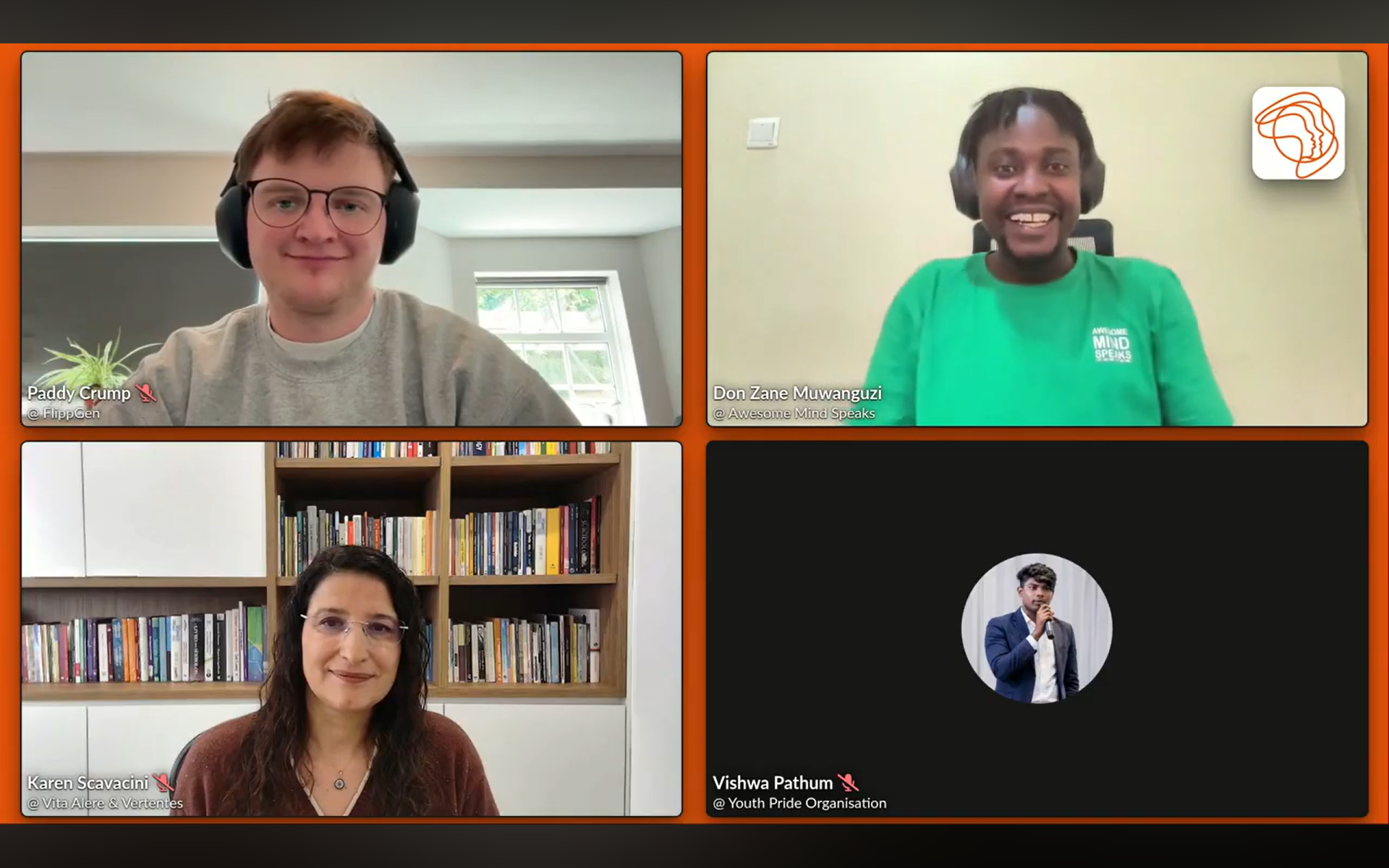
Expert Panellists: Paddy Crump, Don Zane Muwanguzi, Karen Scavacini, Vishwa Pathum
Reflections from Vishwa Pathum
Conversations around the mental health and wellbeing of LGBTQIA+ young people are still often limited or overlooked in many contexts. As someone who has been involved in youth and LGBTQIA+ advocacy, I have seen how online spaces can become both a source of connection and a source of vulnerability for young people. During the webinar, I reflected on my experiences navigating digital spaces as a young queer person and activist. Online platforms have provided me with opportunities to connect with communities, access information, express myself, participate in advocacy and reach people beyond geographical boundaries. At the same time, these spaces can expose young people to harassment, discrimination, cyberbullying, privacy risks and other experiences that can directly affect mental wellbeing.
One of the key reflections I wanted to highlight was that online safety should also be understood as part of mental health and wellbeing. For many young people, especially LGBTQIA+ young people, the online and offline worlds are deeply interconnected. What happens online can have very real emotional and psychological consequences offline. The webinar also reminded me of the importance of creating spaces where young people are not only treated as beneficiaries of mental health programmes, but are recognised as active contributors, advocates and knowledge holders. Our lived experiences can provide important insights into the realities that policies, programmes and services need to respond to. Another meaningful aspect of the experience was being able to represent a Sri Lankan perspective in an international space.
Coming from a context where young queer people continue to navigate various social, cultural and structural challenges, I felt a responsibility to bring those realities into a global conversation while also recognising that many of the challenges faced by young people are shared across different countries and communities. [This webinar] reinforced my belief that meaningful change requires collaboration across communities, countries and generations. Young people should have genuine opportunities to participate in conversations about the issues that directly affect their lives, rather than simply being spoken about by others.
Replay the webinar now
•
Replay the webinar now •
Here’s what our community had to say
To ensure young people are shaping the decisions that affect their lives online, as a global community, we must…
Share the real power with them, and we must make platforms accountable for creating safer spaces where young people can connect and thrive. -Karen Scavacini
View young people as experts and see them as essential to building platforms, interventions and policies that are durable and have a meaningful impact on young people’s lives. -Paddy Crump
Make it fun! Create more intentional fields and communities, and put in place policies that allow for disconnection without the “fear of missing out.” -Don Zane Muwanguzi
Collaborate with different stakeholders. -Karim Ssensamba
Directly involve young leaders and advocates in digital rights panels, advisory boards, and internet governance forums and equip youth with the skills to navigate online safety, advocacy, and technology ethics. -Omniya Ahmed