
Building Resilience Through Policy: Federal and Borno State Stakeholders Conclude Landmark High-Level Engagement to Domesticate National Mental Health Law and Policy
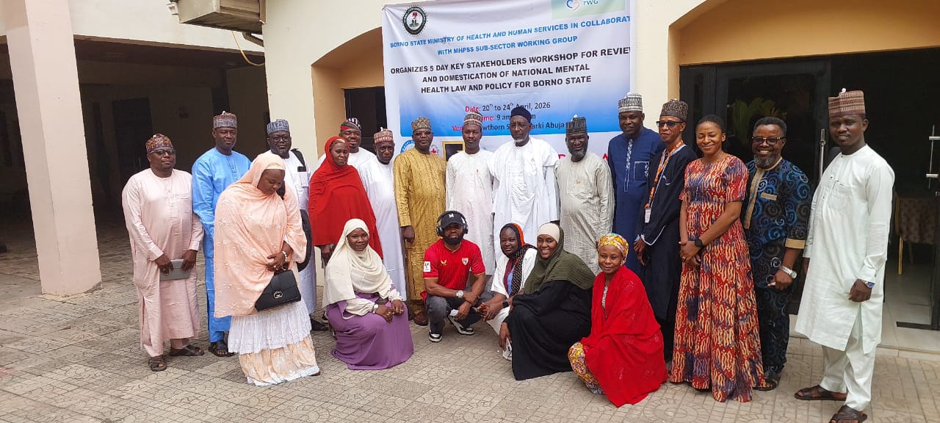
Abuja, Nigeria — In a major step toward transforming mental health governance in conflict-affected regions, key representatives from the Federal Ministry of Health, the Borno State Government, legislative bodies, mental health professionals, civil society, and international development partners gathered in Abuja from April 20th to 24th, 2026. The five-day high-level stakeholders’ engagement focused on reviewing and adapting Nigeria’s National Mental Health Act (2021) and National Mental Health Policy (2023) for formal domestication in Borno State.
For a region that has endured over a decade of insurgency, mass displacement, and severe humanitarian distress, domesticating these frameworks marks a crucial turning point. The effort aims to strengthen local health governance, protect the human rights of individuals living with mental health conditions, secure sustainable financing, and integrate mental healthcare into primary healthcare delivery across Borno State.
Aligning National Standards with Local Humanitarian Realities
Opening the session, Mrs. Grace Ogunleye, Assistant Director (Nursing) and Head of the Coordinating Unit for the National Mental Health Programme at the Federal Ministry of Health and Social Welfare, emphasized the urgent need for local action:
"Mental health is now recognized globally and nationally as a critical pillar of health, social stability, productivity, and human development. For communities affected by conflict, displacement, trauma, poverty, and social disruption, the need becomes even more urgent."
Throughout the workshop, delegates participated in technical presentations, plenary sessions, and drafting working groups designed to:
Review key provisions of the National Mental Health Act and Policy.
Identify operational gaps and opportunities for contextual adaptation within Borno State.
Formulate a draft framework for the Borno State Mental Health Policy.
Harmonize legislative recommendations to ensure swift policy adoption.
High-Level Political Will and Cross-Sectoral Commitment
The engagement underscored strong political commitment from state leadership and civil society actors. Dr. Zannah Hassan Boguma, Special Adviser to His Excellency the Executive Governor of Borno State on Culture and Regional Integration, highlighted the state's resolve:
"We recognize the need to strengthen mental health governance in Borno State. This process will help us deliver laws and policies that protect our people and ensure services are integrated into our health system."
Lead Facilitator Zion Ameh noted that contextualizing national legislation is vital to guaranteeing that affected individuals and families receive dignified, holistic, rights-based, and responsive care.
Partner organizations also highlighted the deep trauma experienced by vulnerable groups, particularly women and children:
Martins Orga, Representative for Save the Children International:
"Children and young people in Borno have suffered profound and unimaginable trauma. We remain fully committed to working with the government and communities to strengthen systems that protect children and support healing."
Sabiu Shehu, Advocacy and Communications Coordinator for RESILAC 2:
"Advocating for mental health governance in Borno is essential. Strong systems empower communities to recover, rebuild, and thrive despite adversity."
Ogenyi Isaac Agbo, MHPSS Technical Advisor for Première Urgence Internationale (PUI) Nigeria Mission:
"The domestication of this law and policy provides a vital roadmap for mental health service delivery. At PUI, we are deeply committed to supporting and complementing government efforts to achieve a mentally healthy society. Beyond serving as a powerful advocacy tool to secure stakeholder buy-in, this framework creates a sustainable pathway for dignified care. We strongly urge other states to replicate this model, as a unified legislative approach is essential to transforming mental healthcare across Nigeria."
Next Steps: A Roadmap Toward Legislative Enactment
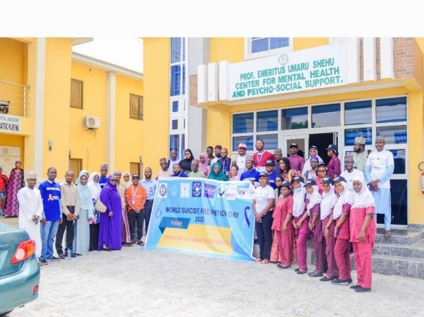
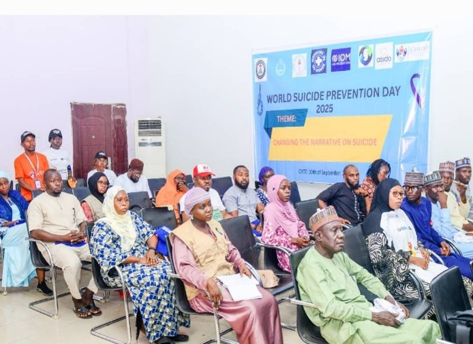
At the conclusion of the five-day workshop, stakeholders officially validated the draft versions of the Borno State Mental Health Act and Policy, issued a joint communiqué, and adopted a clear implementation roadmap. The validated documents will now be submitted to the Borno State Ministry of Health, Ministry of Justice, the State Executive Council, and the Borno State House of Assembly for legislative review and passage.
This historic milestone establishes a sustainable foundation for mental healthcare in Borno State—ensuring that services are rights-based, fully integrated, and tailored to the lived realities of the population.
Changing the Narrative: Mental Health Partners and Flourish Foundation Unify for World Suicide Prevention Day
Maiduguri, Nigeria — In a powerful demonstration of collective action and advocacy, mental health organizations, healthcare institutions, civil society groups, and community partners converged on September 10th, 2025, to commemorate World Suicide Prevention Day (WSPD) across Borno State. Joining the global movement under the theme “Changing the Narrative on Suicide,” the joint initiatives aimed to tear down long-standing stigma, promote open dialogue, and build accessible support networks for vulnerable populations.
Among the key organizations leading the charge was The Flourish Foundation for Wellbeing, alongside regional healthcare leadership, international humanitarian agencies, and grassroots advocacy networks.
A High-Impact Symposium at Federal Neuropsychiatric Hospital
A major highlight of the commemoration was a multi-stakeholder symposium and capacity-building technical workshop hosted at the Federal Neuropsychiatric Hospital (FNPH). The gathering brought together clinical psychologists, psychiatrists, primary healthcare workers, community responders, and policy actors to address the rising burden of psychological distress and self-harm in conflict-affected communities.
The symposium emphasized moving away from silence and criminalization toward a compassionate, rights-based public health model. Key discussions centered on:
Early Detection & Task-Sharing: Upskilling non-specialized health personnel and community extension workers in Psychological First Aid (PFA) and suicide risk assessment.
Community-Based Prevention: Establishing localized referral pathways to ensure individuals in acute distress receive immediate care without fear of social judgment or legal repercussions.
Policy Integration: Aligning local suicide prevention strategies with national mental health frameworks and ongoing legislative reforms in Borno State.
Amplifying Hope Across the Airwaves and Communities
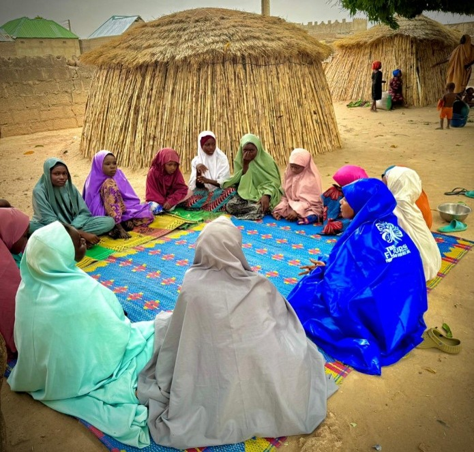
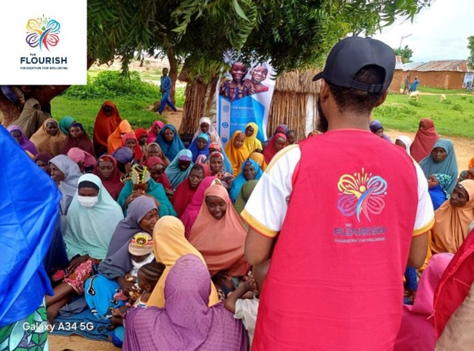
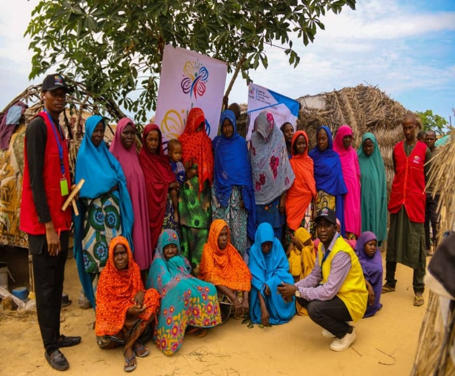
Recognizing that stigma often thrives in silence, partners deployed an extensive public awareness campaign spanning media channels and grassroots locations:
Interactive Radio Sessions: Live call-in radio broadcasts were hosted across major regional stations, providing a safe platform for experts to discuss warning signs, debunk myths surrounding suicide, and highlight available crisis hotlines and counseling centers.
Community-Level Sensitization: Outreach teams conducted door-to-door awareness walks, youth dialogues, and market-place health talks across local government areas, equipping community members with practical tools to identify distress and support peers.
A Call to Action: Moving from Awareness to Action
Speaking during the commemoration, stakeholders reiterated that "Changing the Narrative" requires more than an annual awareness day—it demands sustained investment in community mental health infrastructure, sustainable financing for primary healthcare integration, and continuous public education.
By bringing together clinical expertise at FNPH, non-governmental dedication from organizations like The Flourish Foundation for Wellbeing, and broad community outreach, the WSPD 2025 commemoration established a strong benchmark for unified mental health advocacy across North-East Nigeria.
By Ogenyi Isaac Agbo