Investing in What Makes Young People Thrive: Reflections from the GMHAN Child & Youth Working Group
Inspired by Youth Wellbeing Insights | PinterestOver the past year, across events and spaces, GMHAN’s Child & Youth Working Group has been in conversation with young advocates, researchers, lived experience leaders, and community organisations across regions. Frequently, we see that some of the most creative, influential approaches to youth mental health are from outside traditional mental health systems. They take many forms, from peer-led spaces and arts and cultural initiatives to digital communities and youth collectives. There are also emerging models responding to mental health alongside climate change, identity, inequalities, displacement, and other social realities. These approaches are often intersectional and justice-oriented, recognising that wellbeing is shaped by the wider conditions in which young people live.
These approaches matter because mental health is experienced in context. We increasingly recognise lived experience and community knowledge as expertise, but our funding systems still struggle to trust the people who hold it or enable them to sustain themselves and their movements.
The organisations closest to young people are often the least securely supported
Pinterest's recent reflections from its Impact Fund partners reveal that more than half of its partner organisations describe their financial health as “surviving”, and a further 17% as “staying afloat”. Only 28% say they are thriving.
For those of us working across the youth mental health ecosystem, this is perhaps unsurprising, but should still concern us. Because traditional systems have not always met them where they are, young people worldwide are actively creating their own ways of understanding, responding to, and supporting mental health, with limited resources and support. They are expected to survive through short-term projects, restricted grants, complex language and technical/financial processes, and an almost endless cycle of proving impact before being given the stability to build
What if we funded the conditions for good work?
Youth leadership in many spaces mirrors the idea of personal sacrifice, where there is sometimes an expectation that commitment to a cause should compensate for insecure work. One of the lessons from the Impact Fund that resonates with us is the emphasis on flexible, trust-based funding and investment in organisational capacity.
While funding remains critical, platforms like Pinterest have the opportunity to support the youth mental health ecosystem beyond grants alone. Their role as digital platforms gives them unique opportunities to amplify youth-led solutions, create spaces for knowledge exchange, strengthen storytelling and visibility, support digital wellbeing initiatives, and connect advocates and organisations across regions. For many emerging organisations, access to networks, partnerships, mentorship, and opportunities to collaborate can be as transformative as financial investment itself. Supporting the ecosystem means investing not only in individual organisations, but also in the connections that allow them to learn, adapt, and grow together.
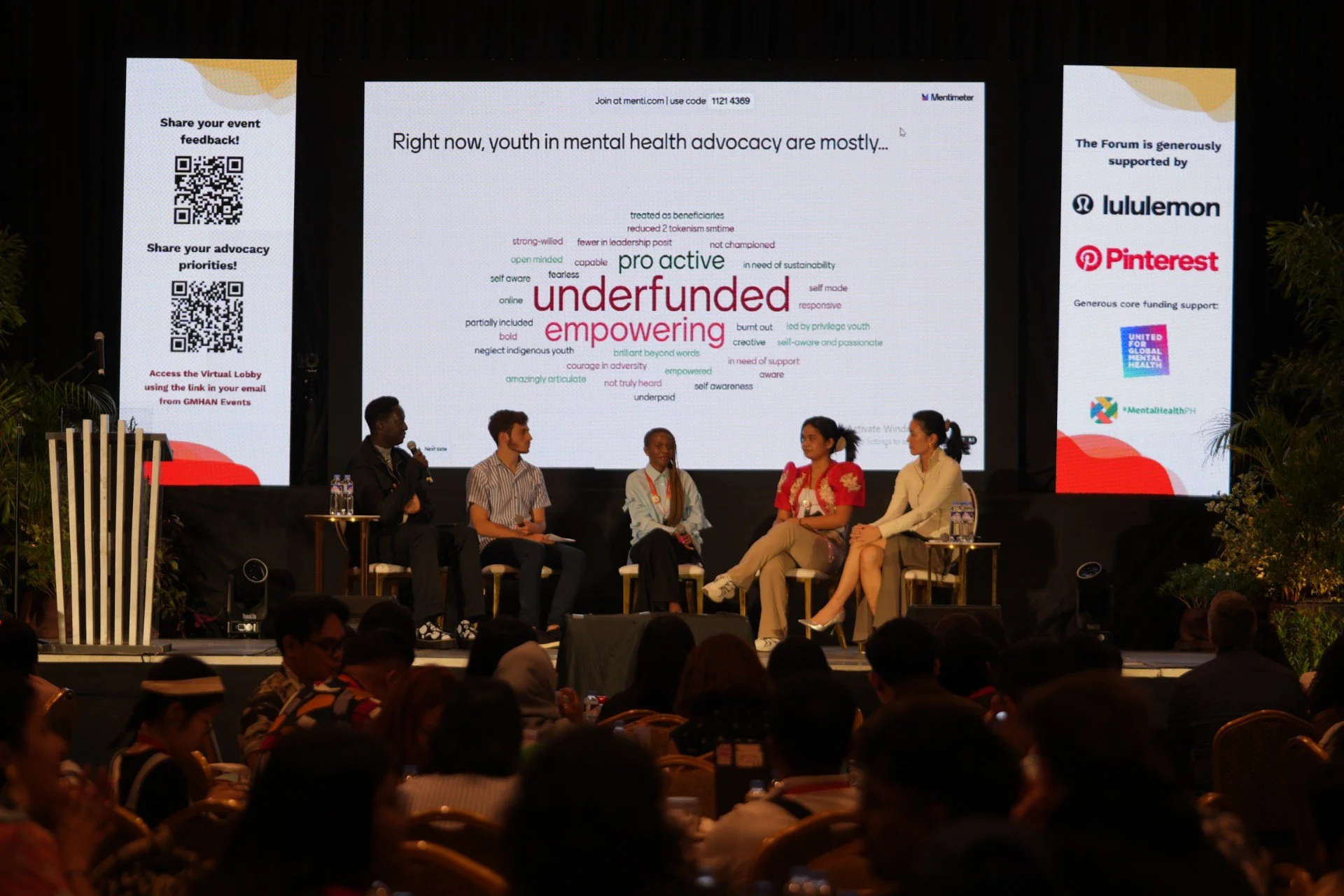
Don Zane Muwanguzi, Co-Chair of the GMHAN Child & Youth Working Group, reflects:
"As a young founder building a youth-led mental health organisation in Uganda, Pinterest's reflection on strengthening organisations rather than only funding programmes resonated deeply with me. Across many low- and middle-income countries, young organisations do not lack ideas, passion, or proximity to communities. The challenge is often creating sustainable structures around those ideas.
Many youth-led organisations are expected to respond to growing community needs while navigating short-term funding cycles and limited unrestricted support. We spend significant time proving our impact instead of investing that energy into strengthening our teams, systems, and long-term vision.
What gives me hope about Pinterest's approach is the recognition that trust matters. When funders trust community-rooted organisations, they allow leaders closest to challenges to develop solutions that are relevant, innovative, and sustainable."
Belonging as an integral outcome
Another integral finding from Pinterest is that 76% of beneficiaries across the Impact Fund's partners reported increased connectedness and belonging. This connects closely with conversations we have had through the GMHAN Child & Youth Working Group, including our #MHForAll Webinar: Youth Reimagining Leadership in Mental Health.
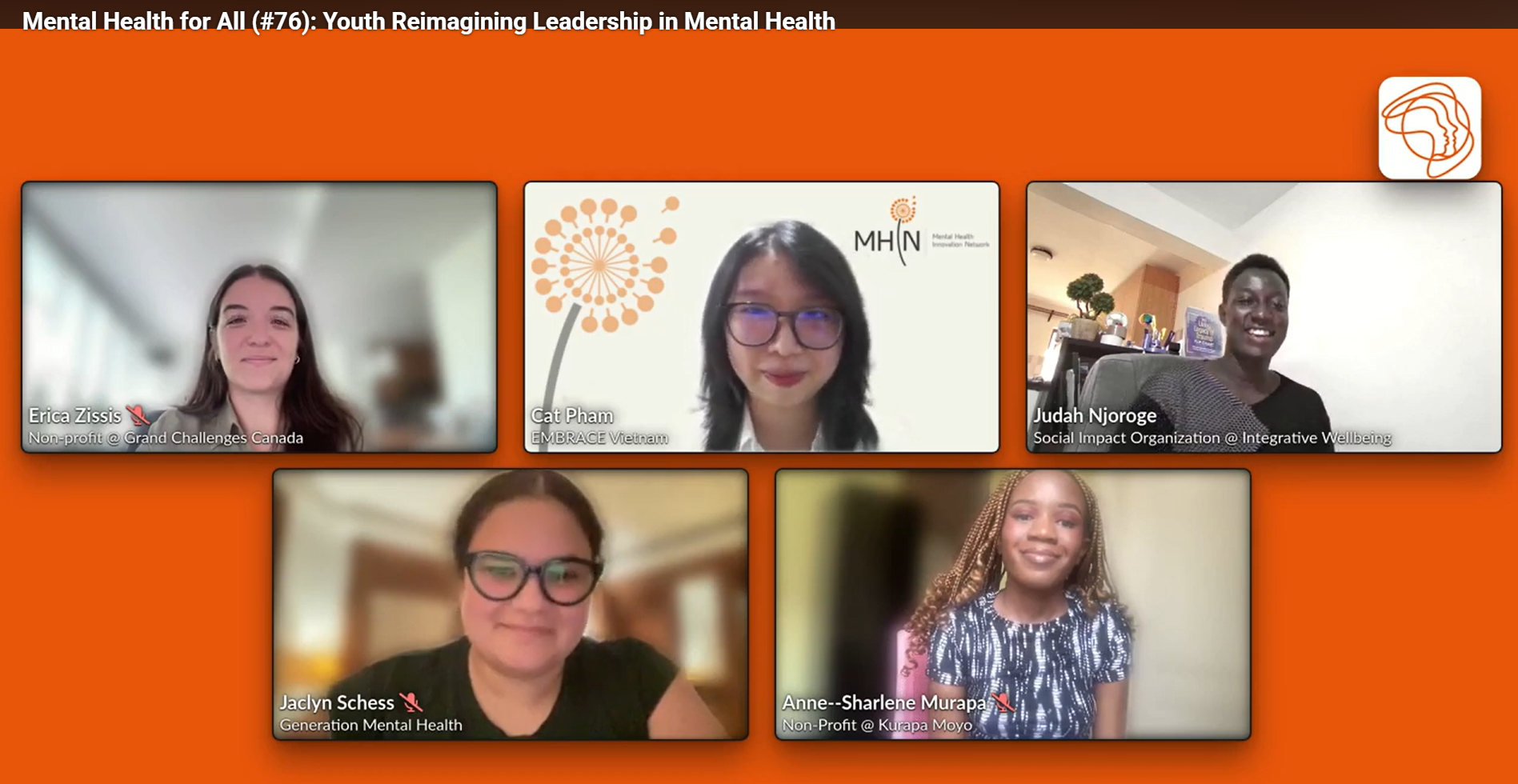
During this conversation, young leaders from different regions reflected on what it means for young people to move beyond being beneficiaries of mental health interventions and instead be recognised as experts in the programmes and circumstances that affect their own wellbeing. Larger than service utilisation or measures of services delivered or symptom reduction are our experiences of wellbeing, as we crave belonging, connection, dignity, agency, and the feeling of being understood.
From listening to shifting power
We have made important progress in listening to young people. However, listening must be the beginning, not the end of meaningful youth engagement. Formal systems still take time to recognise the sacrifice, resilience, success, and innovations that young people lead. The Impact Fund's findings offer an encouraging picture, giving room to community-rooted organisations to build and innovate. That 80% of partners are collaborating within the emotional well-being network is also significant here. Collaborating, in times of polycrisis where a lot overlaps with mental health and is at stake, is the future.
We need to fund the connective tissue between organisations: the time it takes to share learning, build partnerships, and participate in a wider ecosystem rather than compete for the same limited pool of resources
The importance of the right common definition of impact
The approach from Pinterest on "investing in joyful, community-rooted well-being" also resonates a lot with our major thesis on mental health impact: transversality. Within our Working Group, we have members from a wide range of backgrounds: academia, social entrepreneurship, political activism, and youth-led founder communities, not to mention our sociocultural diversity of more than 90+ countries represented.
To embrace this diversity, it is essential that we engage with solutions born from these very differences: community-rooted and culturally grounded approaches. Being a global network does not mean searching for one universal solution. Instead, it requires recognising the plurality of cultures, histories, and realities that shape how young people experience wellbeing. What works in one state, province, or community may not necessarily translate elsewhere. This is where community-based approaches become essential. Lasting and meaningful impact in mental health is built from the bottom up. It maximizes the quality of impact, not simply its reach.
Looking Ahead: Creating Conditions for Young People and Organisations to Thrive
The reflections from Pinterest's Impact Fund reinforce an important lesson for the youth mental health ecosystem: supporting young people requires supporting the communities, organisations, and relationships that make wellbeing possible. As the GMHAN Child & Youth Working Group, we believe the future of youth mental health depends on moving beyond seeing young people as beneficiaries and recognising them as leaders, innovators, and experts in their own experiences.
Moving from surviving to thriving requires more than resources alone. It requires trust, meaningful partnerships, flexible support, and investment in the ecosystems that allow community-rooted solutions to grow. When we strengthen the organisations closest to young people, we do more than improve programmes; we create the conditions for young people and communities to thrive.
Zane, Muskan, Murilo - Co-Chairs, Child & Youth Working Group