World Mental Health Month 2026
Lived Experience Takeover
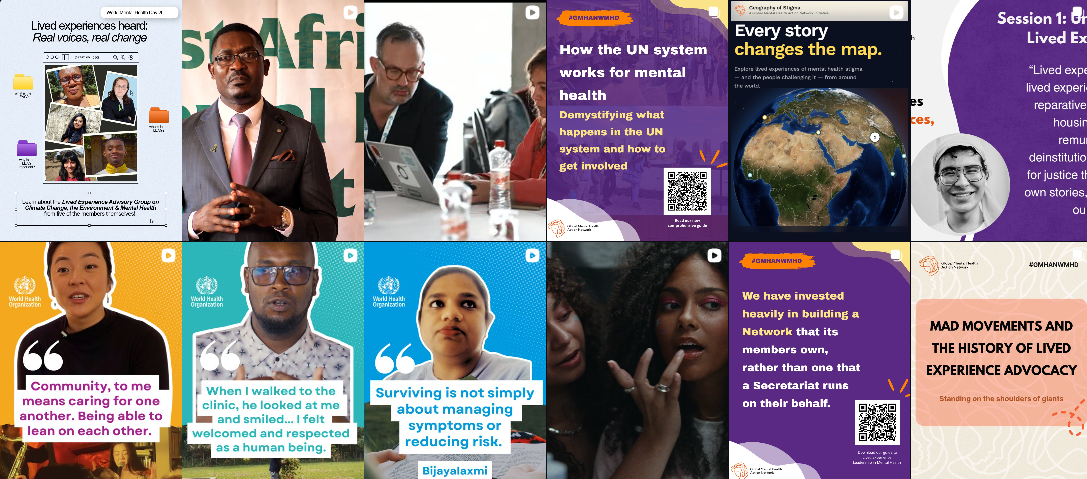
Throughout October 2026, we celebrated this year’s World Mental Health Day theme: Lived Experiences Heard - Real Voices, Real Change.
We’ve spotlighted the experiences and perspectives of advocates from across the globe, launched a suite of new resources, led a dedicated Learning and Action Initiative, and created new pathways to ensure the voices of people with lived experiences of mental health shape mental health policy and practices.
860+ attendees at the flagship WMHD event
•
5 expert-led Knowledge Exchange Sessions
•
3 new guides launched
•
860+ attendees at the flagship WMHD event • 5 expert-led Knowledge Exchange Sessions • 3 new guides launched •
Message from the GMHAN Secretariat
Placing lived experience at the core of World Mental Health Day, the most important moment in our mental health calendar, is a milestone that should not go unnoticed.
At Global Mental Health Action Network (GMHAN), we define lived experience deliberately broadly, including experiences of distress however mild or severe, of trauma, of inequality and of caring for a loved one, and we treat it as expertise rather than as a separate category. This shapes how we work both at GMHAN and as United for Global Mental Health: we invest in lived experience advocates, we work side-by-side, we remunerate lived expertise, and we never make disclosure the price of participation. The alternative is a sector that asks people to perform their pain in order to be heard.
“Nothing about us without us” applies to global decisions as much as to individual care, and it guides the work that we do in advocacy, together with our global community, at a local, national, regional and global level.
Our lived experiences, our loved experiences and our learned experiences have too often been kept in separate rooms, with different weight attached to each. This World Mental Health Day, let them come together to define a better mental health future for all.
World Mental Health Day Flagship Webinar with WHO and the World Federation for Mental Health
“It's more than just “let's get lived experience in the room”. It's actually: “invest in those processes properly”. And I'm not just talking about money, I'm talking about time, creating safe spaces, and having the right people around the table.” - Kerri Butler, Take Notice, New Zealand
a. Webinar
This year's theme, Lived Experience Heard: Real Voices, Real Change” highlights this critical issue and recognises the voices and perspectives of the people most impacted as essential partners in driving change. In partnership with UnitedGMH, World Health Organization and World Federation for Mental Health, we brought together 860+ attendees for our MH4all Webinar to discuss how people with lived experience can be meaningfully engaged in shaping mental health policy, services and practice.
The World Health Organization’s practical guide, Supporting the transition to community-based mental health and social care, provides hospital leaders and decision-makers with an actionable framework for psychiatric deinstitutionalization.
Designed to shift focus away from prolonged institutional stays toward community-integrated care, the guide outlines adaptable strategies across three key phases—plan, prepare, and provide. By targeting reduced hospital admissions, transformed inpatient care practices, and strengthened discharge and continuity systems, this resource helps health systems safeguard human rights, enhance patient autonomy, and foster lasting community participation.
b)WHO’s new Deinstitutionalisation Guide
c) GMHAN’S approach to Lived Experience Guide
Explore our comprehensive Approach and Commitment to Lived Experience Engagement & Leadership briefing for global insights on equity, diversity, inclusion, and lived experience as a core form of expertise. We believe in:
Lived Experience Leadership: Positions lived experience at the core of all network activities, directly shaping governance, leadership, and strategic priorities to decentralize power across the global mental health sector.
Lived Experience as Expertise: Treats lived experience as professional-grade expertise carrying collective community knowledge, which involves investing in advocates through skill-building, reciprocal mentorship, and a fluid view of identity.
Safety and Disclosure: Establishes trauma-informed, psychologically safe spaces where disclosure is entirely voluntary, protecting participants from being forced to perform their pain to be heard.
Safeguarding: Prioritizes relational care, active listening, and zero-tolerance policies against harassment to ensure meetings, events, and travel environments remain safe and supportive.
Accessibility and Participation: Treats access as a core design requirement by removing language barriers, carefully selecting meeting locations based on safety and inclusion, and amplifying marginalized global voices.
Young People as Leaders: Engages young people as genuine strategic leaders by paying them for their contributions, supporting them into global leadership roles, and challenging traditional definitions of leadership.
Processes: Implements clear preparation sessions and fair remuneration structures—using equitable day rates based on international wage estimates—to ensure meaningful participation without financial barriers.
Decentralisation of Power: Advances localisation, indigenous knowledge, and community-led movements to shift decision-making power away from high-income countries toward a more equitable global sector.
Geography of Stigma
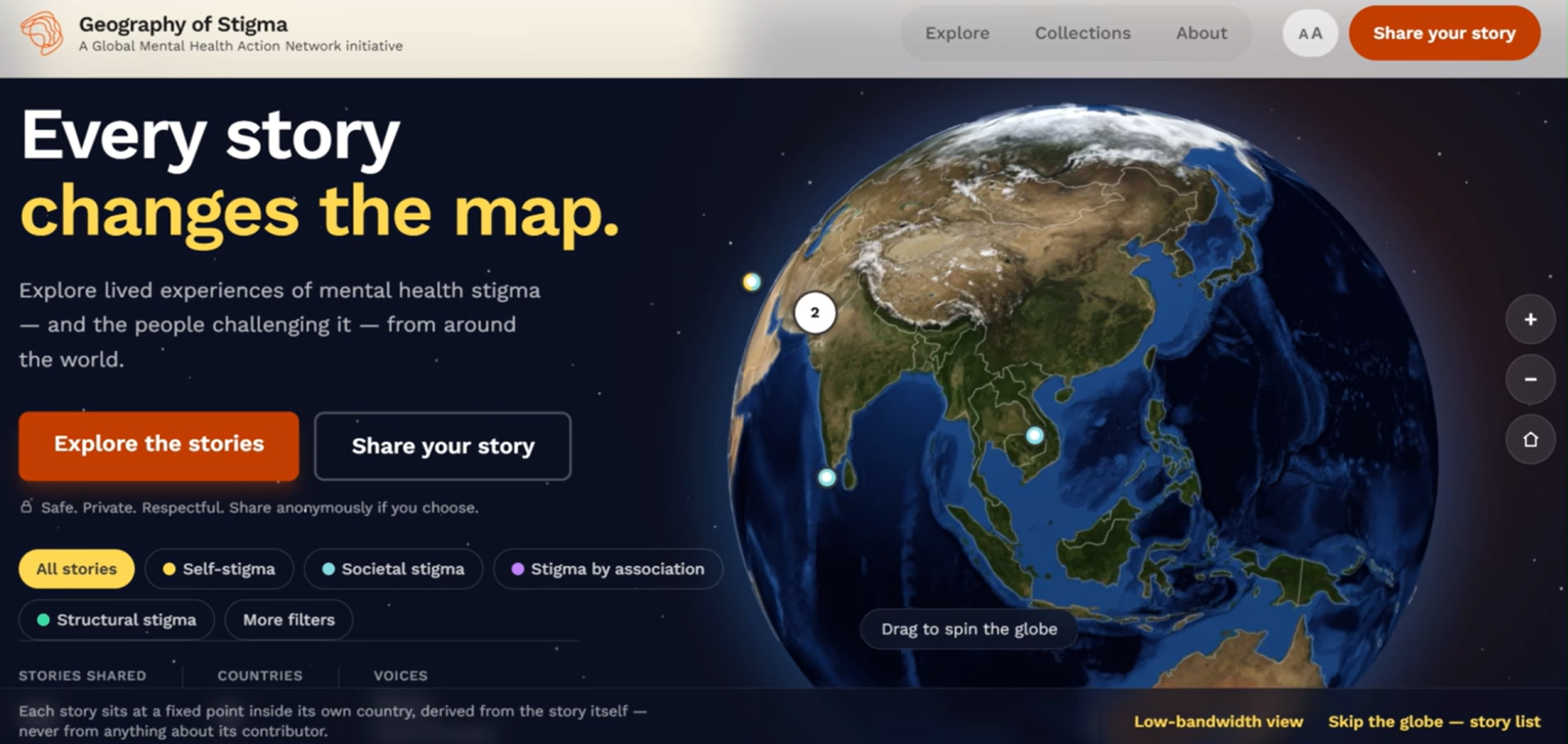
According to findings from the Global Mental Health Action Network’s “Geography of Stigma” Survey, over 58% of mental health advocates have personally experienced stigma and discrimination—most commonly in the form of negative public attitudes (39%)—yet 73% report that addressing stigma remains completely absent from their country's policy priorities, with over half facing a total lack of dedicated funding.
To bridge this gap between grassroots effort and structural support, The Geography of Stigma initiative is mapping these realities to build evidence-based advocacy tools, and we invite you to share your story so your lived experience can help break down barriers and drive global change.
Knowledge Exchange Programme: Lived Experience Learning & Action Initiative
As part of the takeover, we organised a series of five Knowledge Exchange Sessions(KES) that explore how lived experience is understood, valued and translated into meaningful participation across different contexts.
Session 1 - Understanding Lived Experience
In our first session of GMHAN's 5-part learning and action series, speakers Parth Sharma and Sasha Hajj Assaf challenged us to look deeper into history, context, and structural power dynamics.
Key Takeaways:
Beyond Diagnosis: Two individuals with the same diagnosis can have entirely different lived experiences depending on their context, social, and economic barriers.
Challenging Colonial Roots: Mental health frameworks have historically been shaped by ableist and Eurocentric principles that pathologized resistance and dissent. True progress requires reckoning with these histories and fighting for reparative justice, deinstitutionalization, and human rights.
Beyond Storytelling: Sharing personal stories is a powerful tool against stigma, but true inclusion requires meaningful participation, shared power, and structural influence in decision-making.
Session 2 - Engaging with UN Processes
The second GMHAN Knowledge Exchange Session brought together advocates to explore UN processes and mental health advocacy, celebrating the network's expansion to 11,000 members worldwide.
Key Highlights
Navigating UN Systems: Sarah Kline outlined how member countries leverage the UN and highlighted key annual advocacy moments, including the January WHO executive board and the May World Health Assembly.
National Action in Peru: Lucero Andaluz Llerena shared how international declarations are utilized to drive community-based care and youth mental health investments.
Strategic Advocacy: David Johnson discussed advocacy strategies for UN General Assembly sessions when mental health is not centrally featured, emphasizing cross-sector collaboration and persistent follow-up.
Session 3 - What Does Lived Experience Bring to the Table?
The third GMHAN Knowledge Exchange Session brought together advocates to explore the core dimensions of lived experience expertise, global case studies, and strategic leadership in mental health advocacy.
Key Highlights
Core Dimensions: Sasha Hajj Assaf, Adrián Pérez Ara, and Maria O'Brien outlined the definitions and forms of lived experience expertise, emphasizing community consultation and bridging the gap between expert services and customer needs.
Global Case Studies: Participants discussed high-level stakeholder engagement, including the Bridgetown Declaration, the founding of Voices of SIDS, and multi-country political declarations.
Strategic Action & Resources: Members addressed power dynamics, safe sharing of personal experiences, digital advocacy platforms, suicide prevention resources, and actionable next steps for capacity building.
Upcoming Sessions
3rd November Session 4 - What does meaningful participation mean, and how can we put this into practice? Register here
10th November Session 5 - Building Lived Experience Leadership and Collective Action. Register here
Funders Spotlight: Financing as key to lived experience engagement
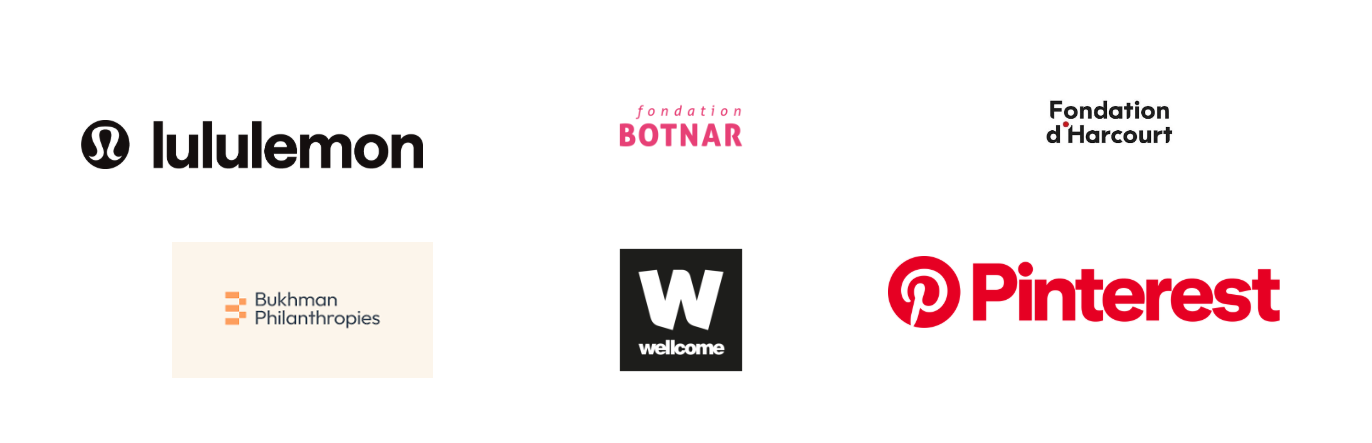
Financing and centering individuals with lived experience to drive systemic change in mental health research, policy, and practice. In alignment with World Mental Health Day's theme, "Lived Experiences Heard: Real Voices, Real Change," the feature showcases commitments from key philanthropic partners—including The Wellcome Trust, Bukhman Philanthropies, Pinterest, Fondation Botnar, lululemon, and Fondation d’Harcourt—who advocate for elevating lived experience experts from passive contributors to decision-making leaders.
Key Takeaways
Centering Lived Experience: Individuals directly impacted by mental health challenges—including young people, mothers, and marginalized groups—must lead research, policy, and solution design rather than just acting as beneficiaries.
Moving Beyond Passive Listening: Genuine engagement requires active collaboration, inclusion in advisory committees and boards, decision-shaping power, and fair compensation.
Targeting Under-Resourced Gaps: Donor initiatives spotlight critical, historically underfunded areas such as maternal mental health and community-rooted youth emotional well-being across diverse or lower-resource settings.
Long-Term, Flexible Funding: Achieving sustainable, community-driven impact requires funders to adopt trust-based, flexible grantmaking and maintain long-term commitments beyond short-term metrics.
Standing on the Shoulders of Giants
Before lived experience experts were recognized as vital contributors to mental health research and policy—and before Public and Patient Involvement became mainstream—mad activist movements and survivor groups were already advocating for recognition and shared power in decision-making.
From a patient petition in 1620 to the first global network of users and survivors of psychiatry (founded in 1991 and now the World Network of Users and Survivors of Psychiatry), we’ve traced key moments and leading organisations who have transformed mental health advocacy.
👉 Check out our new webpage spotlighting Mad Movements and the History of Lived Experience Advocacy at GMHAN Mad Movements.

World Mental Health Day all over the World
We know this year's World Mental Health Day theme resonates deeply with our community. and so we asked them, “What does this year's World Mental Health Day theme mean to you and what are you doing to mark the occasion?”
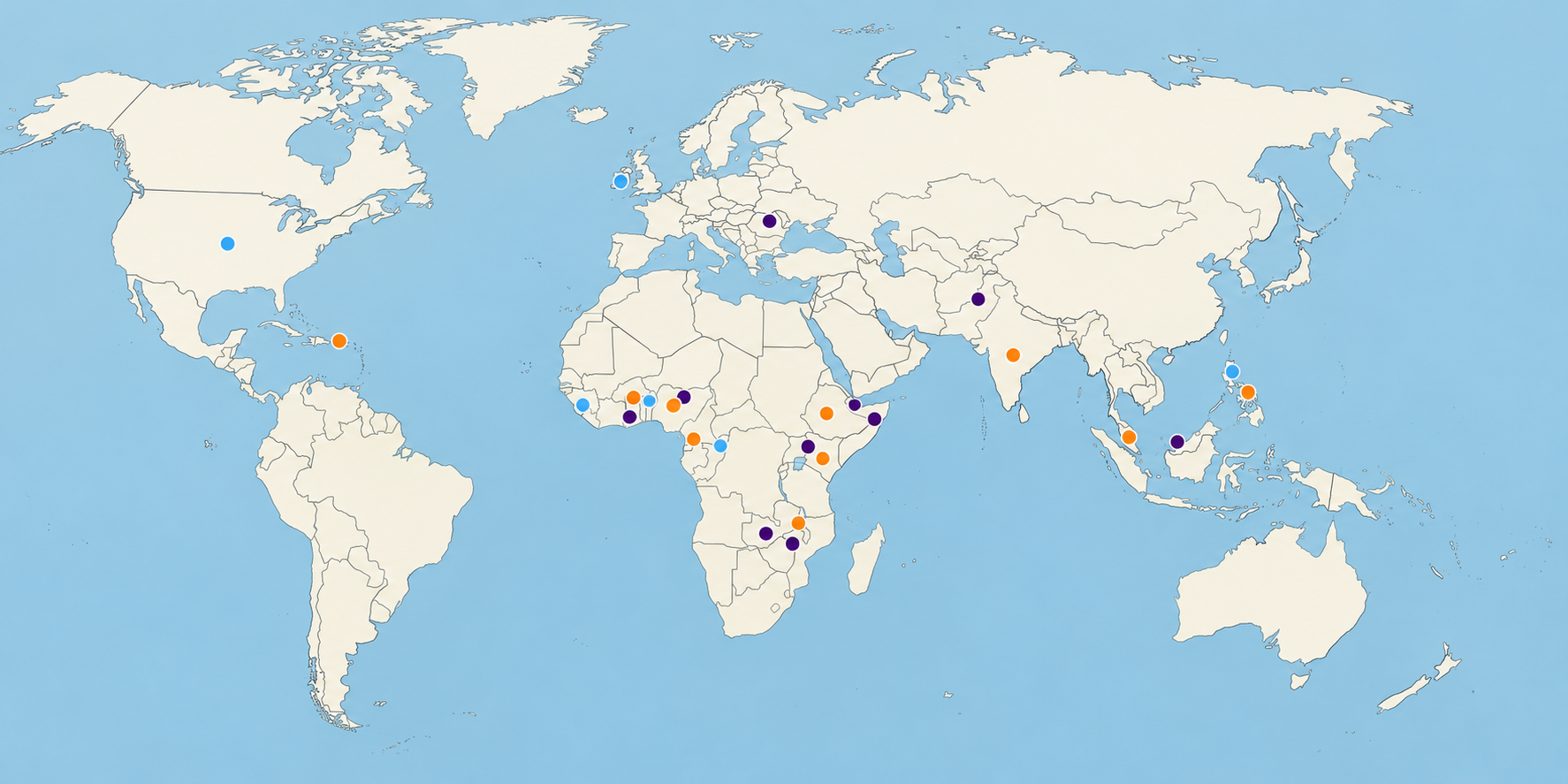
37 people and organisations responded from all over responded
Mutual sentiments over what the theme “Lived Experiences Heard: Real Voices, Real Change” means to our community
Empowerment and Inclusion: Lived experiences serve as critical expertise, meaning individuals with mental health challenges must be active partners, decision-makers, and leaders in shaping policies, research, and services rather than merely being beneficiaries.
Stigma Reduction and Safe Spaces: The theme emphasizes breaking the silence and taboo surrounding mental health by fostering empathetic, non-judgmental environments where people feel secure to share their stories, seek help, and speak out without fear of discrimination.
Personal Healing and Community Impact: Sharing personal journeys provides courage, fosters mutual understanding, and empowers both the speaker and others, transforming individual struggles into a collective force for meaningful and practical change.
How most of our community marked the day
Community Engagement and Events: Hosting conferences, workshops, symposia, walks, and panel discussions involving stakeholders, service users, and experts by experience.
Awareness and Advocacy Campaigns: Conducting social media campaigns, sharing personal and family stories, publishing articles, distributing educational materials, and organizing school and workplace advocacy.
Youth Empowerment and Peer Support: Engaging young people through specialized initiatives, school-based mental health education, clubs, and peer support programs to foster safe spaces and reduce stigma.